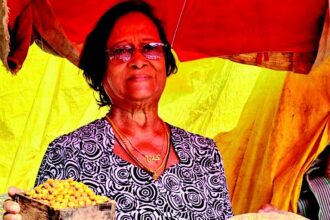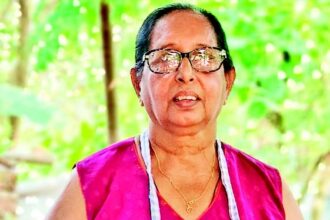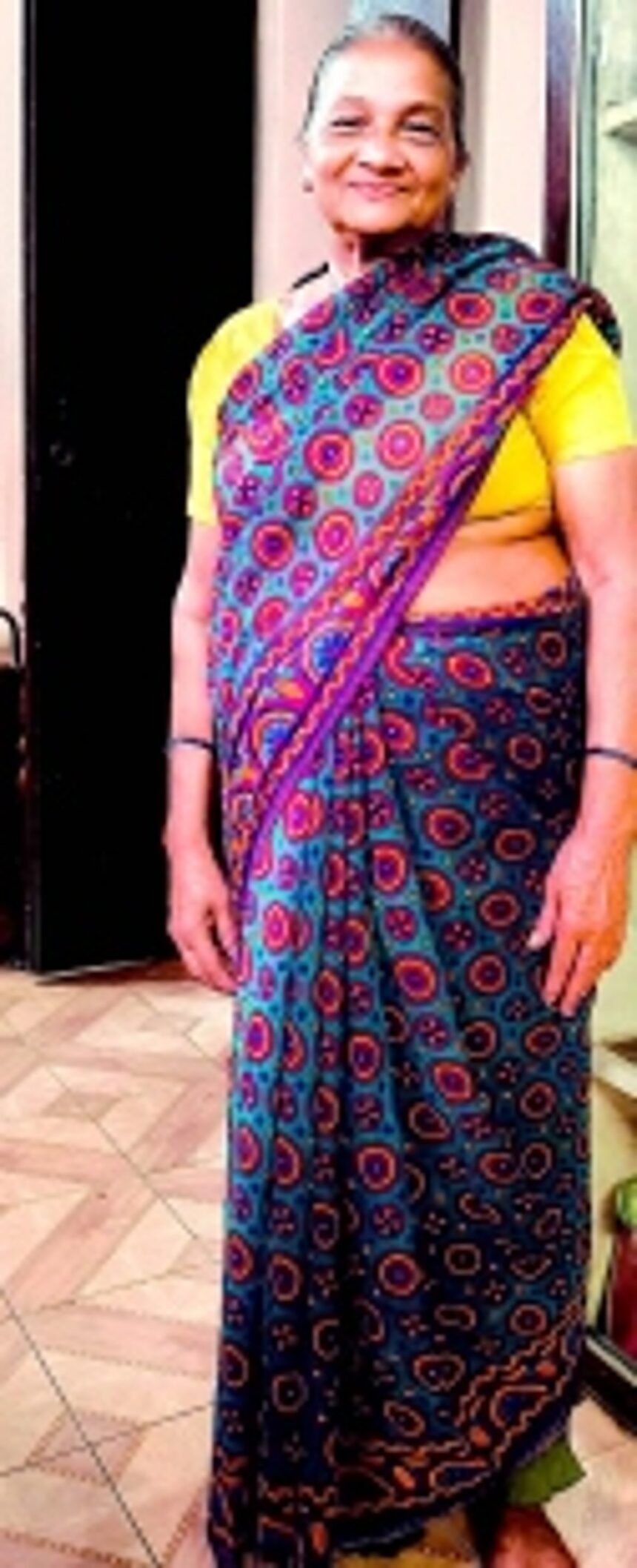
MERCES: Shakuntala Vinayak Chopdekar is a sort of local celebrity in Merces. In her seventies now, she gets picked up and dropped to work, and many families settled abroad plan their Goa trips according to her schedule. This is because Shakuntala is part of a dying breed, and the niche service she provides is in huge demand – Shakuntala is a traditional baby masseuse, or ‘tel kaadpi’, who has massaged four generations of babies in the village, blessing them with vitality and lustrous skin.
Shakuntala was initiated into the secrets of infant massage by her grandmother when she was only 12 years old. In her youth, Shakuntala was a robust worker, juggling cooking for two families, massaging newborns and even garden and farm work. “My father was an expert in crafting rafters or maad made of coconut trunks, while my mother was busy distilling toddy to make coconut feni,” she recalls. “I used to tag along with my aaji and watch her massage both mothers and babies, and learnt everything I know from her,” she says.
Traditionally, the new mother is also treated to a massage every day for at least a month after the baby is born, to help restore strength, relieve achey backs and joints, and tone her muscles and skin. “We only use locally-sourced coconut oil during the massage, preferably the first press which is light and watery,” she says. The vigorous massage is always followed by a hot bath, for which Shakuntala prepares a natural cleanser containing egg yolks, gram flour and milk-cream, believed to keep the infant’s skin supple and hydrated and free from rashes. The fascinating process is completed with lighting dhoop ( benzoin resin) and allowing the fragrant smoke to waft over the mother and baby. “These are traditions we have been following for thousands of years, but doctors these days advise against lighting dhoop around the baby, I don’t know why,” says Shakuntala, rolling her eyes in mock anger. “Still, most of my clients today give me a free hand with their infants, as I have massaged them and their parents before them,” she says.
Bursting with folk knowledge of indigenous herbs, spices and weeds, Shakuntala has many traditional recipes up her sleeve, helping treat everything from cold to colic and indigestion. Most of these potent concoctions are administered to the mother, who passes the benefit on to the baby through breast milk.
“Massaging the infant helps their developing bones, and even correct minor deformities,” says Shakuntala who has worked her magic on countless babies with bowlegs and frail, underdeveloped arms. “In the past, doctors at GMC used to refer parents to me, to help babies they believe may have difficulty walking. As their bones are still malleable, it’s also possible to mould the shape of their noses and skulls,” she says.
Over the years, Shakuntala has become an integral part of many Merces families, who dote on her. “The problem is that I’m ready and eager to retire, but I’m unable to turn them down, when they ask me to massage their babies,” she says. “Even if the baby is born abroad, the parents make it a point to spend some time here, so they can get the long-term benefits of my massage,” she says, adding that she currently massages seven infants, including a pair of twins, every day.
Shakuntala’s hands are wiry and strong, but her knees are stiff and painful, making it difficult to walk and impossible to sit on the floor, and lay the infant on her legs as she used to. “It is getting increasingly hard, and as I massage them, the babies become more muscular and stronger and try to slip away,” she laughs, adding that she tolerates no fuss, and can quell any crying with ease. Shakuntala’s baths are so enjoyable that they end up preparing the infants for the dip during the baptism, allowing for a tantrum-free Mass.
The reason Shakuntala is still in such demand is because there are few others who come with the expertise and experience she brings – many of them are migrants with no training and only do it for the money.
“My daughter has learnt the skill from me, but she’s busy and does not practice it often,” says Shakuntala, who
is willing to teach anyone who is genuinely interested, so her wealth of knowledge is passed on.