JENIFER FERNANDES
Pernem
There are lessons we learn as children that stay with us long after we have grown up. For Diksha Parab, one such lesson came from her mother, who introduced her to the basics of stitching.

Years later, that childhood learning has found a new purpose.
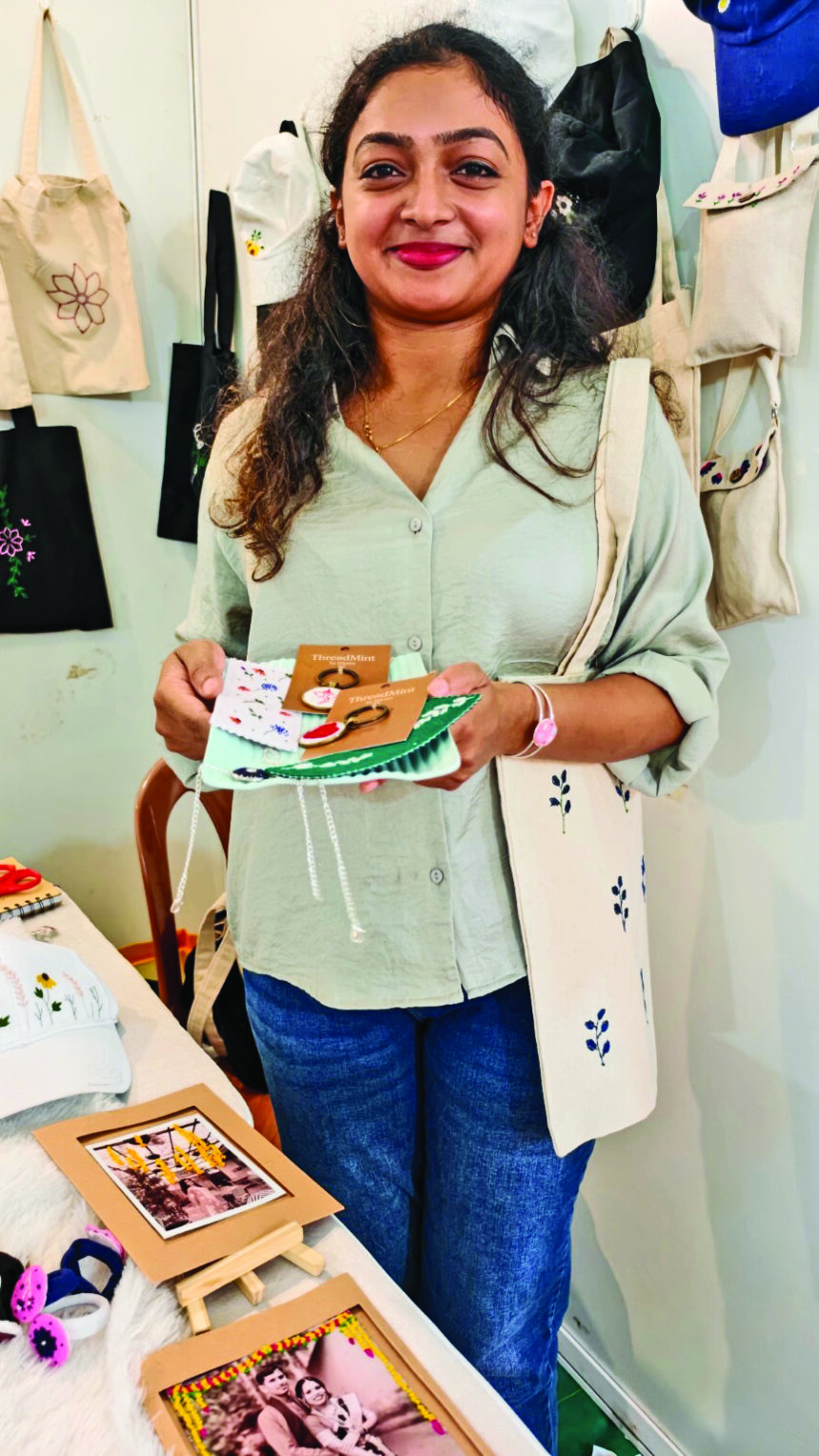
At 29, the Pernem resident is turning her knowledge of stitching into a creative venture through her small enterprise, ‘Thread Mill’, which combines stitching and embroidery to create personalised, handmade and eco-friendly products.
“I learnt a little about stitching when I was a child from my mother. Today, I am using that teaching in a modern way and have been able to make it my career,” says Diksha.
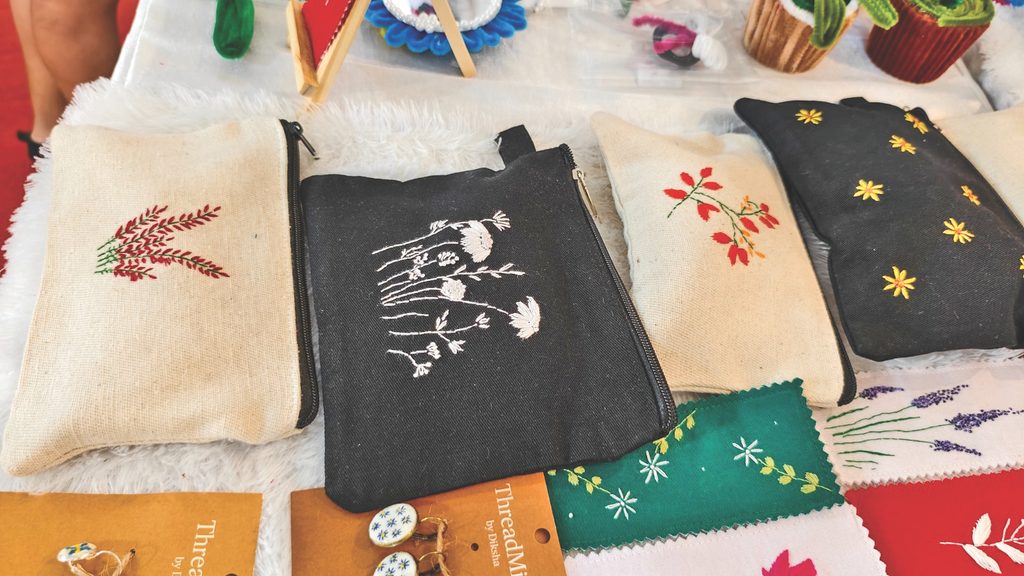
She started Thread Mill last year, initially promoting her work through social media before taking her creations to exhibitions. The response surprised her. People appreciated her work and encouraged her to take the venture forward.
The idea for her personalised cloth bags came from a simple observation. Gifts are often either expensive or easily available in the market. Diksha wanted to create something different and personal. She began embroidering photographs on cloth bags, turning an everyday item into a thoughtful, personalised gift.
The idea was well received and gave her the confidence to expand her range.
“I wanted to give something creative,” she says.
Today, Diksha makes most of the products herself, with occasional help from her family. Her range includes photo-embroidered cloth bags, earrings, bracelets, slim bags, mobile bags and pouches. Depending on the design and creativity involved, making one bag can take more than an hour.
For materials, she shops online, where she finds a wider choice of colours, quality and quantities. But for Diksha, creativity is closely linked to responsibility. She is particular about sustainability and ensures that all her materials and packaging are eco-friendly and free of plastic.
“I know plastic is not the way forward. We need to become eco-friendly,” she says.
Her work is also an attempt to change the way people view cloth bags. Diksha believes they need not be dull or unfashionable. By using different colours and personalised pictures, she wants people to carry them with confidence. She also accepts customers’ own designs, believing that personalised products are more likely to be used.
“I noticed that people feel shy to use cloth bags. That is why I designed them in different colours and with pictures so they look good and people do not feel shy carrying them,” she says.
Diksha holds a BSc in Geology and has five years of work experience. Her creative venture runs alongside her regular work. She manages her professional responsibilities during the day and turns to Thread Mill whenever she gets time.
Her free hours are often spent creating new products or learning new techniques.
For someone balancing work, family, friends and a growing creative pursuit, planning has become essential.
“When I plan, I believe 50 per cent of the work is already done. The remaining 50 per cent is the effort I have to put in,” she says.
Thread Mill, however, has become more than a business for Diksha. It is also a hobby that has helped her personally and mentally.
“There are many hobbies and if anyone nurtures them, they will keep you busy, take away stress and tension and keep you away from problems. Once you begin, you start thinking about what to do next and how to improve,” she says.
Her dedication sometimes stretches late into the night, particularly when she has an order to complete. After working from morning to evening, she spends her evenings on her creations and has stayed awake late to ensure that customers receive their orders on time.
For Diksha, the effort is worthwhile because her work carries a larger message about sustainability and the choices people make every day.
She believes sustainable and durable products are important for the future.
“Whether we use plastic or not depends on us. That is exactly what I am trying to make people understand through my work,” she says.
Her own journey has also taught her that talent needs patience and perseverance to grow. Her message to others is simple: recognise what you are good at, nurture it and do not give up when challenges arise.
“Whatever your main hobby or talent is, you should take it forward. There will be hard work and problems, but never back out. If you take an interest in something and do it passionately, it can become a lasting career,” she says.
For Diksha, success is not measured by profit alone. There is equal value in the happiness of creating something with her own hands, learning new skills, staying creative and overcoming challenges.
What started as a simple stitching lesson from her mother has now become a thread connecting her childhood, creativity and aspirations. Through Thread Mill, Diksha is showing that a skill learnt at home can grow into a meaningful passion, a source of confidence and, potentially, a lasting career.