SHASHWAT GUPTA RAY
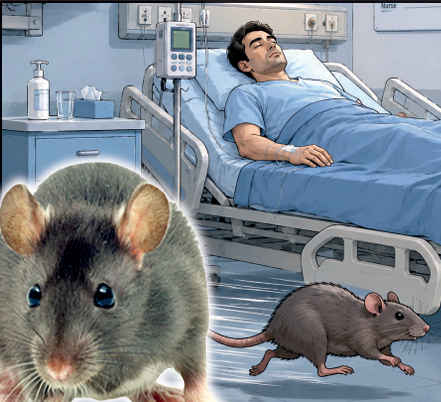
The rat bite suffered by Ponda resident Nilesh Polji while recovering from minor surgery in Ward No 111, Bed No 29, at the Goa Medical College (GMC) has triggered political outrage and raised questions over hygiene at the State’s premier government hospi tal. But this is not the first time such an incident has occurred. Back in 2012, the rodent menace was at its peak. That’s when all the depart ment heads at GMC held a meeting with Vishwajit Rane, who was the Health Minister even then. Some immediate measures, including pest control, were taken.

Now, after 14 years, the same issue has resurfaced. Some of the HODs, now retired, who were present at that meeting with Rane, have attributed the problem to food litter left by visitors and patients, along with the rodents’ ability to adapt to the pesticides sprayed on the campus over a period of time. Professor of Pathology and former HOD, Department of Pa thology, GMC, Dr R G Wiseman Pinto, who was present at the 2012 meeting, recollected a similar incidents during his time at GMC. Pinot said, “This issue mirrors challenges we faced approx imately 10 to 15 years ago during my tenure as Professor and Head of Pathology, when rodents damaged museum speci mens, histopathology wax blocks and expensive equipment cables.
At that time, prompt intervention by the Health Minis ter and the implementation of regular pest control contracts effectively managed the situation.” But the problem has resurfaced, indicating that it is imper ative for the hospital administration to strictly enforce com prehensive anti-rodent measures. This includes ensuring that pest control contracts are regularly renewed and payments are cleared systematically to maintain uninterrupted service. “Furthermore, historical data shows that rats are vectors for serious diseases such as leptospirosis, plague, rat-bite fe ver and salmonella. To mitigate these health risks, we must address the root causes of infestation. I recommend putting up clear warning signs and posters throughout the hospital and college premises, directing staff, students, patients and visitors to eat and discard food waste only in designated are as,” Dr Wiseman Pinto told O Heraldo. Former Professor and Head, Microbiology Department, and former Medical Superintendent, GMC, Dr Savio Rodrigues, said that while initial interventions are typically undertaken whenever the issue is raised, the current approach lacks sus tainability, leading to recurring complacency once the imme diate hue and cry settles. Furthermore, the pesticides and insecticides previously used have proven ineffective over time, as the rodent popula tion has likely adapted to these materials. “To address this permanently, we need to adjust our eradica tion programmes and implement a comprehensive, long-term strategy. Based on discussions and observations — including instances of littering from upper floors near the gynaecology department and past occurrences of both rodents and snakes entering the microbiology department — I propose a three pronged, long-term solution: administrative action and sur veillance, patient and visitor engagement, and finally, hospital hygiene and education,” Dr Rodrigues said. He added that ultimately, preventing further risks — in cluding historical instances of rat bites and dangerous pests tracking rodents into medical wards — requires active coop eration between the administration, staff and the public.
Former Professor and Head, Ophthalmology Department, GMC, Dr Ugam Usgaonkar said that the rodent menace is a complex, universal challenge and is not a matter of placing blame on a single individual, department head or the govern ment. “Addressing this effectively requires a coordinated, mul ti-agency effort combined with a strong sense of civic respon sibility from the public. A primary driver of this issue is pub lic education regarding waste disposal. The administration cannot solve this single-handedly if individuals continue to litter and discard food remnants in undesignated areas,” Dr Usgaonkar said. He said that GMC needs strict administrative enforcement through the municipality and designated officers for prompt waste disposal. “This is especially critical for eateries and hotels operating close to housing complexes and public institutions, where proper food waste management is vital. A successful strategy requires ongoing cooperation between the municipality, the Food and Drugs Administration (FDA), hospital administra tion, the public and active hospital visiting committees,” the former Ophthalmology HOD said. He said that within a healthcare setting, there are specific vulnerabilities to consider. “For instance, diabetic patients with peripheral neuropathy may have a loss of sensation, making them unable to feel or respond to a threat immediately, which underscores the need for heightened vigilance,” said Dr Usgaonkar, who was also present at the 2012 meeting with Rane.
Meanwhile, Rane has strongly condemned the incident, de scribing it as ‘completely unacceptable’, and has initiated im mediate corrective action. Speaking in the Legislative Assembly, the Health Minister said that he had implemented and outlined several key meas ures to tackle the rodent issue. “I have ordered immediate, intensive pest control measures across the hospital campus. I have also convened a high-level meeting with the GMC Dean, Medical Superintendent and oth er top officials to thoroughly review the situation and estab lish strict measures to permanently resolve the rodent issue,” he said. He further informed that a formal investigation report had been sought from hospital authorities, with the Minister stat ing that strict administrative action would be taken against those found responsible for the lapse in basic hygiene. “The hospital management, specifically the Dean, will be held directly responsible if such hygiene and safety issues continue to plague the facility. But it must also be noted that the State’s healthcare system has been upgraded significantly over the years. The rodent issues in the hospital’s wards 15 to 16 years ago were far worse,” he said.