The demolition of a mosque located inside the Saharanpur district collectorate complex triggered a political controversy on Saturday, with AIMIM chief Asaduddin Owaisi and Samajwadi Party president Akhilesh Yadav questioning the timing and manner of the action.
The mosque was demolished in the early hours of Saturday after the district court on September 2 rejected an appeal filed by the mosque committee against an earlier demolition order.

The operation was carried out amid tight security. Authorities closed all five entrances to the collectorate complex and restricted access to the public, including lawyers. Five companies of the Provincial Armed Constabulary and Rapid Action Force personnel were deployed in the area.
Police also conducted foot patrols and flag marches in sensitive parts of Saharanpur to prevent any untoward incident.
Owaisi Questions Early-Morning Demolition
Owaisi criticised the Uttar Pradesh government over the decision to carry out the demolition at around 5am. He alleged that the administration acted at an unusual hour to prevent the mosque committee from approaching a higher court.
The AIMIM chief also accused the BJP-led state government of undermining constitutional protections and said the mosque management should approach either the Allahabad High Court or the Supreme Court.
Owaisi assured the mosque authorities of legal assistance and argued that any attempt to gain political advantage by bypassing legal safeguards would ultimately face constitutional and legal scrutiny.
His comments added a political dimension to an operation that officials described as the removal of an alleged encroachment from government property.
Akhilesh Yadav Raises Questions Over Legal Remedy
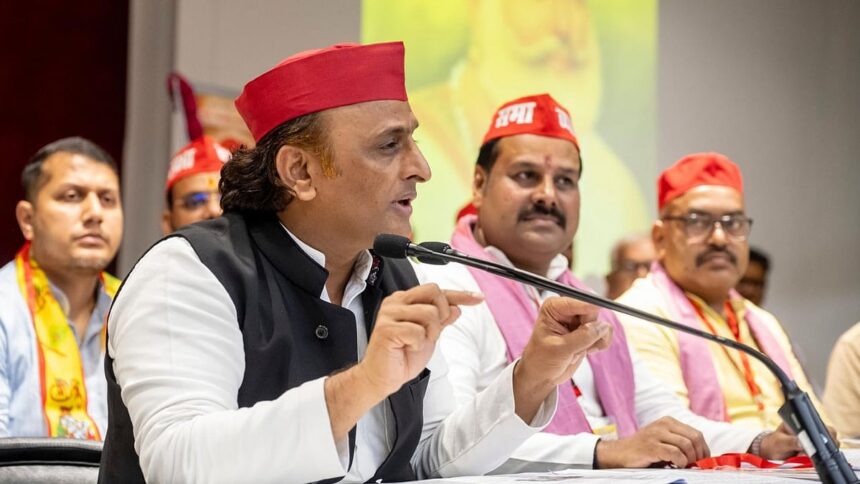
Samajwadi Party chief Akhilesh Yadav also questioned why the authorities proceeded with the demolition when further legal remedies could potentially have been pursued.
Yadav asked whether the matter could not have been taken to the High Court or the Supreme Court. He alleged that officials acted at the government’s direction to prevent the mosque committee from seeking relief from a higher judicial forum.
The SP leader also criticised what he described as attempts to give the issue a communal dimension. He called for religious harmony and said respect for other faiths should remain central to public life and governance.
Yadav further linked the controversy to allegations surrounding the handling of funds connected to the Ram temple project, claiming that political developments were influencing the government’s approach. His remarks were part of a broader criticism of the BJP-led administration.
Officials Cite Encroachment Order
According to officials, the mosque had been declared illegal by the Saharanpur city magistrate on July 16, 2026. The order followed a petition filed in 2025 by Bajrang Dal regional convener Vikas Tyagi.
The mosque committee subsequently challenged the order before the district court. However, the court rejected its appeal on September 2, paving the way for the demolition.
Saharanpur Range DIG Abhishek Singh said the action was carried out to clear government land of encroachment. He appealed to residents to maintain peace and avoid believing rumours.
The administration’s deployment of additional security forces reflected concerns over a possible law-and-order situation following the demolition.
The episode has now become a fresh flashpoint between the Uttar Pradesh government and opposition parties, with questions being raised over the timing of the action, access to legal remedies and the broader political implications of the demolition.