A simple workplace conversation has reignited a major debate about work-life balance after a Gen Z employee reportedly declined a manager’s request to attend a meeting at 9 pm. The exchange, shared on LinkedIn by Sanchit Goyal, quickly gained attention online, with many professionals praising the employee for setting clear boundaries around personal time.
According to the post, the manager suggested a late-evening meeting, a practice that has become common in many corporate environments. However, the employee politely refused and requested that the discussion be scheduled during official working hours instead. The response highlighted a growing shift in workplace culture, particularly among younger employees who are increasingly prioritising mental well-being and personal time.

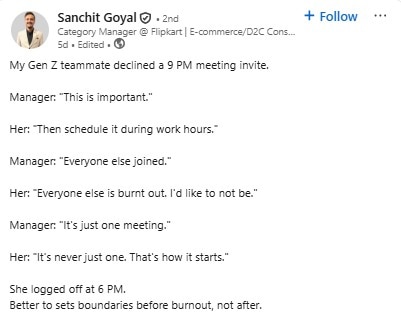
The incident has sparked widespread discussion on social media. Supporters argued that employees should not be expected to remain available long after their workday ends, especially when the matter can be addressed during regular office hours. Many said the employee’s response reflected a healthier approach to work and could help prevent burnout.
Others, however, felt that flexibility is sometimes necessary in fast-paced industries where deadlines and business demands may require occasional after-hours communication. They argued that professional success often involves adapting to unexpected situations.
The debate comes at a time when companies across the world are reassessing workplace expectations following years of increased remote and hybrid work. As employees seek a better balance between their professional and personal lives, conversations around after-hours meetings and availability continue to gain momentum.
While opinions remain divided, the viral exchange has highlighted an important question facing modern workplaces: where should the line between work and personal life be drawn?