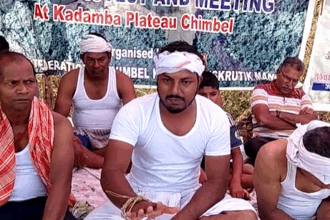
Ever since Arvind Kejriwal has visited Goa and spoken on mining, that too to an audience of people dependent on mining (including truck drivers, equipment and truck owners), the Goa Foundation has been flooded by phone calls seeking a response. What did Kejriwal say? We have studied the video.
1. He said that the minerals under the ground belong to the people of India. They do not belong to “mine-owners”. There is no such a thing as a “mine-owner.” He said that the people in front of him, listening to him, were the real owners. Correction! Minerals (iron and manganese, bauxite, etc) found in Goa belong to the people of Goa. (Minerals found in other States belong to the people of those States.) The minerals belong to the present and future generations of Goa and the government is merely a trustee. Sustainable mining means also considering the rights and interests of future generations, who will include the children of truck drivers, truck and equipment owners and everyone else. Kejriwal is confirming what the Goa Foundation had said years ago that we have wrongly referred to mining lease-holders as “mine owners.” They own nothing.
2. Kejriwal next referred to a “master plan for mining” created by union leader Ajit Singh Rane. He said they would discuss it and once accepted, they would make the main points in it part of the AAP’s election manifesto. AAP takes their manifesto quite seriously. Since the Goa Foundation does not have access as yet to Rane’s master plan, we cannot comment on it. The Goa Foundation has also made a detailed proposal to the Goa government for taking mining forward. This includes ensuring minimal losses while mining, saving all the money earned in the Goenchi Mati Permanent Fund, and distributing real income as a Citizen’s Dividend equally to all (like the zonn from the Comunidades). Caps on mining are proposed to ensure that minerals are available to at least seven generations of Goans and there is no critical damage to the environment and society. We note with disappointment that while AAP Goa has formally supported us in the past, this time AAP has taken only the perspective of the mining dependent. We note that AAP has not bothered to have a Goa Dialogue with the “mining-affected” or the custodians of the minerals — all of us — as to what should be done with our children’s inheritance.
3. Next Kejriwal came up with his election promise to provide truck drivers immediate relief “within ten days of coming to power in Goa.” The truck drivers have asked for a one life-time relief of some Rs5 lakh each. The Goa Foundation has always maintained that the truck owning community made the largest investment in the mining industry and suffered the most. The mining companies made the least investments and walked away with windfall gains. Therefore, the demand of the truckers and their drivers is just. Though Kejri comes originally from the revenue department, he probably does not know that even truck owners have not been given more than Rs 8,000 per truck. As this rate, it would take over five years for a truck owner to get Rs5 lakhs.
4. Kejriwal then moved to his next populist promise, that an AAP government would try to persuade the Supreme Court to raise the cap on mining in Goa from 20 million tonnes per annum to 30 or 35 or 40 million tonnes per annum. To be fair to him, he told his audience that unless they could persuade the Supreme Court scientifically and with confidence, the Supreme Court might not agree. However, he said an AAP government would move the Supreme Court in the interests of raising the cap on extraction. The problem here is that higher the cap, the quicker the minerals are exhausted, leaving nothing for future generations. How will we face our children when they ask us why we did not leave anything for them or future generations? Is this fair? Secondly, the request for a raise in the cap is already in the Supreme Court. But that is the request of the BJP government. So how is AAP different from the BJP? And is its proposal to raise the cap new?
5. Kejriwal next went on to promise he would not allow those who had stolen the ore in the past to sit without anxiety. He said he would chase them till they returned the money. We welcome this. However, he also said he would, after recovering the loot, use it for the welfare of mining dependents and for sustainable mining. This is where our proposals differ. The Shah Commission had placed the looted wealth at Rs 35,000 crores. However, this was before the Supreme Court passed judgement and declared mining activity for the past five years as illegal in the State. Since the Supreme Court is to be followed, the Shah Commission figure needs to be revised to Rs 65,000 crores. This amount cannot be distributed among mining dependents. That simply cannot be done. It is public money. It belongs to all Goans, including the children of the present generation and their generations. Questions have already been raised about why the Goa government was providing relief to the truckers from the public exchequer, when it was the duty of the mining companies to do so, having made maximum and obscene profits from mining. For undoing the damage done by mining in mining areas, and to re-habilitate mining areas and the health of the public in those areas, Governments now have to set up District Mineral Foundations (DMFs). Money from mining is to be deposited in these Foundations. All that money has to go for the welfare of mining dependents and mining affected. The money from the DMF cannot be used in non-mining areas of Goa. All that money has to go for the welfare of mining dependents and mining affected alone. If they do not watch out, government will misuse the money to construct roads and bridges.
6. Lastly, Kejriwal promises to make Goa’s mining the best in the world! We had a metallurgist, ostensibly trained in IIT as our CM for some years. If he could not ensure environmentally sound mining, we doubt Kejriwal can, with no experience whatsoever. However, we strongly support the idea of environmentally sustainable, green, honest mining.