PATRICIA AN ALVARES
Can the power of knowledge be underestimated? Could those of us who have had the privilege to be educated conceive of a world where we did not have this opportunity? Yet millions worldwide are illiterate. How can a birthright be denied we ask? When the UN first instituted the International Literacy Day in 1966, its very aim was to highlight this importance to individuals, communities and societies. With its theme (2013) ‘literacies for the 21st century’ it highlights the need to realize basic literacy skills for all as well as equip everyone with more advanced literacy skills as part of lifelong learning. The optimism that every segment of society will have an access education by the next decade is not improbable one as concerted efforts by various international and domestic groups continue to make large inroads.
And so as we touch upon the topic of literacy on another UN designated day, let us take a look at those who have been given the chance to enter the ‘magical world of knowledge’ as they term it.
Raul Raju Rathod is an 11-year old bundle of mischief, but with a sharp mind and an unmatched enthusiasm he’s devouring his books with all the intensity he can muster. Born into an impoverished family of five who live in a shanty at Candolim, Raju is the first generation of his household to get an education. “I would while away my time climbing trees and playing around. But since I had the opportunity to join Mushtifund High School, Panjim (through Hamara School), I enjoy learning,” admits this student of Std IV. “My favourite subjects are EVS, Maths, Marathi, sports and drawing. I also enjoy reading Marathi books from the mobile library” avers this young lad who envisages a career as an automobile engineer in the future. Given the chance to live his dream he is determined to fulfil it, much to the delight of his parents and two younger siblings.
Providing him with a window of opportunity with its concept of equal opportunity for all, Hamara School has been the mainstay of many such street children.
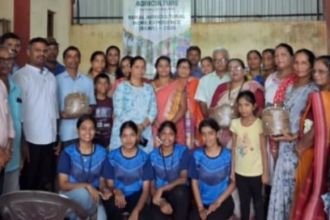
“Although this school is a shelter providing them with the basic necessities during the day, we also give them some basic education and organise a lot of activities,” elucidates administrator and teacher, Amruta Shirodkar. Mobile libraries, interactive book reading sessions, games are some of these activities which allow the children to sharpen their mental skills. Beyond these they also study music and instruments at the Kala Academy. In keeping with the UN theme, education as Amruta emphasises goes beyond mere bookish knowledge.
Sameera, a 12-year old student at Mushtifund, is another success story. A daughter of a balloon-seller who live on the streets, education has brought a new light and hope to her life. And 11-year old Sarika Chavan, who up to a couple of months ago was begging on the streets, cannot believe her good fortune. Already a Class 1 student, she is displaying a remarkable acumen. “She’s very enthusiastic and also helps out with kitchen chores,” affirms Amruta, justifiably proud of how her wards are shaping up.
Education, in its all encompassing role, is so designed to make a difference in everybody’s world. For it to be limited would be to detract from its very purpose. ‘Literacy is important for every child. Reading and writing are bridges to understanding and communicating with the wider world and becoming a part of the mainstream,” emphasises Dr Nandita de Souza, Developmental and Behavioural Paediatrician. Sethu, Panjim. “The definition of literacy is no different for children with special needs. However as children with special needs (CWSN) are varied groups, different approaches will have to be used depending on their needs,” she explains.
The focus of education, she points out, should be on inclusive education, where all children learn together. “This is good for both CWSN and typically developing children,” she states. “For CWSN, one can use technology to build literacy skills. There are several alternative augmentative communication systems which help those with communication challenges to reach out and make sense of the world around them. An Individualised Educational program which is functionally and developmentally appropriate is important for these children,” she adds.
To reiterate, literacy is indeed a birthright ad a foundation for lifelong learning. It is a driver for sustainable and inclusive development.