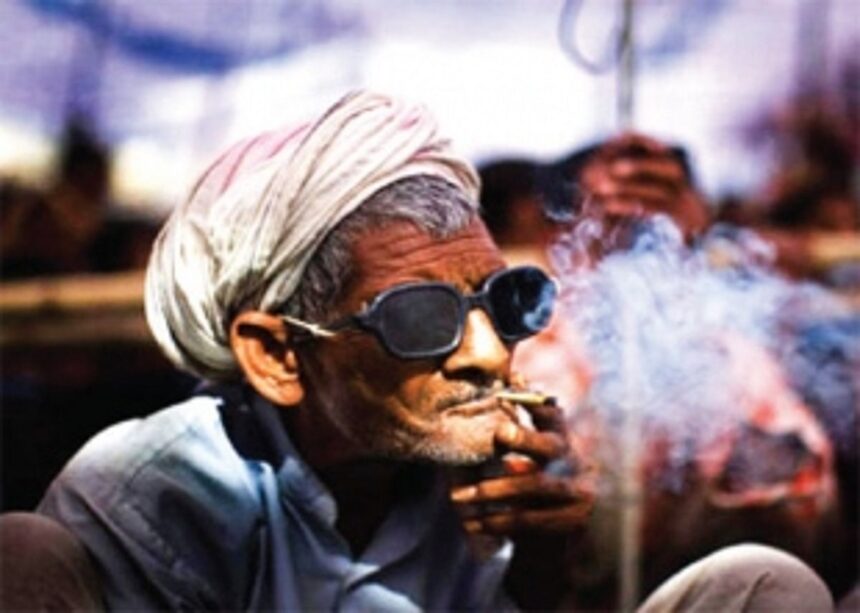
The temporary ban on
the sale of tobacco products during the ongoing lockdown to curb the spread
of COVID-19 is an opportunity to reduce tobacco consumption in India, the
world’s second biggest consumer, experts say. Forced to go without tobacco for
over six weeks and isolated from social circles where tobacco use is common,
users will find it easier to quit.
Nearly 267 million, or 29% Indians aged
15 and above, currently use tobacco in some form, as per the Global Adult
Tobacco Survey (GATS): India 2016-17 Report. Up to 199 million tobacco users in
India either chew it or apply it on their gums and teeth in various forms; half
that number (99 million) smoke, as per available data.

During the ongoing pandemic, a government
directive on April 15, 2020, asked for a “strict ban” on the sale of “liquor,
gutka, tobacco etc” for health reasons. Two of these reasons are critical,
health experts say:
Since COVID-19 primarily affects lung
functioning, patients who are smokers tend to need intensive care and
ventilation more than non-smokers, as per the World Health Organization.
Fatality rates were higher among patients with comorbidities such as
cardiovascular disease, diabetes, hypertension, chronic respiratory disease or
cancer, some of which are directly related to smoking. In India, of the 480
deceased on April 18, 83% had comorbidities.
The use of chewable tobacco leads to
increased production of saliva and thus the urge to spit, as an appeal from the
Indian Council of Medical Research (ICMR) explained. “Spitting in public places
could enhance the spread of the COVID-19 virus,” it said.
Spitting in public places has also been
banned by the government and made a punishable offence under the Disaster
Management Act.
“Quitting tobacco use may be especially
important at this time to reduce the harm caused by COVID-19,” according to the
WHO. Tobacco users who manage to quit would almost immediately have improved
lung and cardiovascular functioning and be better placed to manage comorbid
conditions if infected, it said.
“This is an ideal opportunity to make
people aware of the harmful effects of tobacco consumption as they are scared
and listen to you in such moments,” Ravi Mehrotra, chief executive officer of
the ICMR’s India Cancer Research Consortium, told IndiaSpend. “With the ban in
place, if people can manage 2-3 weeks without it, then why not forever?”
About 55% of smokers and nearly 50% of
smokeless tobacco users are interested in quitting the habit or plan to do so,
as per the GATS report. For those keen to quit, the lockdown might be a good
opportunity, said Mehrotra. “Many times, the use of tobacco products,
especially smoking, is a social activity among friends, colleagues and fellow
tobacco users,” he pointed out. “Now that people are in isolation because of
social distancing, this could be a good opportunity [to kick the habit].”
It is estimated that more than 1.3 million people in
India–nearly as many people as the population of Arunachal Pradesh–die of
health issues caused by tobacco use every year, the GATS report said. Of them,
1 million deaths can be attributed to smoking and the rest to the use of
smokeless tobacco products.
‘Facilitate massive efforts to quit’
“This is the absolute best time to quit smoking,” said Gan Quan,
director, tobacco control, at The Union, an advocacy on tuberculosis and lung
disease, headquartered in Paris, in a statement on April 6, 2020. “Countries
have a moral imperative to advise their citizens of this urgent fact and
facilitate massive cessation efforts.”
The level of addiction is high among tobacco users in India: 59%
of those who consume it daily do so within 30 minutes of waking up and 78%
within the first hour. About one in every 10 adults in India smoke, and 80%
(80.1 million) of them smoke every day and 19.4 million occasionally.
The more popular tobacco products in India are smokeless, as we
mentioned earlier. Khaini, a tobacco-lime mixture with 104.1 million users and
gutka, a tobacco-lime-areca mix with 63.6 million users, are the two most
commonly consumed, as per the GATS study. This is followed by betel quid (paan)
with tobacco, products for oral application and paan masala–a mixture of
tobacco, areca nut, slaked lime, catechu and other flavouring agents.
The use of smokeless products is particularly problematic during
the pandemic because it increases the urge to spit, as we said. “Chewing of
tobacco leads to spitting which contains bacteria,” explained Pankaj
Chaturvedi, professor, department of surgical oncology, head and neck services,
at the Tata Memorial Hospital, Mumbai. “Even while doing tests for COVID-19,
the swab is collected from the throat which contains the virus in the saliva.
So when the infected person spits, the entire virus is loaded into that saliva
and the droplets are then thrown in the air. This risks the entire population
in the sphere of influence or radius.”
Tobacco causes a loss of nearly Rs 1 lakh crore ($13 billion)
every year to the exchequer in terms of healthcare expenditure and is the
number one preventable cause of death among youth, said Chaturvedi. The ban on
tobacco should be extended beyond the epidemic too, he suggested.
“More awareness and better resolve is required to stop the use
of tobacco products over the next two-three weeks because once people realise
that they can avoid it and overcome the withdrawal symptoms, they will not let
it come back into their life,” he said.
Suppressed immunity among smokers
“A recent study in China showed that the odds of disease
progression (including to death) were 14 times higher among people with a
history of smoking compared to those who did not smoke,” said Mehrotra. “They
are also at risk of developing pneumonia. If you are a smoker it increases the
risk of being infected with diseases related to respiratory illnesses like
COVID-19 or tuberculosis.”
Smokers are susceptible as fingers (and possibly contaminated
cigarettes) come in contact with lips which increases the possibility of
transmission of virus from hand to mouth.
#COVID-19: Tobacco use & Vaping:
SMOKING
Smoking & other forms for smoking products can increase your
chances of getting COVID-19 by transferring the virus by bringing your hand to
your mouth.
Quit now. It’s never too late to quit#coronavirus
pic.twitter.com/ G9E1YJm9qz
— WHO South-East Asia (@ WHOSEARO) April 10, 2020
“Smoking in many ways predisposes people to coronavirus infection,”
Chaturvedi said. “They have higher chances of getting COVID-19 infection
because their defence in the respiratory system is low, being susceptible to
pathogens, bacteria or any virus. Their immunity is suppressed because the
mucosal barrier is damaged because of smoking.”
Half of Indian users want to quit
About 55% of smokers and nearly 50% of smokeless tobacco users,
as we said, are interested in quitting or plan to do so, the GATS report
revealed.
Nearly two in five (39%) smokers and one-third (33%) smokeless
tobacco users tried to quit the use of tobacco products in the past 12 months
of the survey conducted, the GATS report said.
Why a tobacco ban can be challenging
While experts welcome a permanent ban on tobacco, they also flag
the challenges. “People suffer from addiction and it is important to have
infrastructure in place to support those who will get into withdrawal,”
Mehrotra said. “There are many medicines, gums etc to help during the
withdrawal phase but these are expensive. Counselling by physicians will be the
other option but in such a situation that will not be practical, so in that
case they will need phone counselling, through Quitline services (1800 227787)
of the government.”
A ban on tobacco products will involve multiple ministries,
Chaturvedi pointed out. “Banning of tobacco products comes under the purview of
the health ministry, but the crop comes under the ministry of agriculture; the
sale of cigarette and tobacco products comes under the ministry of commerce while
bidi workers come under ministry of labour and gutka manufacturing comes under
ministry of MSMEs,” he said. “Hence there is a lot of overlapping when it comes
to decision-making and other ministries should be ready to handle the shock [of
a ban].”
There are two aspects when it comes to deciding on a ban on
tobacco products- -demand and supply, Chaturvedi pointed out: “The demand
aspect can be brought down by the consumer, understanding the risk in the time
of COVID-19. The decision on the supply side is totally political. If people
quit, then certainly there will be no demand and as a result supply will stop.”
Chaitanya Mallapur –
Chaitanya has a masters degree in politics from the University of Mumbai and a
bachelor’s degree in computer science. His areas of interest are foreign policy
and security studies. He has also worked with ET NOW, a business news channel,
as an assistant producer in the digital team.