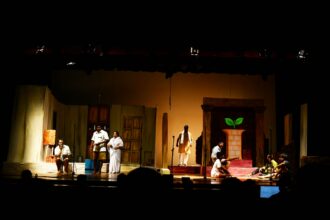
Let’s start with the simplest of differences, now-a-days,
tiatrs are all season and they go on throughout the year. Previously they had
their own seasons. “We were not able to have tiatrs during the rains,” explains
veteran tiatrist Titta Pretto as we picture Goa’s lashing rains and artistes
struggling to perform in bad weather. Incidentally, tiatr started in Bombay, a
city with indoor theatres and halls where tiatrs could run throughout the
rains. “But Goa had no tiatrs during the rains since there were no halls,”
confirms veteran tiatrist Platilda Dias. In Goa, tiatrs would take place in
‘mattows’ which were makeshift theatre stages where tiatrs were performed.
“Then again there were no tiatrs during Lent season,” she
continues. “It must have been about thirty years back, when J P Souzalin first
released a tiatr during the solemn period of 40 days, that too with special
permission of the bishop,” mentions the octogenarian Pretto who also remembers
the name of this tiatr, ‘Saibinicheo Sath Dukhi’. J P Souzalin was a writer of
religious plays who also wrote the plays ‘Sorvonndar’ and ‘Sant Anton’.

Apparently, tiatrs were a no-no during this holy season,
reveal tiatr-goers from those times. The church and the parishners too wouldn’t
venture out to see tiatrs during this time as Lent is considered a period
reflection and repentance. The three days that precede it though, the Carnival
festival, would see Goa and Bombay full of khells (street plays). However,
Young Stars of Goa, the only Goan troupe of tiatrists, would travel to Bombay
for tiatrs during Lent as Bombay still had tiatrs during Lent. Then again, the
availability of halls in Bombay would also make it possible for tiatrs to
continue in Bombay even during the rains.
So apart from rains and 40 days of Lent, tiatrs played out
throughout the year in earlier times, in Goa. Viz-a-viz this, in Bombay, tiatrs
happened almost throughout the year. “In Goa, they would really start in
November because rains were heavy and the last rains, also called ‘maadd paus’,
resulted in losses. Sometimes there were also losses when this season tried to
stretch to May with the rains playing spoilsport. So November, December and
January were full on tiatr months. This was the tiatr season in those times,”
informs Platilda, referring to periods before the nineties. Then Easter again
would have tiatrs being performed, but this time, till the school holidays in
May, hence making it a short season.”
“Mostly C Alvares would have his tiatr during these few
days. But this was a shorter tiatr season hence not many tiatrs were released
then. Apart from maybe Alvares who would sometimes even release a new show,
usually tiatrs that started later in the earlier season starting from October
continued their tiatrs during this short season. Given his popularity and
prowess in the tiatr world, late C Alvares was probably the best tiatr director
to come up with something new even in this short season. “Although a short
round, C Alvares would have even around 10 shows of a tiatr,” says Titta. This
month and a half long odd period was called, ‘pascam’. So when a tiatrist would
say, “pascam tiatr bhair sortollo,” it meant the tiatr will release post
Easter.
However, since tiatrs of religious order had already been
permitted starting with J P Souzalin, by the nineties, there were instances of
commercial tiatrists also releasing tiatrs during this time of the year. Then
again, Goa got halls for tiatrs and thus the reign of tiatrs during the rains
started in full swing. Now-a-days, there are halls in places all over the
state, not just the main cities; this allows tiatrs to go on from May till
October.
Another interesting fact while noting seasons of tiatrs is
that it was Aristedis Dias’ tiatr that first had a morning show at 10.30.
Before this, tiatrs were never performed during the day time. There were no
10.30 am or 3.30 pm shows. “Earlier, tiatrs were held only at 6.30 pm and even
for this show, people would turn up late, with the show starting after 8 pm.
Then there were tiatrs at 10.30, which would inevitably start at about 12.00,”
confirms Platilda.
While the distinguishing features of the earlier times
viz-a-viz the present can be analysed from the above, a starkly differentiating
element of earlier times, now lost forever, was that of tiatrists allowing each
other to have their own tiatrs and not releasing shows to overlap others. While
Titta Pretto actually remembers the months of the year when directors C
Alvares, Boyer, Jacinto Vaz and Remi Colaco would share their tiatr releases
giving each a month and even act for each other and support every tiatr that
came up, the present day tiatrists defend the current overlapping trends by
mentioning that in those earlier times, tiatrists were also few, and that’s why
shorter seasons could accommodate all tiatr directors.
In conclusion, tiatrs playing all year round are a norm of
the present day. Also, while earlier tiatrists wrote a tiatr per year or so,
the present day sees a commercial tiatr director writing two and sometimes even
three tiatrs per year; now that there are no more seasons like there were in
the ‘good old days’.