Ajit John
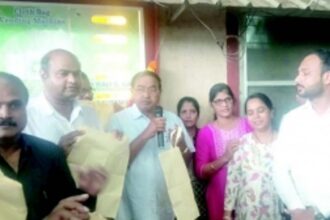
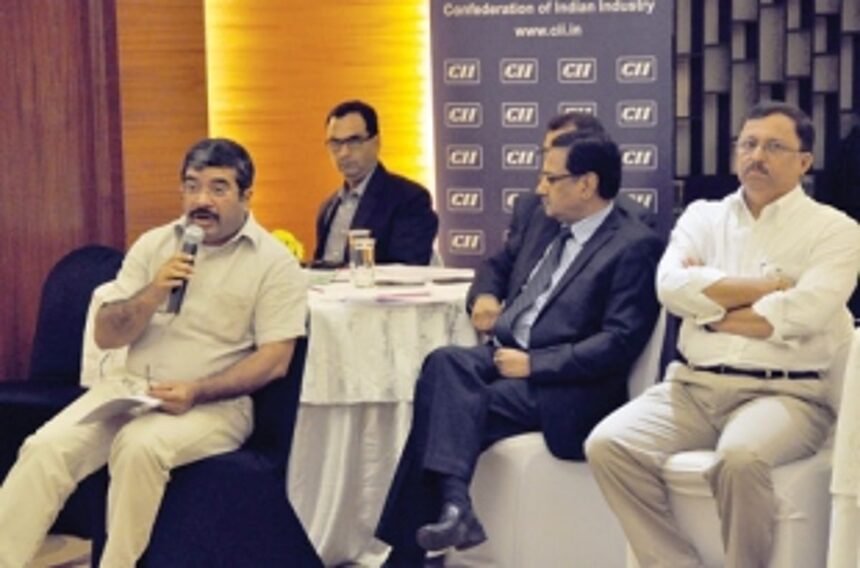
PANJIM: In the years to come people will look back and say that they were there too. The first CII – KPMG Goa CXO Budget 2015 roundtable held earlier this week was a start in what should hopefully become a very important feature of the state’s corporate intellectual landscape. Senior corporate personnel discussing important aspects of the budget and the possible effects on the state and more importantly on the sector they were operating in.
Kirit Maganlal, chairman CII Goa Council, started off the session by expressing the hope that this platform would set up thoughts and ideas through the eyes of the CEO on what he feels would be the right architecture towards a growth oriented economy.
It turned out to be one such morning with Anish Mehta of KPMG providing an analysis of the implication of the direct tax that would be levied after this budget. He said that there were generally few positives for the corporate world and the reduction in the corporate tax from 30% to 25% over a period of four years was a double edged sword what with the benefits that the corporates enjoyed now would not be continued resulting in companies actually having to pay more.
It was he said generally a mixed bag. A corporate leader this journalist spoke to later and who did not want to be on record said that the budget had some good aspects which were helpful but like everything in the country he said no government could be seen to be going all out to encourage business at the expense of the poor. Taxes he said would continue to increase because social welfare schemes had to be funded and it was a reality he was prepared to live with.
On the rather emotive subject of mining Harish Melwani felt it was time that people in the industry looked beyond iron ore as a commodity that could be mined though Ashok Chowgule felt one would have to look at the quantities that could be mined and more importantly if there was a requirement for what was mined in the state. There was universal agreement that the non reduction on the high tax on the low grade iron as expected was disappointment. It was hoped that a decision would be taken sometime later in the year.
Nitin Kunkolienkar, VP, Smartlink felt that people always expected the budget to make big announcements and they always wanted big reductions in taxes when the government had a larger vision. The government he said had created an infrastructure fund and a beginning had been made in setting up a mechanism to ensure that work happens at a good pace. The fact that the government was pushing entrepreneurships was a very good move however it was also important to go beyond talk and action had to take place on the ground. He cited the example of the Verna industrial estate where the roads were poor and the water reservoir was still not ready despite spending huge amount on it. The fact that Rs 32,000 crore was given to the Goa Shipyard would ensure that almost Rs 1000 crore would come to the state in terms of taxes and that it was important that ancillary units be encouraged to set up operations and that local businesses be given preferential treatment be considering that a lot of business would emerge when ship building activities move up a notch. He also revealed the new investment policy was yielding results with projects valued at Rs 1700 crore having been signed by the authorities which would guarantee approximately 1200 people jobs.
The PPP model proposed by the budget for infrastructure was a very good idea especially for Goa given that much needed to be done in the state. It was felt that the state urgently required a rail terminal, logistics park and a road to the port. Harish Melwani said that the absence of continuous supply of power was a very big problem which had to be tackled. Another major issue that was troubling the state was the paucity of talented people who could get the job done. The general consensus was that the smart kids were leaving the state and that trend had to be stymied over a period of time if national initiatives like Make in Goa had to fly. It was felt that a single unit of HRD would help. Lester Pinto of Betts India Pvt ltd felt a strong new curriculum had to be created to help tackle this problem. The importance of helping create MSME’s in the state was felt by everyone. They felt it would happen over a period of time it would happen and if large companies set up base then small units would emerge.
Kirit Maganlal ended the proceedings by expressing hope that the senior corporate executives would be present when the second such initiative would be held next year.