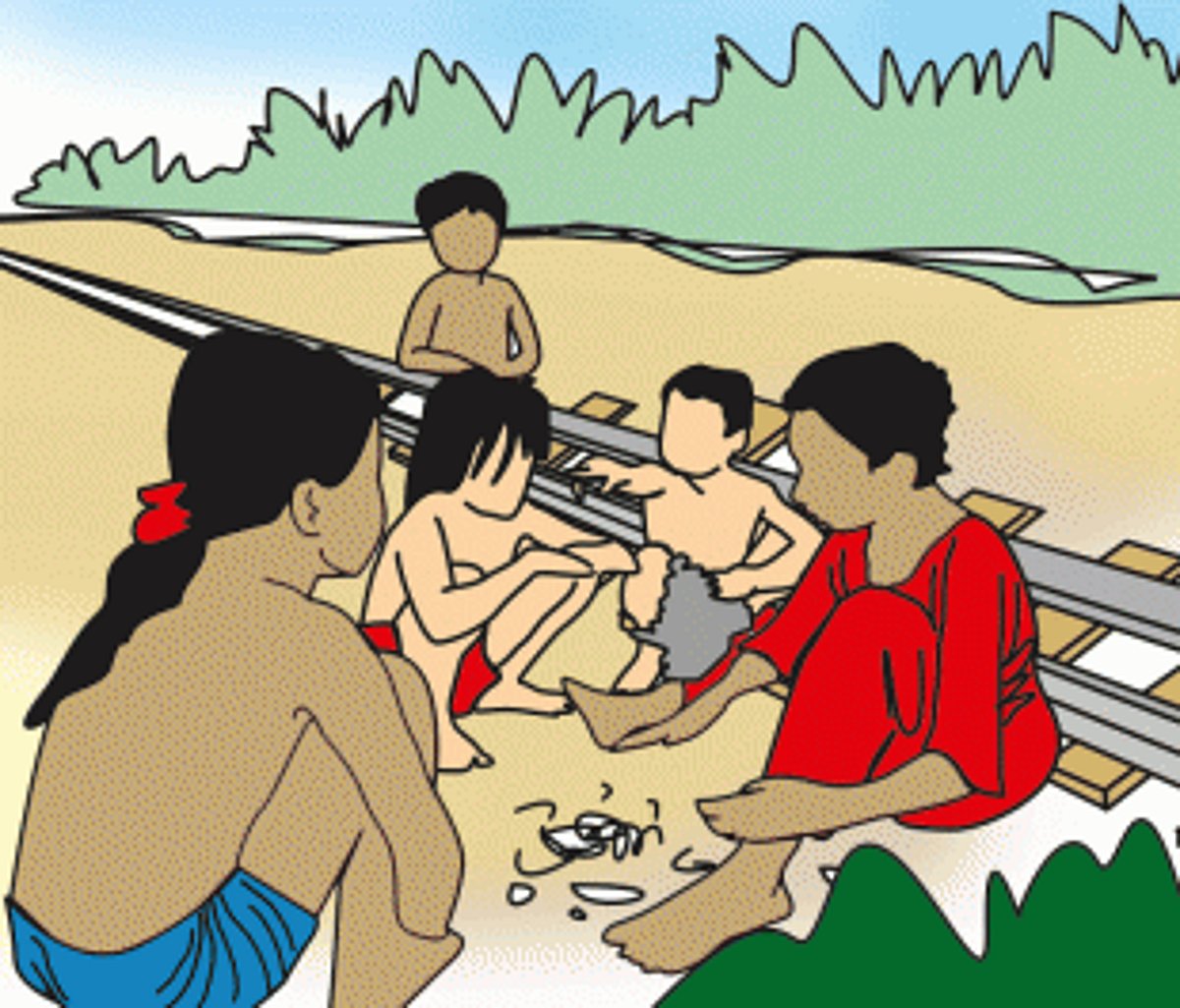
Most of the slum kids near Margao railway station haven’t seen the Oscar winning movie Slumdog Millionaire but if any parallel can be drawn between the two, it would be that of the elder brother of the protagonist, Salim Malik and the street smart boys who like to leave their collars popped up. If ‘Baab’ is used for respect while greeting a friend in Konkani, ‘Bhai’ is a word more commonly used in their circles.
Fantasies after all, can be a powerful tool for those to think about their future and for these kids, life’s a struggle. It has not been an easy childhood. The older they grow, the harder life will be. Many of them are orphans, some have left orphanages, some still have nightmares of their time spent at Apna Ghar and some of those who have parents are at that adolescent stage where listening to them is certainly not high on their agenda. More than family, the bonds of friendship are valued much higher among the kids and moreover, the adage – “You’re known by the company you keep” holds true for them. It is their company which remains their identity.
If one had to empathize with them, one just has to take a look at their residence – the area around the old railway station, the slum areas at the Aquem-end of the Konkan Railway station and the area below the abandoned sky bus. Furthermore, the lack of proper lighting gives them the leeway to what regular folk would call anti-social activities.
Anzil Fernandes, a writer and professor who has profiled some of these children felt it was society’s general attitude to them that has forced them into such a wayward lifestyle. “Why? Because when they expected family, love and support they got none. Instead we abused, the police saw them as criminals; not as a kids without guidance. We failed to be sympathetic towards them. They seem to know what they are doing is wrong but they too want to enjoy like the rest of the kids,” said Fernandes.
The police have already asked a few of the children to report to them after catching those committing petty crimes or in possession of ganja. These mistakes cost them dearly as they feel discouraged from attending school and the activities of the NGOS as they do not want to embarrass their friends.
Furthermore, there are several cases where the girl children in the neighborhood have been pushed into prostitution and this doesn’t bode well with the young society.
There are NGOS who work with these children, notably the Margao-based social organisation Jan Ugahi and EL Shaddai Child Rescue. The NGOs through their respective outreach activities have monitored the children, provided food, clothing, education and counseling and tried to help them find a better future. However, while the NGOs have achieved a tremendous amount of success in uplifting the life of these children, there are those who do not feel education is the way out and aspire to be the next gang leader with all the glory that comes with it in their eyes.
It is to be noted that the problems faced by these kids are not isolated to their area but are endemic to slum areas in general. For instance, Margao citizen Divya Pinto, alumni of St Xavier’s Mapusa, works with Teach For India in Mumbai and teaches children from the slums of Dharavi, Asia’s biggest slum. While she has an enthusiastic bunch of students, Divya acknowledged that some of these children have a far different outlook to education and are more easily attracted to the fast life. One of the children from the Margao slum when asked what he thought about education and how education was the answer, the kid speaking in his native language scoffed at the suggestions stating he was not naïve and felt he could get a job as a salesperson in a store and there were more practical ways of earning a quick buck which is a necessity and a way of earning respect to keep them content.
Speaking of Bombay slums, a video trending on social media is that of international comedian Russell Brand who visited the slums when his phone was nicked only to be returned by another kid. “I went to try and give him money and stuff, he looked at me like it meant nothing – money. That kid was living by a higher code,” said Brand while praising the child’s benevolence despite his living condition. The children of the Margao slums live by their own code and that code is survival of the fittest.