FRAZER ANDRADE

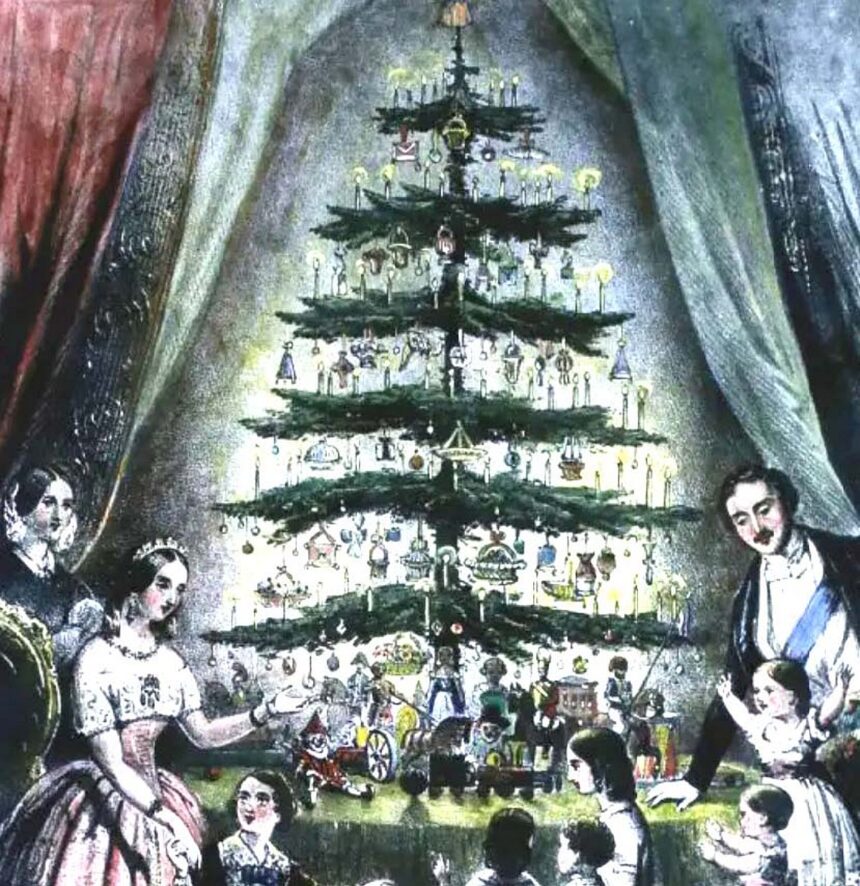
MARGAO: The tradition of using greenery to commemorate winter holidays predates the Christmas tree itself. Records from 15th and 16th century rural English churches highlight the use of holly and ivy during the winter season, giving rise to the iconic British carol The Holly and the Ivy. During this time, private homes and public spaces were also decorated with greenery. Historian Judith Flanders, in her book Christmas: A Biography, suggests that an early version of the Christmas tree could have been a holly-and-ivy-wrapped pole, a winter counterpart to the Maypole.
Several myths surround the origins of the Christmas tree. One tale credits Martin Luther with introducing the idea of a decorated tree, perceiving pine trees as symbols of divine goodness. Another legend attributes the tradition to St Boniface in the 8th century. He is said to have felled an oak tree to stop a pagan sacrifice, and a fir tree miraculously grew in its place, symbolising Christ’s eternal truth. Some stories suggest St Boniface displayed this fir tree upside down, inspiring a custom seen in medieval times to represent the Holy Trinity.
While the myths are fascinating, the modern Christmas tree has its roots in medieval Germany. In 1419, a Freiburg guild decorated a tree with apples, tinsel, and gingerbread. Similarly, the Paradise Plays celebrating Adam and Eve on Christmas Eve featured evergreen firs adorned with apples to represent the tree of knowledge. By 1605, in Strasbourg, Alsace (modern-day France), the first indoor Christmas tree was documented, decorated with roses, apples, wafers, and other sweets.
The demand for trees soared by the 15th century, prompting regulations in Strasbourg and Alsace to limit each household to a single tree. This marked the burgeoning of the Christmas tree market.
The Christmas tree tradition crossed the Atlantic in the late 18th century, appearing in private residences and establishments across North America. By 1786, a pine tree was recorded in North Carolina, and in 1805, a Moravian missionary school asked students to retrieve small trees for Christmas. German immigrants further popularised the tradition, decorating their trees with moss, pecans, cotton, and homemade garlands.
Public Christmas trees became a staple in the US during the late 19th century. The first “National Christmas Tree,” nearly 60 feet tall and illuminated by 2,500 electric bulbs, was installed at the White House as a marketing effort for the emerging electrical industry. In 1931, a 20-foot Christmas tree was displayed at Rockefeller Centre during its construction, becoming an enduring emblem of hope during the Great Depression.
In Goa, boys traditionally cut pine branches from village trees, taking them home to adorn with handmade paper decorations. This custom thrived into the early 20th century but began to fade with the advent of artificial plastic Christmas trees.