Team Herald
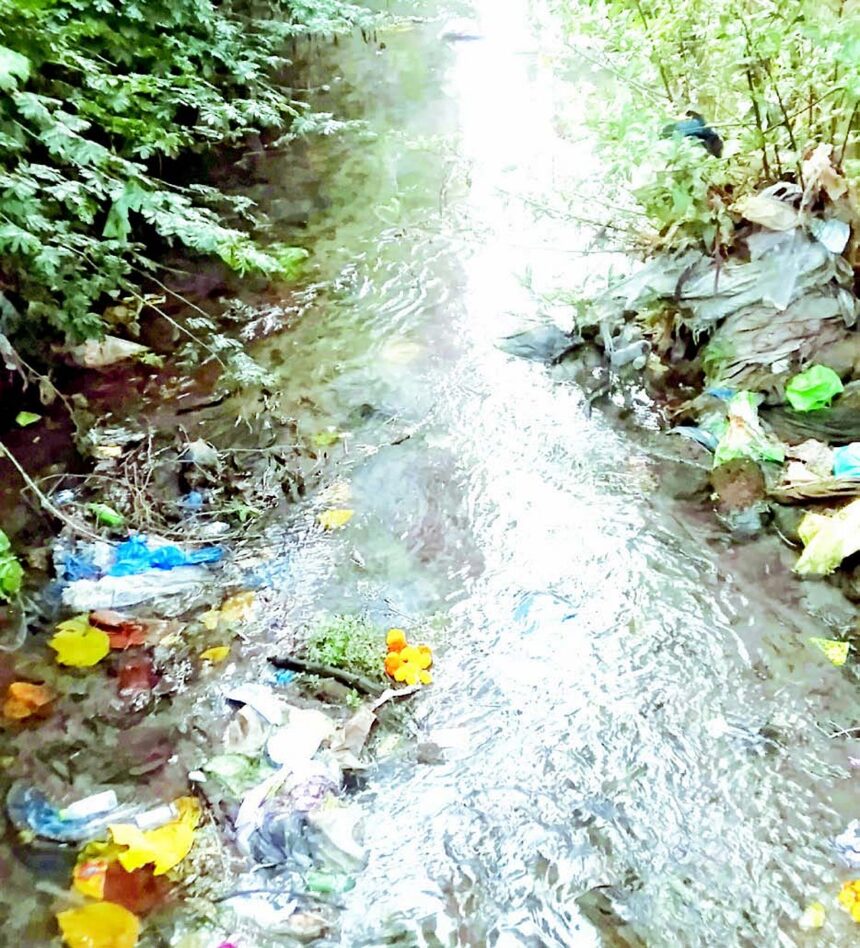
PONDA: Once a vital water source for agriculture and drinking water, the 12-kilometre-long Ponda nullah, which passes through the town and four villages, has become a dumping ground for garbage, industrial waste, hotel refuse and sewage over the past two decades.

The degradation of the nullah has had severe consequences, particularly for farmers downstream, who once relied on its water for irrigation. The increasing urbanisation in the area has exacerbated the problem, leaving farmers fearful of using the polluted water. Many have abandoned their paddy fields, now lying fallow, due to the health risks associated with exposure to contaminated water.
Farmer Durgadas Naik, who depends on the nullah for irrigation said, “It is risky for health and often causes rashes on the body.”
Local authorities, including panchayats and the Ponda Municipal Council (PMC), have attempted to curb the pollution by imposing fines on offenders, however, these measures have failed to deter the violators. The growing number of residential and commercial establishments along the nullah has contributed to the worsening situation, with waste from these areas flowing into the water body unchecked.
The Curti-Khandepar Panchayat recently lodged a complaint with the Goa State Pollution Control Board regarding the release of chemical waste into the nullah by industrial units in Bethora. In the past, residents have reported fish deaths linked to chemical pollution in the water.
Farmers downstream in Bandora and Kavlem, once productive hubs for paddy cultivation, have largely abandoned farming due to the contaminated water. The situation has also impacted local residents, with the stench of pollution near the Ponda market and alongside roads becoming unbearable.
Medical waste, including syringes and other hazardous items, has been found in the nullah, leading to injuries among farmers. Additionally, some hoteliers and vendors have been identified as contributors, releasing waste directly into the water.
Residents and farmers have urged the government to take immediate action to clean the nullah and enforce stricter regulations against polluters. They have specifically called for measures to stop the release of waste by houses, commercial establishments, hotels, and industries.
“The nullah was once our lifeline,” said a local. “We used to depend on it for drinking, cleaning, and irrigation. Now, it’s a health hazard.”
Smaller streams that flow into the Ponda nullah are also polluted, carrying domestic waste from Ponda city and surrounding areas. Despite door-to-door garbage collection by the PMC, many residents continue to dump waste directly into the nullah.
The PMC has appealed to city dwellers and commercial establishments to connect to the city’s 15-MLD sewage treatment plant (STP), which has yet to operate at full capacity. However, compliance has been slow, with many ignoring warnings and fines.
While some residents live in posh homes and flats, the nullah flowing near their areas remains heavily polluted, emitting a foul stench. The lack of adequate sewage connections and improper waste management continue to aggravate the crisis.
The locals are now looking to the authorities for sustainable solutions to restore the nullah to its former glory and ensure the health and livelihoods of the affected communities.