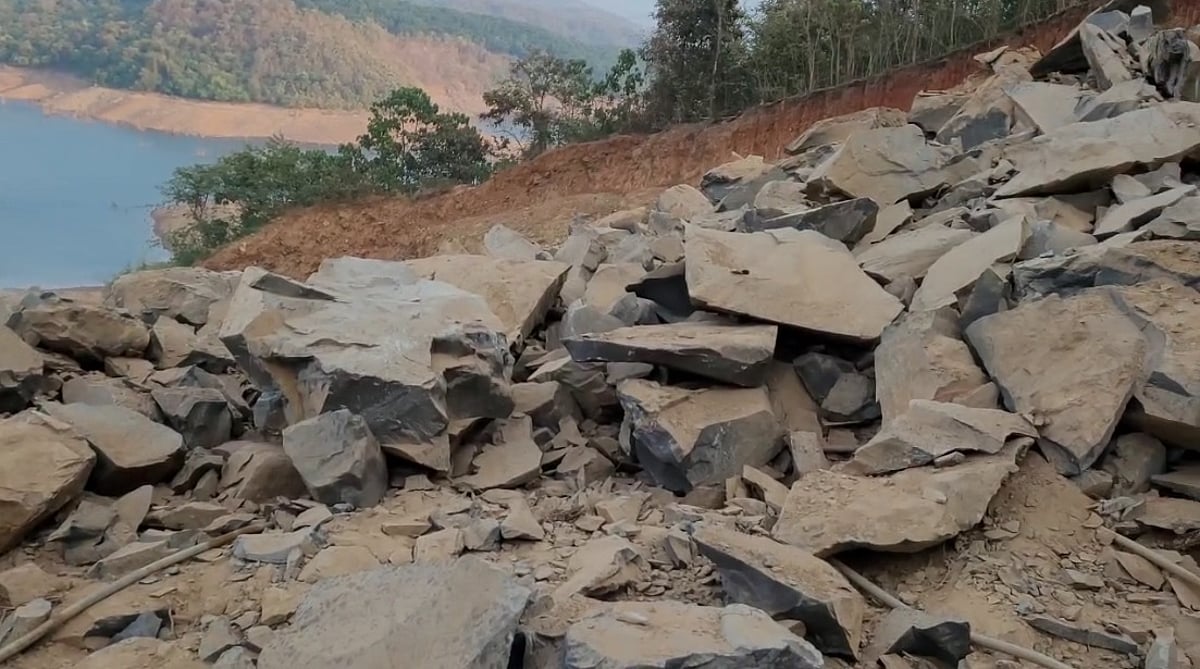
Shocked by the rapid pace of illegal constructions across the state, the high court of Bombay at Goa unleashed its wrath on the state government and issued a slew of directions to the authorities to ensure that the sunshine state retains the lush and verdant landscapes that it is so popular for. Among the directions from the high court is the call to establish flying squads to address complaints of illegal constructions, particularly over the weekends when most government offices are shut and violators get a free hand to build without permission left, right and centre.
Justice M S Karnik and Justice Nivedita Mehta, who gave out the directions after hearing a suo motu public interest litigation pertaining to illegal constructions and encroachments, were clearly distraught when they said, “Open spaces are encroached upon. Paddy fields are being converted without any permission…. Roads and road-widening areas are encroached upon without any authority of law. Illegal constructions are also put up in no-development zones. The competent authorities either do not take action against such illegal activities or avoid taking such actions.”

The high court’s observations are sad but true. It rightly said that rampant illegal construction without any authority of law has caused the wholesale change of Goa’s landscape, unfortunately, for the worse. It in fact comes as no surprise any longer to see buildings come up virtually overnight, considering the pace at which land in Goa is being traded for crores and crores of rupees just so that the who’s-who can lay their hands on a piece of paradise and develop it with scant concern for the undue burden plush projects – be they residential or commercial – put on Goa’s infantile infrastructure and natural resources.
Among the directions from the high court was the procurement of a special number for every flying squad to enable citizens to register their complaints via WhatsApp pertaining to illegal constructions. It called for stoppage of the constructions in question without an hour of receiving such complaints that must be backed by visual evidence too.
In probably what is the most far-reaching section of its directions, the high court directed all health officers to not issue any permissions under provisions of the Goa Public Health Act for the supply of electricity and water connections to any commercial or residential structures unless the requisite permissions for construction have been obtained along with technical clearance
certificates.
The high court has essentially put the entire administration to work – right from the collectors to the municipalities and panchayats – in the crackdown on illegal constructions, particularly those that come up along areas that have been set aside specifically for road widening, irrespective of whether they are meant for commercial or residential use. It has even created seven categories of illegal buildings, including separate categories for those mushrooming in paddy fields and on government and comunidade property.
Measures such as these must definitely be lauded as they are so desperately needed if the state is to be shielded – however little – from the onslaught of concretisation. However, it remains to be seen if the authorities that have been tasked to ensure justice is served in a timely fashion step up to the job and do it without fear or favour.
It is obvious that there will be immense pressure and several attempts by violators – especially those flush with money – to persuade the flying squads to look the other way while they continue to build with gay abandon. However, it is up to the authorities concerned to stand up, fight the good fight and bring the violators to task according to the laws in force. It will be hard, but it must be done if Goa has any chance of being saved at all. Else, the high court’s genuine concern and action towards preserving the already degrading landscape will have come to a naught.