Karsten Miranda
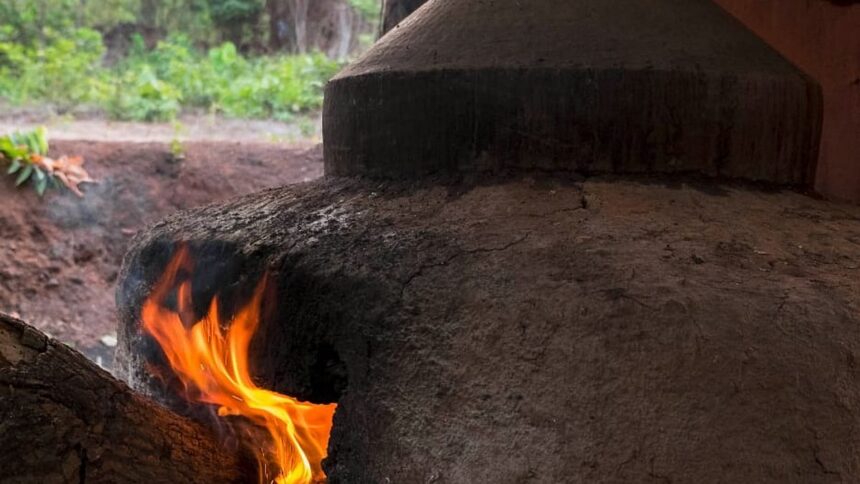
In a breakthrough for Goa’s heritage drink, the Coco nut Feni Collective (CFC) has been formed to secure a Geographical Indication (GI) for coconut feni and position the spirit for export oppor tunities under the India–UK trade agreement. Committee members describe it as the first-time toddy tappers, distillers and bottlers have come together in one body with a shared vision to take coconut feni to the next level. The CFC brings together distillers, bottlers and toddy tappers under a single, elected committee. Leading it are two established heavyweights of Goa’s feni trade — distiller-bot tler Hansel Vaz as President and bottler Solomon Diniz as Secretary — both with years of experience in promoting and protecting the craft. Alongside them is Vice-President Shwetha Gaonkar, a graduate of an agriculture college and considered to be Goa’s first female toddy tapper, who has already built an impres sive reputation in the State for her work in the field. Her presence on the committee, members say, sig nals not only inclusivity but also the growing recognition of younger, ed ucated voices in shaping the future of the industry.

Treasurer Tyson Da Costa and executive members Vailano Pereira, Tukaram Haldankar, Christine Oliveira and Lourenco Oliveira complete the leadership team. The com mittee stresses that this is a collective project: “This is not about one person — it is about us as a team,” a senior mem ber told reporters, underlining the focus on shared govern ance and fair returns for every link in the chain. The story of why the CFC matters is also a story of revival. Committee members recall how the COVID-19 lockdowns grounded ageing toddy tappers and choked artisanal sup ply lines, threatening to extinguish coconut feni’s presence in village festivities and local markets. “For 16 years we tried to get it … lots of behind-the-scenes work. And finally, we got it,” said one committee member, a line the Collec tive uses to capture years of petitions, meetings and stalled proposals that precede the present push. Another member added: “I’m finalising the draft GI document… so there is a lot of work going on,” a remark that signals the applica tion is close to submission and that momentum has shift ed from talk to paperwork. Those involved say the GI bid reflects sustained, patient effort rather than a last-minute scramble. Cashew feni’s GI recognition in 2009 set Goa on the glob al map — the first time an Indian spirit had secured such protection — coconut feni was conspicuously left behind. Producers say the irony still stings: the drink regarded as Goa’s original spirit was sidelined while cashew feni be came a brand name, exported, and even featured in high end cocktail menus abroad. Coconut feni, by contrast, re mained confined to villages. Members of the CFC say the new collective finally gives coconut feni the same platform cashew feni enjoyed, with the added advantage of year round production and a milder profile that lends itself to innovation. A key practical change, they say, is the emergence of organised toddy production on farms that can reli ably supply distillers. Farms such as Nanu, Deejay and Timblo are cited by the Collective as examples of sites where toddy is now collected at scale with the docu mentation required for excise compliance — a depar ture from the cottage, drop-in-supply model that had hobbled wider commercialisation. “We now have a steady supply that allows distillers to plan, bottle and meet standards,” Gaonkar said, pointing to horticultur al advances such as dwarf coconut varieties that have reduced dependence on specialist climbers and helped scale operations. The revival has also had a symbolic effect. For toddy tapping families who once saw their craft dismissed as a fading occupation, the CFC offers recognition and respect. The presence of Gaonkar as vice-president has been de scribed by members as a landmark moment — a sign that the profession is opening to women and welcoming edu cated youth who see value in heritage-linked livelihoods. “No one thought toddy could be produced at this scale,” she observed, noting that innovations in horticulture have combined with renewed pride in the profession to create a base for growth. The Collective also emphasises institutional coopera tion: for the first time, the CFC has opened a dialogue with the Cashew Feni Distillers and Bottlers Association and has welcomed the All Goa Toddy Tappers Association (AGTTA) into the fold as ex-officio members, a development com mittee members describe as a breakthrough in unity. With support from state agencies — including the Department of Science and Technology, which members say has helped frame technical aspects of the GI dossier — the Collective believes the legal and regulatory groundwork is now in place to make a credible claim. Voices across the committee emphasise different priorities, which the Collective says is intentional. Vaz casts the effort as heritage preservation with an eye on livelihoods and market access; Diniz frames the GI as legal protection and market credibility; Gaonkar stress es production innovation and training for new recruits into a physically demanding craft. Treasurer Tyson Da Costa underlined governance and financial transparen cy as non-negotiables: “We must ensure honest books and equitable payments to toddy tappers,” he said. Ex ecutive member Vailano Pereira spoke of safeguarding tapping communities, while Haldankar and the Olivei ras — Christine and Lourenco — urged that any scaling up must preserve traditional distillation techniques and quality control. Those combined voices, the Collective argues, will raise the bar for coconut feni while keeping village practices intact. Beyond GI, the Collective’s ambitions are practical: standardised hygiene protocols, training centres for tod dy tappers, documented excise-compliant production, product diversification into coconut jaggery and vinegar, and international market development that makes small producers export-ready. Here the committee points to the India–UK trade pact as a contemporaneous opening that could help premium, authentic Goan spirits reach recep tive markets overseas. “If we protect the name and ensure quality, we can leverage trade openings for meaningful returns to our communities,” Diniz said. Members believe the time is right to reclaim pride in co conut feni. The steady flow of toddy from farms, the will ingness of bottlers to add coconut feni to their portfolios and growing curiosity among younger Goans, all point to a revival that is both commercial and cultural. If cashew feni proved what Goa’s heritage spirits can achieve with organ isation and vision, coconut feni is now poised to write its own chapter — not as a neglected cousin, but as a spirit with global ambitions. “The CFC is not just saving a drink,” said Vaz. “It is preserving the soul of our State and building a legacy for future generations.”