Colombo woke up under its dullest and greyest sky of the week on Sunday, an atmosphere that seemed to foreshadow the tension and intrigue surrounding the much-anticipated India–Pakistan T20 World Cup encounter later in the evening. While gloomy weather briefly raised concerns about play, it ultimately gave way to a dominant on-field performance by India against their arch-rivals.
The build-up to cricket’s most emotionally charged fixture was clouded by political and logistical controversy. Pakistan had initially signalled its intention to boycott the match in solidarity with Bangladesh, who were forced to withdraw from the tournament after being denied permission to play their fixtures outside India. However, Pakistan eventually relented, allowing the marquee clash to go ahead.

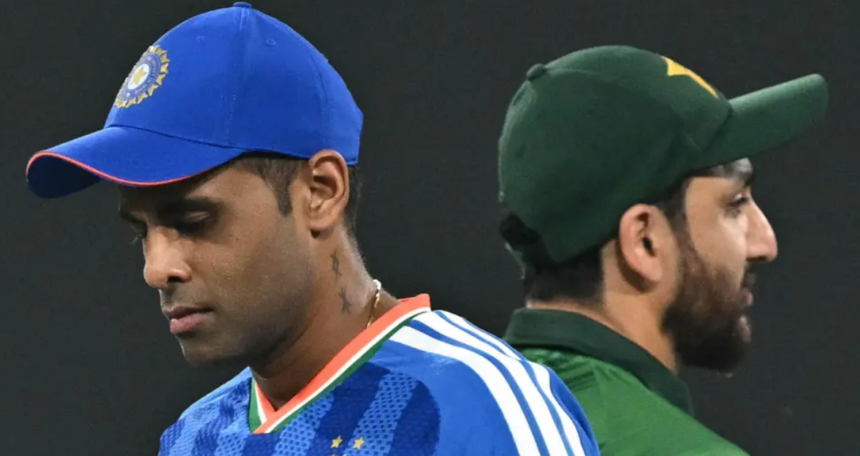
More attention, perhaps, centred on the theatre and symbolism surrounding the contest than on the cricket itself. All eyes were on the pre-match formalities, particularly the toss, amid speculation over whether recent tensions between the two sides would spill into public view. That anticipation was answered when India’s stand-in captain Suryakumar Yadav and Pakistan skipper Salman Ali Agha exchanged no pleasantries, opting instead for a notably frosty silence.
The awkwardness lingered long enough for television cameras to capture every detail, even down to a minor wardrobe mishap involving the Pakistan captain’s untidy collar, quickly adjusted by a staff member. The moment subtly undercut the strong, defiant image both teams’ leaderships had sought to project in the face of heightened scrutiny.
In contrast, former greats from both nations struck a far more conciliatory tone. On the ICC broadcast, Rohit Sharma and Wasim Akram were seen sharing a warm greeting as they jointly carried the tournament trophy onto the field. Elsewhere, veteran cricketers Harbhajan Singh, Misbah-ul-Haq and Ramiz Raja were observed chatting cordially in the media area.
While India’s emphatic victory settled the contest on the scoreboard, Sunday’s match also highlighted how India–Pakistan encounters continue to be shaped as much by symbolism, history and diplomacy as by runs, wickets and results.
(This story is published from a syndicated feed)