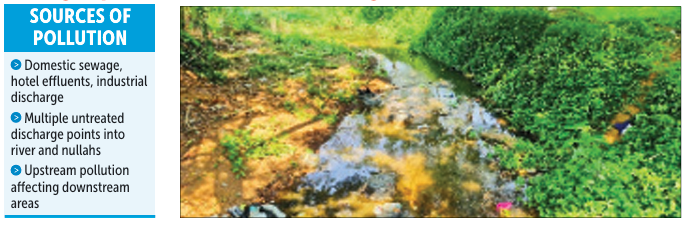
Concern over worsening pollution in the River Sal is intensifying, with multiple stakeholders flagging untreated sew age inflow as the primary cause and warning that on going clean-up efforts will fail without addressing the source of contamination. The issue has now drawn formal attention from the Cavelossim vil lage panchayat and the Benaulim Congress block, with representations sub mitted to the Goa State Pollution Control Board (GSPCB) seeking immedi ate intervention. Cavelossim Sarpanch Dixon Vaz, who submitted a complaint to the Board, pointed to the discharge of raw sewage into nullahs flowing into the river, de scribing the situation as alarming. He highlighted visible signs of deteriora tion, including foul odour, discolouration of water and a decline in aquatic life, and called for strict monitoring, improved waste manage ment and action against violations. Speaking to the media after submitting the com plaint, Vaz said the issue cannot be addressed in iso lation, stressing that pollu tion entering the river from upstream areas continues to impact downstream vil lages like Cavelossim. He noted that unless sewage inflow from multiple sourc es is tackled through coor dinated action and engage ment with stakeholders, local efforts alone would not bring lasting relief. The Benaulim Congress block, led by its president Keith Gracias, has also sub mitted a detailed memo randum to the Pollution Control Board flagging se vere pollution in the River Sal.
The representation points to multiple dis charge points releasing un treated domestic sewage, hotel effluents and indus trial waste into the river, contributing to rising con tamination levels. Citing water quality con cerns, the memorandum states that recent observa tions indicate elevated To tal Dissolved Solids (TDS) and disturbed pH levels, along with the presence of fecal coliform at unsafe levels, raising serious pub lic health concerns, par ticularly for communities dependent on the river and its aquatic life. The block has called for comprehensive inspection of discharge points, strict enforcement against viola tors, proper functioning of sewage treatment plants and sustained monitoring, warning that the continued failure to implement pollu tion control measures has led to the steady degrada tion of the river system. The renewed push comes even as de-weeding opera tions have been carried out in parts of Benaulim to remove invasive water hyacinth from water bod ies connected to the River Sal. The exercise, undertak en on the initiative of Be naulim MLA Venzy Viegas, has helped clear portions of the Tolleaband water body. However, residents and local stakeholders have cautioned that such meas ures offer only temporary relief. They have pointed to untreated sewage flowing from Margao into the river system as the root cause, warning that the rapid re growth of water hyacinth will continue unless in flows are effectively con trolled.

Chairman of the Be naulim Biodiversity Man agement Committee, Charles D’Silva, appreci ated the de-weeding ini tiative but stressed that it would have limited impact without curbing sewage discharge. He warned that repeated clean-up efforts would prove futile if pol lution at source is not ad dressed. Benaulim-based social activist Santan Pereira also highlighted the ecological and cultural significance of the Tolleaband water body, noting that it supports freshwater fish and is used for the immersion of Ga nesh idols, reinforcing calls for sustained restoration measures. With concerns now being raised at multiple levels, fo cus is expected to shift to the response of authorities and whether concrete steps are taken to curb sewage inflow and restore the river system.