Marcos Gonsalves
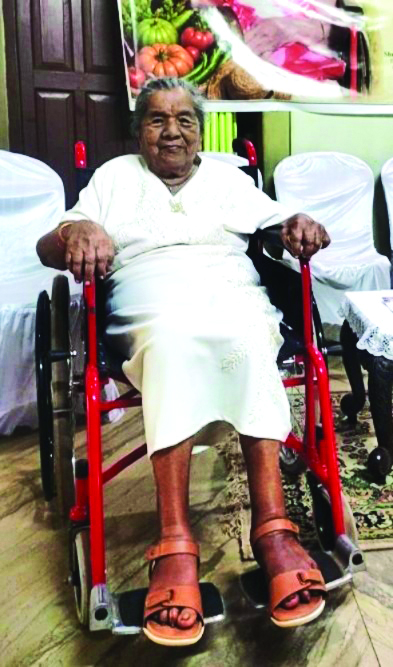
In the quiet riverside village of Assolna, where paddy fields stretch like green quilts and time seems to slow with the rhythm of nature, Maria Caetana Diniz has spent a lifetime rooted in the soil. Born on March 1, 1926, she has lived through a century of change, yet her connection to the land remains as strong as ever.

At 100, Maria represents a fading generation of traditional farmers whose lives were shaped by hard work, resilience, and an intimate understanding of nature. Her story is not merely one of longevity, but of quiet perseverance and an enduring commitment to agriculture in its most authentic form.
Growing up in a modest household, Maria was introduced to farming at a very young age. In those days, agriculture was not just a means of survival but the very foundation of life in the village. Children learned by observing and participating, and Maria was no exception.
“We did not have much, but we had our fields,” she recalls. “The land fed us, and we respected it like our own family.”
Without formal education in farming, she learned through experience—planting, harvesting, and understanding the cycles of the seasons. The fields became her classroom, and over time, she developed an instinctive knowledge of the soil, weather, and crops.
Life in those early years was far from easy. Farming depended entirely on manual labour, and Maria remembers long days spent working under the harsh sun with her family. There were no machines or modern irrigation systems—only bullocks, simple tools, and determination.
“We would start before sunrise and finish only when the light faded,” she says. “It was hard work, but we never complained. That was life.”
Despite the physical demands, there was a deep sense of unity within the community. Farming was a shared responsibility, and neighbours would come together during crucial seasons.
“In those days, no one worked alone. Everyone helped each other,” she says, reflecting on a time when cooperation was essential for survival.
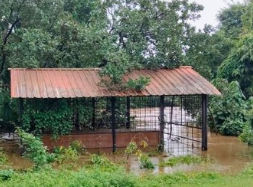
Among her most cherished memories is that of ModdorachemTollem, a traditional irrigation system that once sustained the village’s agriculture. Rainwater was collected and stored in a large lake, which provided a reliable source of water during dry periods.
“We depended on the Tollem for our fields,” Maria explains. “The rains would fill the lake, and we used that water for irrigation.” She pauses, her eyes lighting up with memory. “The lake water was so vast, it stretched till the horizon.”
For Maria, this system was not just about irrigation—it was a reflection of how people lived in harmony with nature, using available resources wisely and sustainably.
Over the years, Maria has witnessed profound changes in agriculture and rural life. Traditional methods have gradually been replaced by modern techniques, and many young people have moved away from farming in search of different opportunities.
“Today everything is faster, but something is missing,” she observes. “People have forgotten the value of the soil.”
Yet, despite these changes, Maria has remained deeply connected to farming. For her, it is not just a livelihood but a way of life—one that has defined her identity for a hundred years.
Her journey has not been without challenges. She has seen years of poor harvests, changed weather patterns, and shifted economic conditions that have affected farmers across Goa. But through it all, her determination never wavered.
“If the crop failed one year, we worked harder the next,” she says. “Giving up was never an option.”
Even in her later years, Maria’s daily routine reflects a life of discipline and simplicity. She rises early, eats modestly, and remains active. Those who know her often speak of her sharp memory and calm nature.
When asked about the secret to her long life, she smiles and says, “Simple food, hard work, and no tension—that is all.”
Maria’s life also represents a wealth of traditional knowledge—practices that are increasingly being recognised for their importance in sustainable agriculture. Long before organic farming became a global movement, farmers like her relied on natural methods.
“We never used chemicals before,” she notes. “The land gave us what we needed when we treated it well.”
In today’s context, her experiences offer valuable lessons about sustainability, balance, and respect for nature.
For the people of Assolna, Maria is more than just a centenarian. She is a symbol of strength, continuity, and cultural heritage. Her life connects the past with the present, reminding the community of its agricultural roots.
“Young people should not forget farming,” she says with quiet conviction. “It is our roots.”
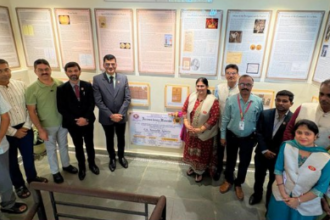
Her recent felicitation by the local Biodiversity Management Committee was not just a recognition of her age, but a tribute to her lifelong contribution to agriculture. It honoured a generation that worked tirelessly, often without recognition, yet played a crucial role in sustaining rural life.
“I only did my duty,” Maria says humbly. “I never thought I would be recognised for it.”
As Maria Caetana Diniz completes a century of life, her story continues to inspire. It speaks of resilience, humility, and the dignity of labour. More importantly, it serves as a reminder of the importance of preserving traditional knowledge in a rapidly changing world.
“Life is simple if you live honestly and work hard,” she reflects. “That is what I have learned in all these years.”
As the sun sets over the fields of Assolna and the rustle of crops echoes through the evening air, Maria’s life stands as a quiet testament to a bygone era—an era rooted in the soil, sustained by hard work, and guided by an unbreakable bond with nature.