SIDDHARTH DESAI
Tourism today has evolved far beyond travel and leisure. It has emerged as a powerful engine of mac roeconomic growth, a massive generator of employment, a catalyst for infrastructure de velopment, and a potent vehi cle for cultural diplomacy. Over the past decade, India’s tour ism landscape has undergone a profound structural shift. Enhanced connectivity, world class infrastructure, digital dis ruption, and a deliberate move toward destination-focused sustainability have combined to expand the country’s global tourism footprint. As the nation marches to ward the vision of Viksit Bharat by 2047, the tourism sector is strategically positioned to an chor this progression. Indus try apex bodies forecast that tourism could contribute up to $3 trillion to the GDP by 2047. Realising this potential means recognising that tourism is no longer a tertiary luxury, but an indispensable pillar of India’s global economic footprint. The defining feature of this transformational era is the sheer ease of access.

For inter national travellers, the liberali sation of the e-visa regime has broken down long-standing bureaucratic barriers. India stands as one of the few global destinations offering stream lined e-visa facilities across multiple categories—including tourist, business, conference, and medical visas—to more than 170 countries. Concurrently, a massive surge in capital expenditure has revitalised multi-modal do mestic connectivity: •Roadways: A network of modern expressways and high ways has slashed travel times between major cities and cul tural hubs. •Railways: The introduction of the premium Vande Bharat network has modernised rail travel, making it both aspira tional and highly efficient. •Aviation: The rapid prolif eration of both greenfield and brownfield airports has un locked previously inaccessible regions. Direct policy tools have fur ther incentivised state par ticipation.
Under the central government’s SASCI (Special Assistance to States for Capital Investment) scheme, states are granted 50-year interest-free loans. This mechanism allows state governments to fund ambitious, capital-intensive tourism infrastructure pro jects without immediate fiscal strain, aligning national objec tives with regional execution. The confluence of infrastruc tural expansion and a robust domestic economy has trig gered an unprecedented travel boom within India. This monumental growth in domestic mobility acted as a critical economic cushion dur ing global upheavals. Following the pandemic, steep interna tional airfares and severe visa backlogs in Western nations prompted Indians to explore their own backyard, fundamen tally altering domestic hospi tality dynamics. Conversely, the international inbound market has charted a more complex trajectory. While actual Foreign Tourist Arriv als (FTAs) dropped to a mere 1.52 million during the peak of the pandemic, international arrivals have witnessed a sol id resurgence. When adopting global UNWTO metrics—which comprehensively account for both traditional foreign tourists and the vast Indian diaspora— international arrivals scaled to 20.57 million, surpassing the pre-pandemic benchmark of 17.91 million.
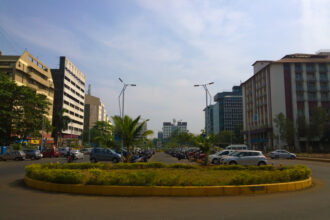
This dramatic surge in do mestic travel underscores a fundamental shift in the Indian consumer mindset, where trav el is now viewed as an essential lifestyle choice. Consequently, this domestic resilience has laid a robust financial foun dation, allowing progressive states to aggressively pivot to ward high-yielding, premium international and niche hospi tality segments. Nowhere is this balance be tween domestic volume and high-value international influx more evident than in Goa. As a micro-state with a macro im pact on India’s global tourism identity, Goa serves as a crucial barometer for the entire sector. Defying global geopolitical uncertainties and localised social media headwinds, Goa smashed historical milestones by welcoming over 1.08 crore visitors. This momentum has held strong, with the state re cording 4.63 million tourist arrivals between January and May 2026 alone. The operationalisation of the Manohar International Airport (Mopa) alongside the existing Dabolim facility has funda mentally reshaped access.
In 2025, international scheduled and charter flights handled over 2.35 lakh foreign visitors across both airports, while cruise tourism brought an ad ditional 51,510 high-spending travellers to Goan shores. However, sheer numbers bring the looming threat of “over-tourism,” which can strain local infrastructure and harm fragile coastal ecosys tems. Acknowledging this, Goa has pivotally shifted its strate gy toward Regenerative Tour ism. Through its “Goa Beyond Beaches” narrative, the state is actively directing investments into the hinterlands, wellness avenues, and eco-tourism. Key regional initiatives—such as the Goa Ayurveda and Well ness Policy 2026, the establish ment of women-led eco-villages in Cotigao, and financial grants empowering rural women to open homestays—demonstrate how tourism can be decentral ised to directly benefit local communities. As India scales its tour ism ambitions, transitioning from Swadesh Darshan 1.0 (which focused on broad, cir cuit-based infrastructure) to Swadesh Darshan 2.0, the core focus has firmly locked onto destination-centric sustainability. To attract high-end interna tional travellers who contrib ute vital foreign exchange earn ings, two critical areas demand sustained focus: 1.Strategic promotion: Transitioning from passive ad vertising to aggressive, target ed global campaigns highlight ing India as a safe, cohesive, and premium multi-experien tial destination. 2.Niche segmentation: Max imising underutilised segments like MICE (Meetings, Incen tives, Conferences, and Exhi bitions) tourism—buoyed by world-class venues like Bharat Mandapam and Yashobhoomi— alongside medical, spiritual, and adventure tourism. The path from Vikas to Vira sat (Development to Heritage) ensures that India leverages its unparalleled cultural depth. By harmonising robust central policies with innovative, com munity-led state models such as Goa’s regenerative frame work, India is firmly on track to establish a resilient, inclusive, and world-leading tourism ecosystem.
Furthermore, as global travel patterns shift toward conscious tourism, India’s readiness to deliver deeply immersive, com munity-backed journeys be comes its primary competitive edge. By continually refining the synergy between public capital, private innovation, and grassroots stakeholders, the nation ensures that its tourism narrative is not just economically lucrative, but socially transformative and permanently sustainable. (The author is an Advocate)