JENIFER FERNANDES

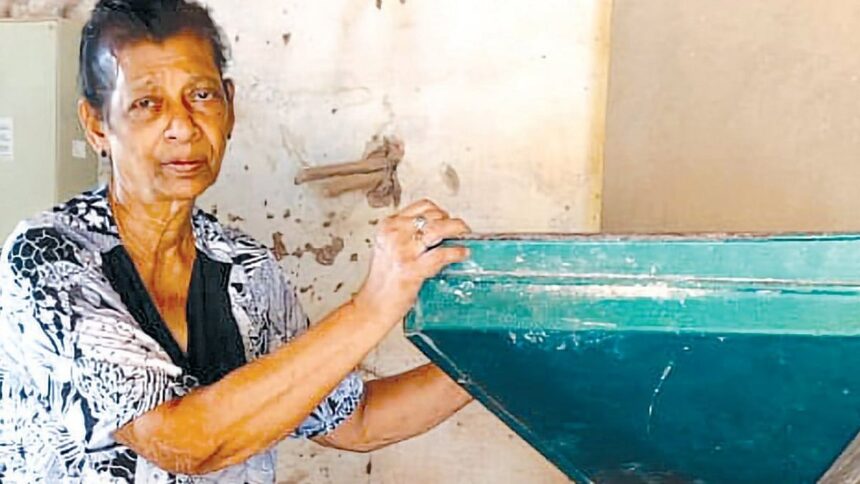
CARONA: At 75, Angela Lourdes Vaz
spends each day upholding a family
legacy spanning over a century—operating
a traditional flour and husking
mill in her village.
The mill’s history dates back over
100 years when it was first run by
her in-laws. Later, her husband took
over, and together, they sustained the
business for over three decades. “I can
proudly say that for over a century, we
have kept this Goan tradition alive despite
all odds,” she said.
In the past, the services of the mill
were in high demand, as local farmers
brought their freshly harvested paddy
for de-husking and rice and wheat,
for grinding. Homemade food was the
norm, and people relied on traditional
flour mills. “That’s why we remained
fit and healthy,” Vaz reflected.
However, with modern conveniences,
consumer habits have shifted.
“Everything is available readymade
now—wheat flour, rice, and other
packaged items.
People no
longer want to
take the trouble
of grinding
their own
grains, and
farming itself
is
o n
the decline,” she lamented.
Excessive rainfall this year further
impacted the trade, damaging crops
and reducing the number of customers
who would normally bring their
paddy for processing.
Angela recalls the early days when
the mill ran on a rare diesel-powered
grinder. “It had to be lit, and smoke
would rise into the air—people knew
the mill was running just by seeing
the smoke,” she said. Today, electric
motors have replaced the old system,
making the grinding process faster.
However, dependency on electricity
has also made the work unpredictable.
“Back then, we didn’t rely on power,
but now, if there’s no electricity,
there’s no grinding, especially during
the monsoon,” she explained.
For Angela, the flour mill is more
than just a livelihood—it is a passion.
“Many admire my work and say it is
worthy of praise. It isn’t a tough job
because I have workers to help me. I
manage it as best as I can,” she said.
Her family, like many others in their
time, prioritised work over education.
“I studied up to Std X, but our main focus
was to earn a living. Those days,
many people worked in the fields, and
there was a heavy rush for grinding.
Now, business has slowed down, but
I still grind on,” she said.
“No matter whether I make a profit
or not, I will do this work as long as
my health permits.”
Angela believes that today’s generation
is moving away from traditional
businesses in pursuit of high-income
jobs and modern comforts. “Children
don’t want to continue these traditional
businesses. They want high
standards of living, and they don’t
want to struggle like we did,” she said.
She recalls the past when grinding
fees ranged from 25 paise to one rupee—
an amount sufficient for daily
needs. “Now, everything is expensive.
Earlier, if you took Rs 10 to the market,
you could buy everything for your
house. Today, even thousands are not
enough,” she said.
Angela also points to the government’s
role in preserving traditional
occupations. “The government
should support farmers by providing
free machinery, tankers, and fertilizers.
Many fields remain uncultivated
because people need
some help. If the government
encourages people to save traditions,
they will have faith in
it,” she stated.
Even as flour mills disappear,
Angela remains hopeful that
her trade will not be forgotten. “I
still grind wheat and make chapatis
at home. We make jaggery chapatis
and other traditional items from our
own flour,” she said.
She also rears local hens that lay
eggs, which she sells to sustain her
household. “If our parents made a living
this way, why can’t this generation
do the same?” she asked.
For her, the greatest reward is
appreciation from the community.
“A compliment is like sunshine—it
fills the heart with happiness. I feel
proud when people say my grinding
is fine and they return to my mill,” she
said with a smile.