SHASHWAT GUPTA RAY
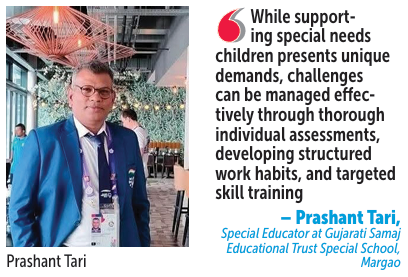
Elated with the news of him being one of the recipients of the prestigious CM-Vashistha Guru Puraskar 2025–26, Prashant Tari, working as special educator at Gu jarati Samaj Educational Trust Special School, Mar gao, said that patience and empathy are key to deal with children with intellectual disabilities. Tari, who has 26 years of special education ex pertise, has served as a Special Olympics and Union Cycliste Interna tionale (UCI) Level 1 Cy cling Coach, supporting athletes to state, national, and international hon ours. “I have received special ised training in managing these children. My ap proach focuses on design ing custom jigs, fixtures, and teaching-learning materials that enable chil dren to work effectively and independently with out hindrances,” Tari told O Heraldo. He said that while sup porting special needs children presents unique demands, challenges can be managed effectively through thorough indi vidual assessments, de veloping structured work habits, and targeted skill training. “We implement a ho listic framework tailored to each child’s unique learning requirements, ensuring consistent en gagement and positive response to skill acquisi tion,” he said.

Reacting to Tari’s award, his junior colleague in the school and a special edu cator, Liby Mendonca said he has done remarkable work with the children, particularly within the vocational section. “Hav ing collaborated with him on numerous initiatives— including establishing the folk dance competition and organising the local cycling tournament—I have seen his deep dedi cation and tireless efforts toward child develop ment,” Mendonca said. According to her, Tari’s approach to working with the children is both me ticulous and exception ally effective. Utilising the ABC (Antecedent, Be haviour, Consequences) framework, he thoroughly addresses severe behav ioural challenges, work ing closely with the chil dren to help de-escalate and manage their needs on an individual, one-on one basis. His efforts are espe cially impactful in help ing students build inde pendence and essential life skills. “Through his instruction in vocational trades—such as lantern making, crafting clay and wax diyas, and basic cu linary skills like cutting vegetables and prepar ing sandwiches—he em powers the children to improve their Activities of Daily Living (ADL) and develop practical skills for their future.It has been a privilege to work alongside him,” she said. Secretary of the Dis ha Charitable Trust and president of the Goa Spe cial Schools’ Association, Sandhya Kalokhe, said that the government’s decision to formally rec ognise special educators is a commendable step forward. “Unlike traditional teaching, special educa tion is truly a vocation that requires immense patience, dedication, and care.
Special Educators work tirelessly with chil dren who have various disabilities, often push ing them to succeed even when progress is difficult to measure,” Kalokhe said. For many years, state recognition was limit ed to teachers in regular schools. Thanks to ad vocacy highlighting the extraordinary efforts re quired in special educa tion, this pattern has ex panded to include special educators. “A prime example of this dedication is Tari, who be gan as an assistant voca tional trainer at Disha and went on to promote sports and vocational skills at Gujarati Samaj. His heart led work exemplifies why these educators deserve public honour,” she said. While recognising one special educator per year is a positive start, Kalok he said that there are over 30 schools in Goa where dedicated professionals put in equal effort every day. “Expanding this rec ognition would not only honour more deserving special educators but also raise essential public awareness about special education and the integral role these children play in our society,” she said.