There is no time left to build brick by brick. BRICS Summit along with BIMSTEC, will be held in next two weeks in Goa. But as far as communication infrastructure is concerned, are we prepared to provide good connectivity for this high-level event? The October 15-16 event will be studded with at least 11 heads of state or governments and about 1000 delegates from countries like Brazil, Russia, India, China, South Africa, Nepal, Bhutan, Bangladesh, Myanmar, Sri Lanka and Thailand.
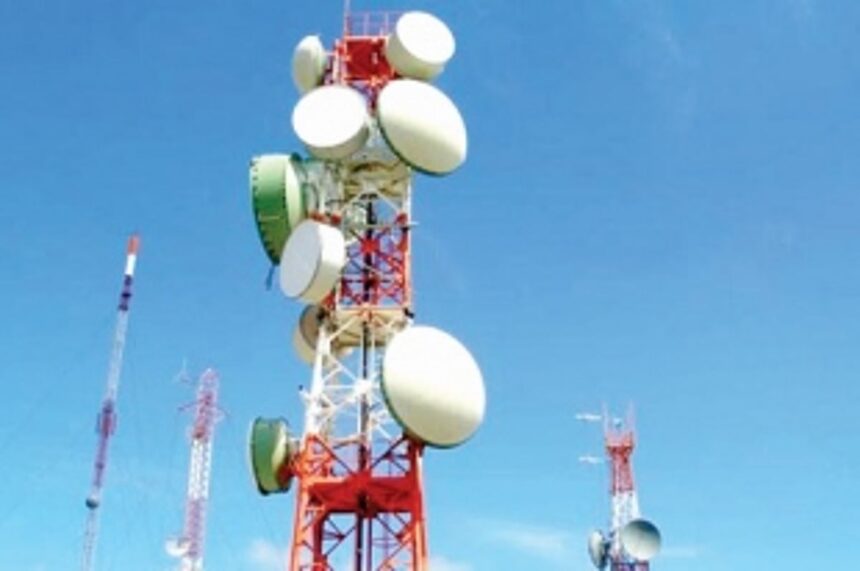
Even though Goa happens to be a tourist hot spot globally, seamless and reliable mobile and Internet connectivity has been a bane rather than a boon in an ever increasing digital world. According to the Department of Telecommunication (DoT) and Cellular Operators Association of India (COAI), to ensure quality service, Goa requires at least 102 new mobile towers immediately. At present Goa has about 1200 towers across the State.
“Yes in south Goa we are having problems and connectivity is very poor. Since live telecast will be done across the globe infrastructure needs to be upgraded and for that, lot of new towers are required. At present at least 102 towers are required in entire Goa. We and our operators are ready with the equipments and the plan. We are now only waiting for some of the “no objection certificates” (NOCs) from some village panchayats, which we are expecting very soon and immediately the installation will start. We have given a commitment that before October 10 all towers should be in place,” said the senior deputy director general of Telecom Enforcement and Resource Monitoring (TERM), Western Region, M M Gupta.
When asked about the resistance by the villagers in some parts of Goa, Mr Gupta added that, “Yes this is a fact. In some pockets there is some misinformation which is creating unfounded fears. Some of the residents do believe that these may be health hazards but the Department of Telecom (DoT) has been placing its view points through its website (dot.gov.in), which can be accessed by the general public. It has all the details of EMF radiation, studies, norms, tests etc. It has been assured by the Government of India that there is absolutely no affect on the health of the citizens.”
Mr Gupta added further that, “We have recently taken readings and we shared it with the concerned public also in Goa. Our average reading has been found at 8.26 milli watt per square meter for the ten or eleven village panchayats where the towers are operational. Now, overall the safe standards has been set at 450 milli watt and it shows that it is less than two per cent of the allowed 450 milli watts. We have found that during last two years no tower has been found violating the norms prescribed by Government of India which is 450 milli watt per square meter radiation level. This 450 milli watt itself is 1/10th of the global standards of 4.5 watt per square meter.”
COAI director general Rajan S Mathews informed Herald that considering the prevalent quality of mobile voice and data services in Goa, one needs to ensure that the network is enhanced both coverage wise and capacity wise. The telecom industry has committed an investment to the tune of Rs 300 crore to improve the network infrastructure in Goa. In view of the upcoming BRICS summit there is substantial urgent need for good connectivity and increased bandwidth in Goa. To achieve this, the industry needs to deploy mobile network infrastructure at 102 locations and lay 43 kilometres of optical fibre cable for last mile connectivity.
“The industry is working on a war footing to set up the adequate network in time for the Summit. Much of the problems are faced by the industry in setting up of cell towers emanating from unfounded fears of the health impact of emissions from cell towers (EMF). The Government of India has one of the strictest EMF Safety norms in the world – better than that of the USA and Europe. The DoT, through its enforcement arm, TERM, conducts random checks on EMF levels from cell towers to ensure compliance. The Department of Telecom has conducted similar random EMF checks across South Goa and has found the results to be far below the threshold limits prescribed by them” added COAI Director General, Rajan S Mathews.
Meanwhile, the Citizen Groups of Mumbai, led by noted cine star Juhi Chawla Mehta and Prakash Munshi has submitted a dossier before chief minister Laxmikant Parsekar and his government on August 10 this year on the ill-effects of mobile tower radiation.
“DoT have informed the Parliamentary Standing Committee on Information Technology in 2013 that Indian norms are five to ten times higher than five countries of the world which have much lower radiation norms of 100 milli watts per square meter for all frequencies. DoT advertised in national dailies in December 2012 of health hazards and precautionary measures from EMF Radiation which said that if you have a choice, use a landline (wired) phone and not a mobile phone. Also ICMR and Ministry of Health studies indicate health hazards from mobile tower radiation for citizen residing 300 meters from antennae,” Prakash Munshi said.
Vice President of the Goa IT Professionals Vincent P. Toscano believes that majority of the Goans know that there is only 5 per cent of the non-productive side of the Internet which is Internet games, movies, social media, chat etc. “But if we realise the outrageously productive power of the Internet in any field of our social utility structure, we would have fought to get the towers installed in our villages instead of being fooled by the baseless ‘cancer’ paranoia peddled by some vested interests. We have put our energy into extracting transparency from the telcos regarding their compliance with the prescribed EMF norms,” said Mr Toscano.