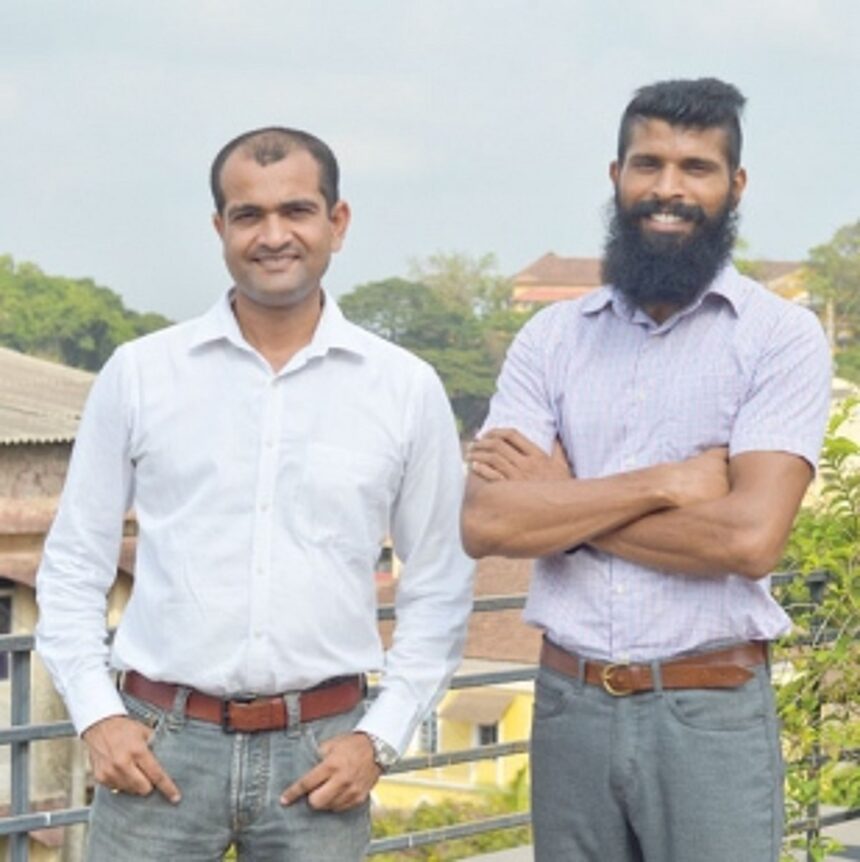
HERALD: When will you be launching FleetRover?
LUKE SEQUEIRA: There are two answers to this. Our trial run has begun and we are already doing it in India. This is not a ‘public launch’ and it is not happening any time soon. Unofficially, it has already been launched but the official announcement may happen in June or July this year as we need to read and see the circumstances in the market which also has bearings. No contract has been struck in India as yet with anyone. However, we are very close to signing of a contract. Publically, we may launch the Fleetrover by end of June.
HERALD: What change will the Fleetrover bring about in the logistic sector?
LS: Basically the logistics market in India is very fragmented. Unlike in the United States, Canada and UK where 3PL (third party logistics) is a major component of the logistics. In US 3PL is 64.6 per cent of the logistics market. Fleetrover will connect with specialists who compliment our product and make it into use. In India there are a lot of companies which will buy their own set of logistics and will not take the help of other specialists and will try to become specialist on the field which they are not made for. The reality is that the logistics cost will come down in India, only if the technology becomes a major player in logistics. Which means, India too will have to move to 3PL and who will provide the technologies for these companies? Hence, a lot of smart kids are launching their own apps and 3PL companies but they are literally been squeezed by these truck-owner companies as the old school players are feeling threatened. Now finally, there is real pressure on them as they have no choice but to use technology.
HERALD: What are your immediate challenges?
DEEPAK KASTHWAL: There are challenges in every start-up which is normally the same as the market dynamics changes very rapidly. One needs to change and place ones strategy accordingly. Obviously in last 10-15 years the venture capitalists have also understood the Indian market and they have evolved. Only if they see a compact and solid business model do they provide funding. No one will give you money on your paper plans. However, in Clear Trip we got funding on paper plans. Here we have to make the business work and Luke is front-ending it and we are very close to striking it. The challenge is to use that limited funds to reach a point from where you can scale up. For this, Goa is a favourable place because the overheads are low and you still get enough manpower for software development and other supporting systems in the business to built a workable model and there has to be an exponential growth and then we may run out of resources in Goa and then we may have to spread out of the State too. At this point we do not want to do it but if it is inevitable, then we may have to move out to make the business run, but that does not mean that the Goa chapter will be over. It will continue.
HERALD: Do you see opportunity ahead?
DK: In terms of opportunity there is another big thing which has happened in the market. The e-commerce companies will also get an opportunity to improve upon their logistics as the venture capital companies are expecting these e-commerce companies to perform and logistics is one big area where they are struggling. It is an opportunity for us.
HERALD: How do you see the prevailing ecosystem for start-ups in Goa?
DK: Ecosystems are developed over few decades and it doesn’t happen overnight. Like in Silicon Valley, Bangaluru actually started by Goverment setting up and electronic cities and IT parks in later 1970s and today you have almost 200 private engineering institutes and hence it provides a lot of catchment area for people to hire new talents. This all helped Bangaluru to attract few icons like Wipro and Infosys and then it had a snowballing effect. It is very important even in Goa to build that ecosystem, like linking of educational institutions and some workable IT parks. In Dehradun (Uttarakhand) we have an IT park which is completely empty. There is a difference between a graduation, education and requirement of the industry. All these three elements need to match for a win-win situation.
HERALD: Where do you see FleetRover five years hence?
LS: Goa is a great place to incubate ideas because the overheads are low as compared to other places. The ecosystem is still not that bad as you get resources so that you can build up a pilot projects. We got a lot of help from GITIC, GEMS, CIBA in Goa and it is less competitive that places like Bangaluru and Hyderabad and that is a huge advantage. In about 18 months after the launch we should be moving into an established mode and then we will go into rapid scaling mode. Next five years will still be a pretty hard time and it will take at least 7 to 8 years to have a proper grip in the market. Several milestones need to be overcome. We will get a much clearer picture withing six months when we actually hit the road across India.