HERALD: Your ministry is normally construed as a ministry whose major stakeholders are the youth. What plans do you have?
ROHAN KHAUNTE: Mining and tourism has always been the backbone of the Goa’s economy. Mining now has crashed due to lot of illegalities and other issues which came up which led to the cap on mining. Secondly, we have been over dependent on tourism. Foreign chartered flights are now depleting and domestic tourists are increasing with respect to foreign tourists. This gives a scope for some other industry which could be non-polluting, which will keep the identity of Goa and give a boost to the Goans who are educated and unemployed. People have gone outside Goa because there were no proper avenues of making something of themselves here. For those who are still here in Goa the government’s priority is to create employment for them.
HERALD: About 2600 IT professionals pass out of college in Goa every year. Hardly 10 per cent of them get jobs in Goa. How do you propose to correct the anomaly?
RK: The IT policy will drive the requirement of our people and industry stakeholders. We have categorised it into three verticals. One is the start-ups, second is the IT industry which is looking for expansion and third is the new industries which will come to Goa. We are not looking for big cap IT companies to come down to Goa as we do not have the land. The priority will be for the first two. For the people and industries which will come down to Goa we will look into issues like revenue, employment generation and how Goa can benefit out of it.
For all this we need to make our people skilled and in terms of skill development we are simultaneously tying up with institutions which are under Digital India, Niti Aayog, Start-up India which will be categorising themselves and creating an area where these people can be trained. In addition to that the Chief Minister has asked the bigger industries also to have some small cluster where our youth can be trained to be placed in their industry. So there is a win-win situation where local educated unemployed Goans can get an opportunity.
HERALD: What incentives are you providing to the IT companies who are willing to employ Goans?
RK: This will be revealed in the IT Policy which everyone has been waiting for. Successive governments have been talking on IT parks and other things. Our Chief Minister has a got a clear vision on what he wants and the government is very clear that it needs to implement certain priorities, keeping in mind how much loss we have suffered in the last 15-20 years and looking ahead for the next 20 years. We will give whatever incentives which are required by taking into confidence of all the stakeholders. For example the Start-Up Policy has been discussed with various sections of people who are involved in start-ups and have grown to be industry. We have understood what the problems were and what the industry needs. The Chief Minister has taken personal interest and has been involved in these long sessions of stakeholders. These policies will be as what the industry requires and will not be made within the four walls of the government.
HERALD: In the recent past, Goa government signed several MoUs with big ticket companies. What is the status of those now?
RK: The type of MoUs signed has not been necessarily the way it was required as IT sector is very vast. There are various sectors which could come. Every big industry is welcome to Goa as long as they look into our priorities of creating jobs for Goans. As a coalition government, we are very clear, that Goans should not be left unemployed and the back migration of Goans should be hastened. There are a lot of people from Goa who are based outside are sending mails to us and expressing their willingness to come back. This allows us food for thought and we are doing something to cater to this demand. Goa is a great destination as the State is multi-lingual and ecosystem for IT is fine and the only thing we require is a proper IT policy in place.
HERALD: Any plans to bring in research-based units in Goa?
RK: We are looking into it at a macro level. This will give a new dimension to our youth. All these are part of Digital India campaign and expanding the level of digital literacy is also a part of it. Whether it is the concept of Grameen Mitra or some agencies opening up some knowledge centers, all will be taken care off. You will find a lot of things happening in the coming one year which will actually give a boost from the village level where people will understand what is Digital India.
HERALD: Goa was early in terms of setting up a broad band network across the State. But unfortunately the connectivity in the state is still a problem. Any thoughts?
RK: The companies which have laid the fibre have done it about 15 years back. Today we need to know what changes are required. Adequate attention will be given to the areas which are of concern. Connectivity surely is not seamless and 100 per cent today. We need to improvise on that and we are working towards it. Technology is never constant and it changes rapidly so to keep ourselves equipped for the next number of years we need to take proper structured decision to ensure that we have good broad band service, WiFi and other related services.
HERALD: What new steps are being taken to encourage start-ups in the State?
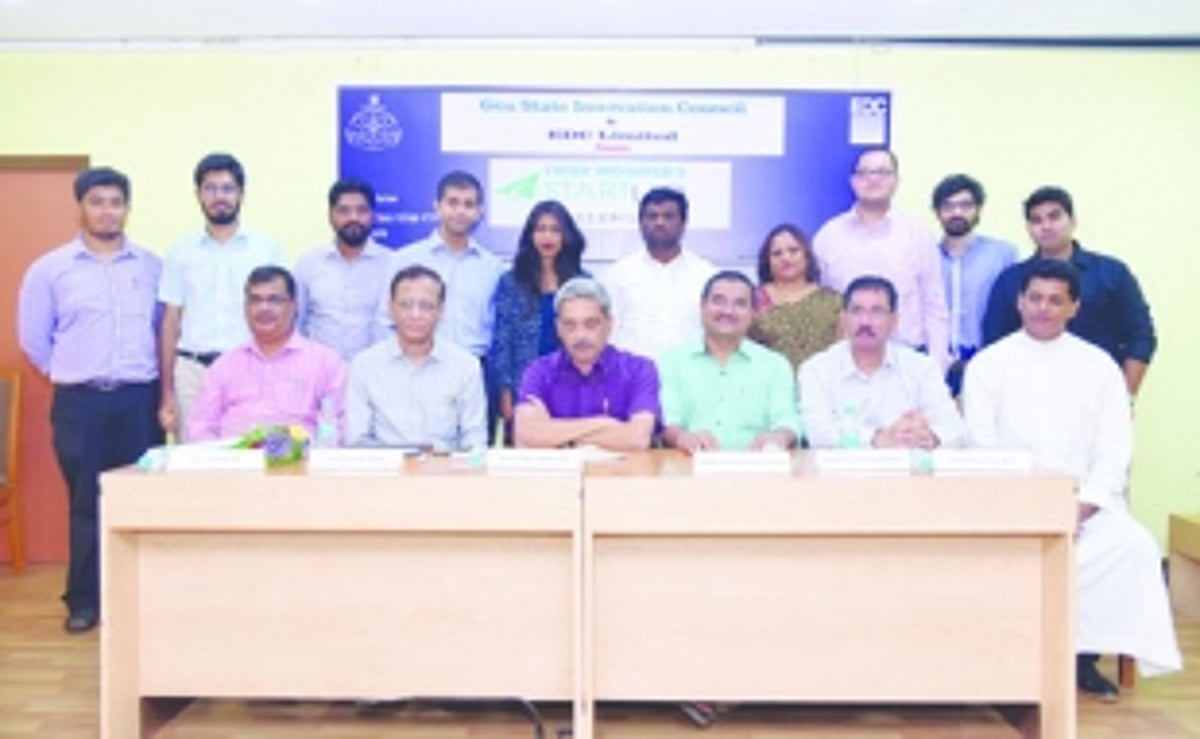
RK: We categorise start-ups on the companies which has been existing for last five years and have sustained themselves from the period of incubation to present. We have incubation centers for them and very soon STPI will also set up its incubation center in Panjim and it is likely to be launched simultaneously with the Start-Up Policy. So these ideas will not remain on the table. We are walking the talk and the government is very active as the Chief Minister is giving his full support for these issues.
HERALD: What steps have you undertaken to frame the Start-Up and IT Policy?
RK: We have taken lots of existing policies into consideration, including that of Kerala as they have taken lot of initiatives for start-ups. They have a Start-Up Village in Kochi. We also considered the Telangana model, Start-Up India etc. After picking up relevant and good parts from those parcels, we have had meetings with our people who are already into this sector in Goa. We have also connected with those who have crossed the level of start-ups and scaled up. We have also taken inputs from industries of Goan origin which have expanded. We have had sessions for roughly 14 days non-stop with about more than two hours per day. In fact, in about 50 per cent of these sessions, Chief Minister Manohar Parrikar was personally present. This policy will be what Goa has been waiting for.
HERALD: What does the government assure to the start-up and IT companies in the State?
RK: We would rather say that local or start ups coming from outside the State should give priority to Goans and for that whatever the government needs to do, it will be surely there to support in any issues related to the industry. We are outlining all the related schemes which includes venture capital etc in the upcoming Start-Up Policy.