Even as we await the new start-up and amended IT policy from the Goa government, the questions which stares at us is — where are the jobs in IT sector?
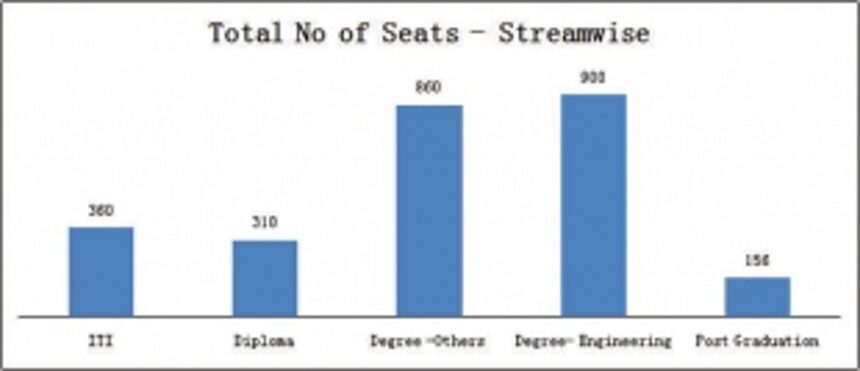
About 2586 IT engineers and professionals pass out of their colleges every year from Goa. Barely 8-10 per cent of them are placed in Goa. The rest, either go to Bangaluru, Pune in search of a respectable job. The migration continues while the academia continues to follow the archaic syllabus which has almost lost relevance in the dynamic IT industry.
When asked whether the IT students passing out from Goa are ‘industry ready’ for jobs in Goa, the President of Manufacturing Association of Information Technology (MAIT), Nitin Kunkolienker was very candid by saying, “No. There is a huge mismatch between the industry expectations and what the academic systems are providing. Why states like Andhra, Karnataka and Telangana have emerged as the IT hub. The one single reason is their open and liberalised education system.”
Mr Kunkoleinker also mentioned that in Goa somewhere we are having mental blocks and spending on education is not an issue but the focus and approach towards education is quite regressive and very regulated with no heed to the progressing IT industry. “There can be a regulation on content but the system must open up and move with time and industry requirement. We need a drastic and urgent reform in the education system of Goa,” he added.
Also when this new Goa government stepped in, Goa Chamber of Commerce and Industry (GCCI) in its suggestion sheet, mentioned that
in order to create synergy between education and skill development, it is necessary to merge Ministry of Education and Ministry of Craftsmanship Training to create a new Ministry as Department of Human Resource Development. Also, creation of Integrated Education Development Council under an expert must be formed to review vertical mobility and integration of all educational aspects including creative /skill development. The review of syllabus and academic restructuring should also be taken up at time-bound intervals. GCCI further had suggested that BBA and BCA and other value added courses may be brought under grant in aid pattern of government of Goa by creating a new hybrid model of assistance.
GCCI president, Sandip Bhandare in his recent interview with the Herald said that, “Goa has got 4-5 colleges which produces roughly around 350 to 400 engineers per year.Where are the opportunities for us? Do you want people to just go to Bangalore, Chennai and other places? What kind of an environment will they face and what kind of social issues would we face 10-15 years down the line. Therefore, our people should get employment. If you are looking at an industry then look at the ones which you feel is going to cost the least as industry is always a balance between ecology and development.”
The newly formed body of IT entrepreneurs Goa Technology Association (GTA) is also of the view that a big change is required in the present curriculum. GTA President, Mangirish Salelkar told Herald that, “The curriculum which is being followed today may have been drafted a decade ago. Technology changes so fast that we cannot match up the pace at what the colleges are teaching and what we are expecting out of the students. Consequently, if we hire them we have to train them for another 4 or 5 months. I cannot expect this person to be industry ready because it is not his fault, it is the fault of the education system.”
Goa’s IT Minister, Rohan Khaunte on the subject of 2600 IT professionals passing out of colleges in Goa every year and hardly 10 per cent of them getting jobs in Goa, said, “The focus is on IT. The IT policy will drive the requirement of our people and industry stakeholders. We have categorised it into three verticals. One is the start-ups, second is the IT industry which is looking for expansion and third is the new industries which will come down to Goa. However, we are not looking for big caps IT companies to come down to Goa as we do not have space and land. The priority will be for the first two and for the people and industries which will come down to Goa we will look into the issues like revenue, employment generations and how Goa can get benefited out of it.”
Mr Khaunte added that for all these we need to make our people skilled and in terms of skill development we are simultaneously tying up with institutions which are under Digital India, Niti Aayog, Start-up India which will be categorising themselves and creating an area where these people can be trained. In addition to that the Chief Minister has asked the bigger industries also to have some small cluster where our youth can be trained to be placed in their industry. So there is a win win situation where local educated unemployed Goans can get an opportunity to be in the industry.
Director of Androcid, Prajyot Mainkar said, “I always believe Goan students have great mind at work and skillful. I find a great disconnect between what industry demands and what education streamlines. If this demand is met, the syllabus can be in sync with the demands of the industry producing better skilled team members for the industry. In the other case, we have to spend a lot of time in training which can be a challenge. Most of the syllabus is out of sync which requires a SOS revisit and a revamp. Syllabus has to be directly proportional to what the industry asks for.”