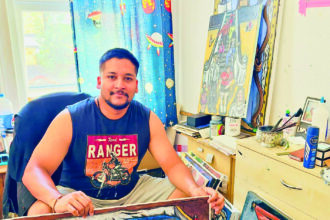
“It’s the holy month of Ramzan and despite their holy fast, our ladies from Chimbel are tirelessly working to help Covid Outreach Goa (COG) feed needy migrant labourers. A salute to their genuine spirit of selfless service.“ This social media post by Miriam Koshy-Sukhija amplifies the spirit of community participation in solving a humanitarian crisis that has emerged and continues to play out during the pandemic lockdown across Goa. Miriam, an artist who also runs the family owned ‘Gallery Gitanjali’ is new to playing this role of chief altruist but it now comes with practised ease after being at the helm of affairs for over a month. “We are no saviours. None of us thought this would continue so long. Our intent was to collect the data and submit it to the government. It’s the fourth week running and we are all exhausted. It’s hard manual labour,” she sighs.
If privilege was put to good use, this is one example of it working towards making a big difference. Shares Miriam, “We started Covid Outreach Goa to help a small group initially. Through the Goa Institute of Management alumni group, we reached out to friends to donate and volunteer help. Soon, we started receiving SOS calls from different places – Merces, Ramnagar in Alto Betim, Pilerne and initially even from Aldona. Putting her degree in Management to good use, Miriam put together a basic website(www.covidoutreachgoa.in)that gives a transparent account of the ration packages distributed and the funds raised. “We are not a registered NGO and initially used to give the vendor’s bank details so contributors could make payments directly. We soon realised that for those whom we don’t know personally especially donors from out of Goa, it was more convenient having a website in place with an easy payment link.”


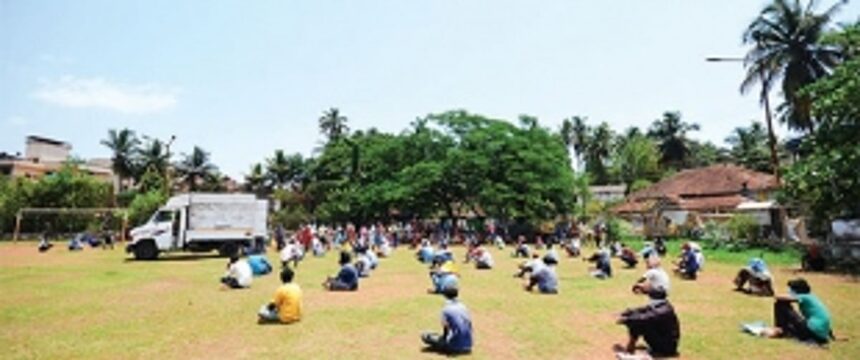
At the St.Cruz football ground, there are long queues of migrants from Karnataka, Maharashtra and Rajasthan waiting for their rations. Police personnel help in maintaining social distancing norms and discipline. Some of those who show up are new and want their names to be registered on the list. Aadhar card in hand and desperation writ on their faces, this seems to be the ‘new normal’ they are getting used to. Guiding them to a volunteer who maintains the list and verifies details, Miriam explains, “Volunteers from each group have their lists of registered people and also an account of the rations distributed to each of them. We know the group size and also check the database between volunteer groups, to avoid duplication.” Duplication, even if a concern seems unnecessary given the genuine plight of these stranded workers, many of them who constitute large groups of single men, living in a small room.“At times, local Goans also turn up wanting access to this distribution,” Miriam reveals and continues, “But we direct them to their Panchayats and explain why this group is being given free rations. They usually understand.” The typical gripe with any such initiative is to bemoan it’s sustainability. Miriam spins the question on its head, “Did any of us even know of this large demographic that existed in Goa?” She has a point.
Migrant workers are never much of a consideration for politicians and statistically, they are almost invisible. This crisis seems to have brought them out in droves making them count and making the government accountable. She adds, “There are several issues that are faced by bureaucrats as well and they are having a tough time with limited resources and have had to deal with a disproportionate number of calls to helplines. Besides, the government relief measures that have been initiated is taking time to cover everyone. At this stage, we just want to assist the authorities in any possible way rather than play the blame game.” The fact though that this group of migrant labour has historically been left out of the national and political discourse is not lost. COG had to approach each cluster differently depending on its density. Recounts Miriam, “We used to get mobbed by people hounding us, as the truck approached their locality. In time, we learnt to put measures in place.” Adds Miriam, “We also have to thank Delhivery – the logistics company for their on ground support with providing us trucks to transport food material.”
The indefatigable spirit of the volunteers who have worked tirelessly is evident. Deepa Naik, from Kalapur in Betim, estranged from her husband, financially classified as poor and living alone didn’t think twice before volunteering her service, lugging sacks of relief material. She spiritedly adds, “I want to be of help to other poor people. It’s good if we can support each other, no?” The women of Chimbel contribute by repackaging food bags for distribution and the senior citizens of the community are involved in making paper bags. “This is an attempt to empower the community so that they are not just bystanders but active, involved team workers. We’ve also begun making a list of skill sets of those registered with us, if at all the authorities can use their services in any way.”She has many stories to narrate: of migrants being desperate to get back to their homes, of them being harassed by landlords and in some cases even evicted.
Although Miriam was serendipitously led to be involved and gather her resources to reach out to those in need, she somehow can’t shrug the responsibility away, despite the challenges. She candidly adds, “Every week, I think it’s the last. Having got so involved, it’s tough to abandon what we’ve started.” Ask her the one big lesson this experience has taught and her and she says with a smile, “Everyone can make a change. I didn’t have to get into this. Now that I chose to, it’s made me aware of the condition of the lesser privileged, There’s no turning a blind eye to it anymore.”