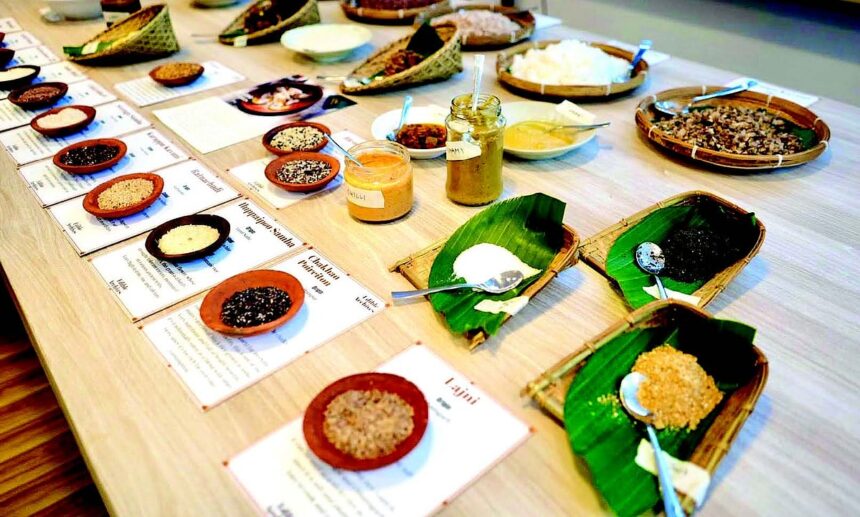
Goa’s vibrant culinary heritage takes centre-stage at the ongoing 9th edition Serendipity Art Festival (SAF), with Edible Issues, a food systems collective fostering thought and conversation on the Indian food system, co-founded by Anusha Murthy and Elizabeth Yorke.
The wide range of sessions, include a lineup of 27 workshops, five exhibitions, two performances and four walks curated by Edible Issues, emphasise the profound intersections between food, environment and society. Speaking on the aspect of preservation of Goa’s food heritage, Elizabeth Yorke said, “The challenge lies in balancing the preservation of Goan culinary heritage with the necessity for sustainable food practices, especially for communities reliant on the fishing industry.”

For the session, ‘Eat the Wild: Foraging for Edible Weeds in the City,’ Dr Maryanne Lobo guided participants through Panjim’s urban greenery, learning about wild greens, their ancestral culinary uses, and their health benefits. This interactive session at The Food Lab Courtyard inspired a reconnection with nature through sustainable foraging practices.
Another session at The Food Lab, ‘Eating Seaweed’, a workshop led by Gabriella D’Cruz, Chaitanya Chowgule of The Good Ocean, and Chef Priyanka Sardessai, introduced participants to the culinary potential of native Goan seaweed. This unique collaboration explored ways to integrate hyper-local ingredients into global culinary traditions, sparking discussions around sustainable food practices.
Mock Wild Picnic by The Center for Genomic Gastronomy offered a unique culinary experience. Combining AI-assisted recipe creation and regenerative ingredients, the workshop encouraged attendees to reimagine sustainable and innovative food practices, creating flavors that balance ecological mindfulness with culinary creativity. This year, visitors can explore sustainable food alternatives, delve into climate-conscious craft practices, and engage with multisensory exhibits as part of the Visual Arts curation.
‘Songs of the millstone’ curated by Geeta Chandran was an adaptation of traditional women’s work songs through dance performances, probing a critical question of what comes to our mind when we think of women’s songs of labour and milestone. The ongoing Serendipity Arts Festival is free and open to the public till December 22. The next workshops will include ‘Crisis Cuisine” Towards the Practice for Future Food’, ‘The Mushroom Keepers’, a film by Naveen Mulki exploring the relationship between fungi and the Khasi and Garo communities and ‘Natural dyes from food leftovers.’