Team Herald
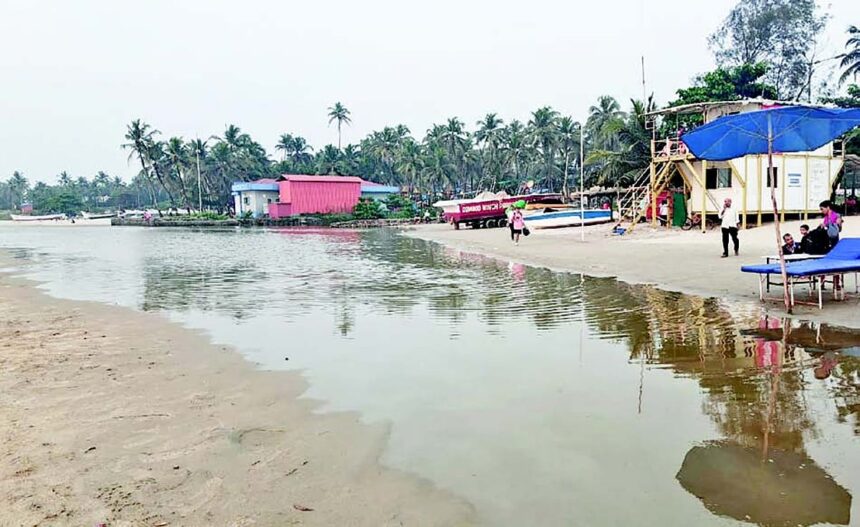
MARGAO: The shocking spill of untreated wastewater from Colva Creek onto the iconic beach has once again laid bare Goa’s chronic failure to address pollution, tarnishing its reputation as a global tourist destination even 63 years after liberation.

Despite multiple assurances and court hearings, Goa remains mired in a perpetual environmental crisis, with rivers, creeks, and beaches choked by pollution. The latest incident comes as a scathing reminder of the authorities’ inaction and indifference, sparking public anger.
As Colva Creek’s contaminated waters flowed unabated onto the beach, local stakeholders and petitioners intensified their demand for accountability. Environmental activist and petitioner Judith Almeida, who has been at the forefront of efforts to save Colva Creek, described the situation as “an environmental catastrophe.” She lambasted the Goa State Pollution Control Board (GSPCB) for failing to curb the discharge of untreated sewage into the creek and urged swift punitive action against violators. “It’s not just an ecological disaster; it’s a public health crisis,” she stated.
The High Court’s impending hearing of a Public Interest Litigation (PIL) on Colva Creek pollution adds urgency to the situation. Almeida, in her affidavit, detailed the alarming state of the Colva sewage treatment plant (STP), which has repeatedly been criticised for its inefficacy. With a capacity of 7.5 million litres per day, the STP has failed to prevent untreated or inadequately treated sewage from leaking into the creek.
Frustrated with the government’s inaction, locals took matters into their own hands. To mitigate the immediate spill, they dug trenches to divert the wastewater into the sea. While this stopgap measure averted further damage to the beach, it underscored the glaring inadequacy of Goa’s sewage disposal infrastructure.
“Why are we still grappling with this after decades of promises? This is a recurring disaster,” Almeida fumed. She has called on the GSPCB Member Secretary, Dr Shamila Monteiro, to enforce stringent penalties on those responsible for the discharge.
Beyond Colva, this incident symbolises a broader crisis facing Goa’s fragile ecosystems. With unchecked pollution, weak enforcement, and inadequate infrastructure, the state risks losing not just its environmental heritage but also the trust of its people and tourists.
“Enough is enough,” Almeida concluded. “If the government doesn’t act decisively now, Colva and other beaches could soon become unrecognisable. This is a wake-up call for Goa.”