During monsoons, the nature is at its best as many areas get transformed into lush green patches and it is time for the trees to bloom in their full glory. To celebrate this very occasion, the married women from the Hindu community worship leaves having medicinal properties, in the form of ‘Shravan Aitaar’. This custom is being observed in most of the parts of the state.
“In the month of Shravan, on the four to five Sundays that are there in a month, the Hindu married women observe fast for longevity of their husbands by worshipping ‘Shravan Aitaars’,” says Pournima Kerkar, a teacher by profession from Sattari. Kerkar adds, “It is also about worshipping the nature to express the gratitude towards it.”
Explaining the significance of the festival, Pournima says, “Married women worship leaves of the plants that hold medicinal properties. According to Hindu mythology (as per Ramayana myth) we believe that whichever plants Sita had access to during the time when she was in exile for 14 years, we worship those wild herbs. It consists of local names ‘chiddo’, ‘sitechi bota’, ‘sitechi paula’ ‘ghodyachi paula and others.”
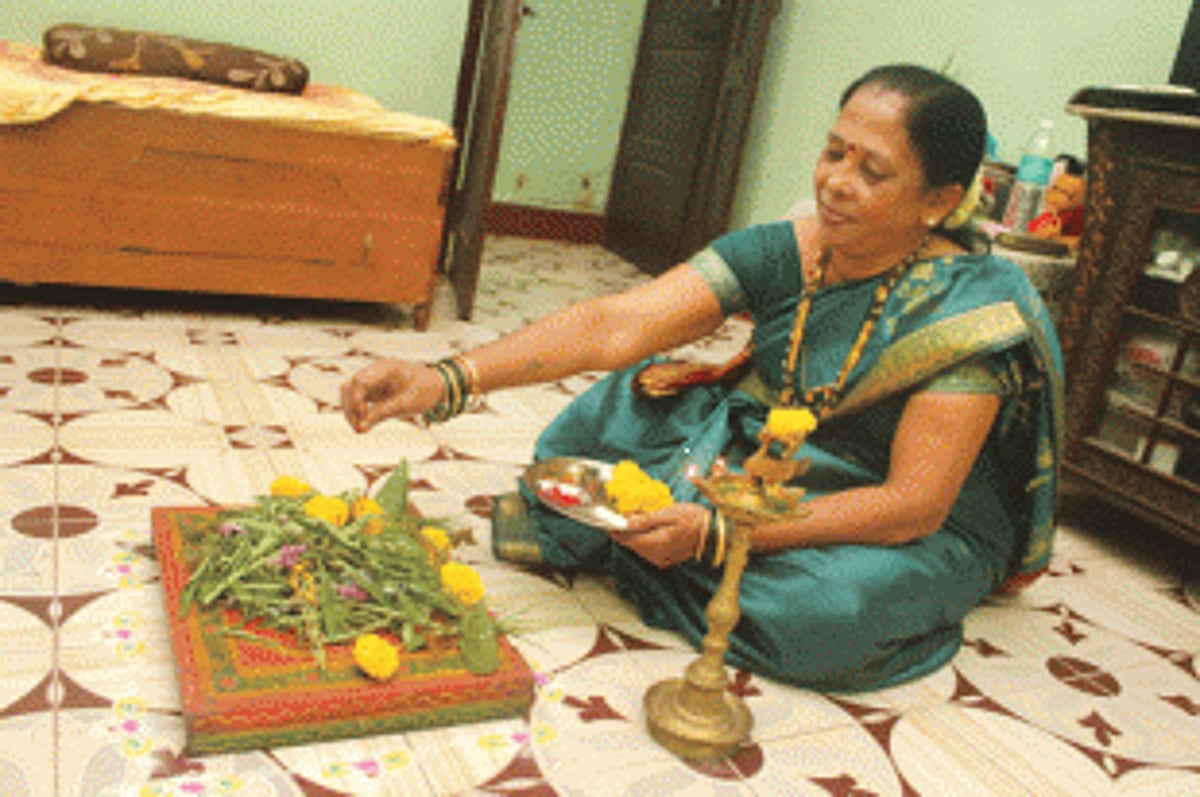
On Sunday, married women in the villages get up early and clean the house. “We decorate our homes with rangolis, and purify the house by sprinkling ‘Goumutra’ (the mixture of cow urine and holy water) and go in search for these wild leaves. We place a ‘shiroti’ top most part of banana leaf on the wooden plank next to the ‘Devaro’(a place where God is worshipped). This leaf is divided into two parts, one one side we place ‘Surya’ (betel nut in the form of Sun god) and ‘Chandra’ (turmeric in the form of moon). Finally, we put all these leaves on top with some flowers and worship them,” says Radha Shyam Pandit, a resident from Vasco, who observes Shravan Aitaar.
The belief associated to this is that married women pray to lord ‘Surya’(The Sun) to bestow their husband supreme power and good health that it possesses, and the gentleness from ‘Chandra’ (The Moon).
Sharing more information on the custom, Pandit informs, “After performing the puja, we offer ‘naivaidhya’ to Shravan Aitaar. Every Sunday, a different traditional Goan sweet is prepared. For instance, ‘Payas’ on first Sunday, ‘Patoleao’ on second, and ‘ukadiche modak’ and ‘mangane’ on the remaining ones. On the last Sunday, ‘polo’ is offered.”
Every Sunday, late in evening, the Shravan aitaar is followed with the ceremony of departure. “This sacred banana leaf holding wild herb leaves with all the puja articles is released by performing a small puja near the Tulsi,” adds Pandit.
Not all married Hindu women practice this tradition. “Times have changed. However, those who have been following continue to believe, whereas the newly-wed brides also show interest in following this ritual,” says Kerkar. “Today, we see that newly-wed brides worship two ‘Shravan aitaars’ at their maternal place and two at her in-laws,” she adds.