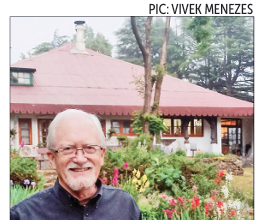
In Chandor during the local carnival, he Christians sing a song praising Harihara. No one knew who he was. Research revealed he was the king of Vijayanagra who also ruled Goa.”
Goan history is full of these nuggets of information and of countless anecdotes. Goans, especially the younger ones

will have an opportunity to get an illustrated anecdotal history of Goa, without having to go to their default library,
Google.
A decade old journey to relearn and learn the history of Goa, has had an interesting offshoot. Another project on
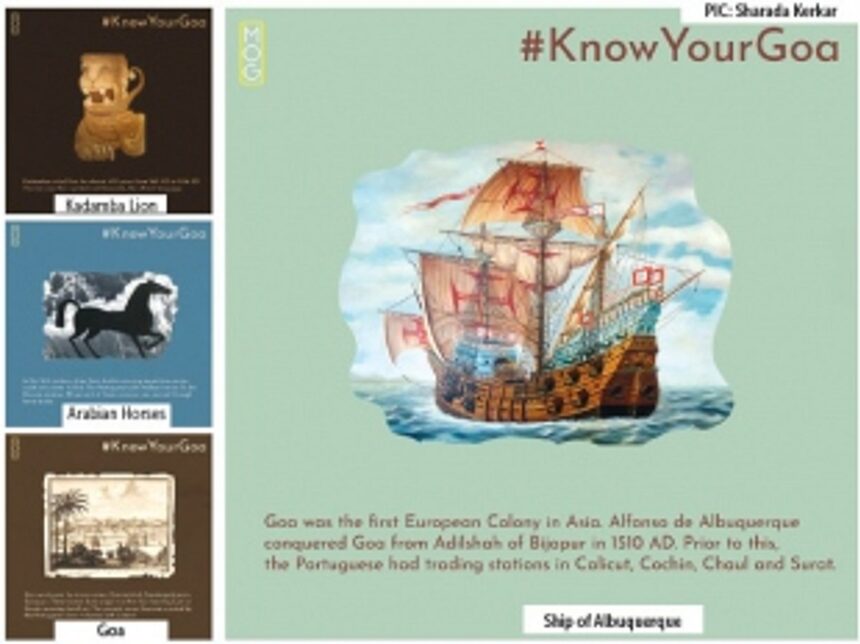
putting the history of Goa on postcards. Illustrated, each postcard will have an anecdote from Goa’s past.
One of Goa’s most prolific artists Subodh Kerkar has in collaboration with his daughter have come out with a
series of postcards called Know your Goa. The postcards numbering two hundred feature interesting
anecdotes from the history of the state. The postcards were designed by his daughter Sharada Kerkar.
Over a period of time she will be illustrating them too.
Work on the project commenced ten years ago when Subodh started working on understanding the history of Goa.
He said “I always loved history and I began to learn more about the history of Goa. I gave Sharada the stories and
she illustrated. These stories talk of myths and folklore, like the Chandor story.
TThe artist has included anecdotes from the time man first made his mark in Goa that is around 20,000 years ago
to the present-day. Afonso de Albuquerque also features in the series. Framers from Talegoan secretly supplied
him with rice at night because they were forbidden to help by the then ruler of the state Adil shah.
Albuquerque honoured the farmers of the area after he defeated Adil Shah.
The artist said he was motivated to do this because it was very important to know the history of one’s place and
history, he said was all about life. He said “For people history is about the importance of dates and wars
when it should be about life. It is about the living”. He went on to say that there were many words from the
Arabic which were used in Konkani. The Muslim influence in Goa, he said was very strong. He said the phrase
saiba bhogos which was so popular in Goa and meant ‘Saheb forgive me’ was Arabic.
The artistic duo intend to release two to three new postcards every week and this exercise will continue
over two months.