Herald Café: What was the ideology behind
conceptualising the app?
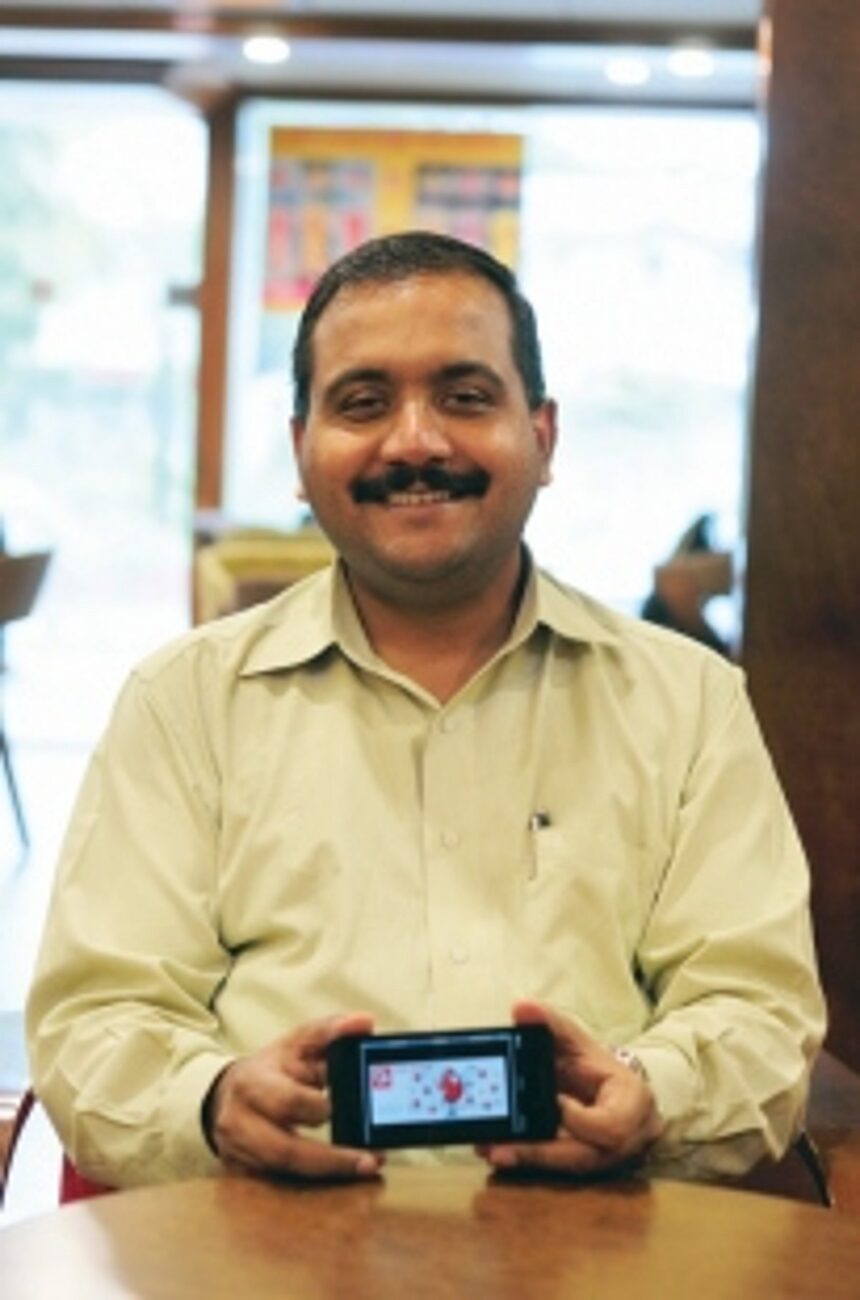
David De Souza: I made a blood donor
directory in 2011-12,which helped me to not only save a lot of lives but got me
an entry into the 2013 edition of the Limca Book of Records. This helped in
saving many lives, connecting blood donors to people in need. Eventually,
people started approaching me to have their names listed on the directory as
donors. That’s when I realised that I could scale up this concept, and that,
like me, there were many other people who wanted to step up to save a life.

HC: Describe the working of the Panic
Button app.
DD: Once you download the app, do not log
out. It does not use any of your bandwidth anyway. It is referred to as 24×7
for a very simple reason; if you log out, you are off the app’s radar. So while
you are in the database, if we have to communicate with you; we cannot do so.
Secondly, when somebody requires blood there are two possible situations. It
could either be a planned decision or an emergency. In the case of an
emergency, as soon as somebody presses the Panic Button app, we will scan our
database a find a match for the required blood group. The potential donor will
then be intimated through the app. It is already programmed that way.
If it’s a planned situation, it will work
on the system of a pin code, either of the vicinity where the patient stays or
of the location of the hospital. We then scan our database and locate a donor
from said vicinity. The pin code concept is followed due to a study that we
conducted. People living within your pin code area are likely to know you, and
therefore the response time for addressing the distress call is very high.
Also, donors can know the location of the hospital where a patient is admitted
and can rush to the spot and save a life. In a planned situation, within 12 to
24 hours the donor will receive a reminder about the request for blood from the
specific person. If the donor responds in the affirmative, then a confirmatory
text will be sent to the receiver.
HC: What are the steps taken to avert blood
wastage by use of the Panic Button app?
DD: The primary reason why blood gets
wasted is because of unnecessary blood donation. Most people don’t know that
donated blood has a shelf life. The shelf life of the blood donated is 30 to 35
days. If not used within that time span, the blood has to be disposed off. In
most cases of blood donation, anyone and everyone comes to donate blood. One
cannot screen blood at that point of time. Hence all the samples are collected
and very often hospitals find that we have too many units of blood of a
particular blood group. Through the Panic Button app, we can plan our blood
donation drives.
HC: Does the Panic Button app catalogue the
kind of blood available, so that users are aware at a glance, or is there still
much red tape to go through to get the requisite details?
DD: We maintain a standard code of
confidentiality. We cannot share the blood group database or the donor’s
personal information, such as mobile number and email address with the
public.The main idea behind the app is that someone who is in distress can
reach us and we will connect them with a suitable donor. In this manner,
everyone will know that a patient somewhere needs blood of a specific type
urgently so that if you are a perfect match, you can come forward and donate.
Panic Button is available for download for Android and IOS