Dolcy D’Cruz
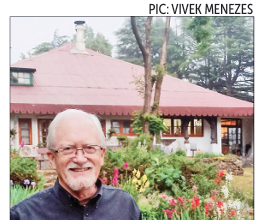
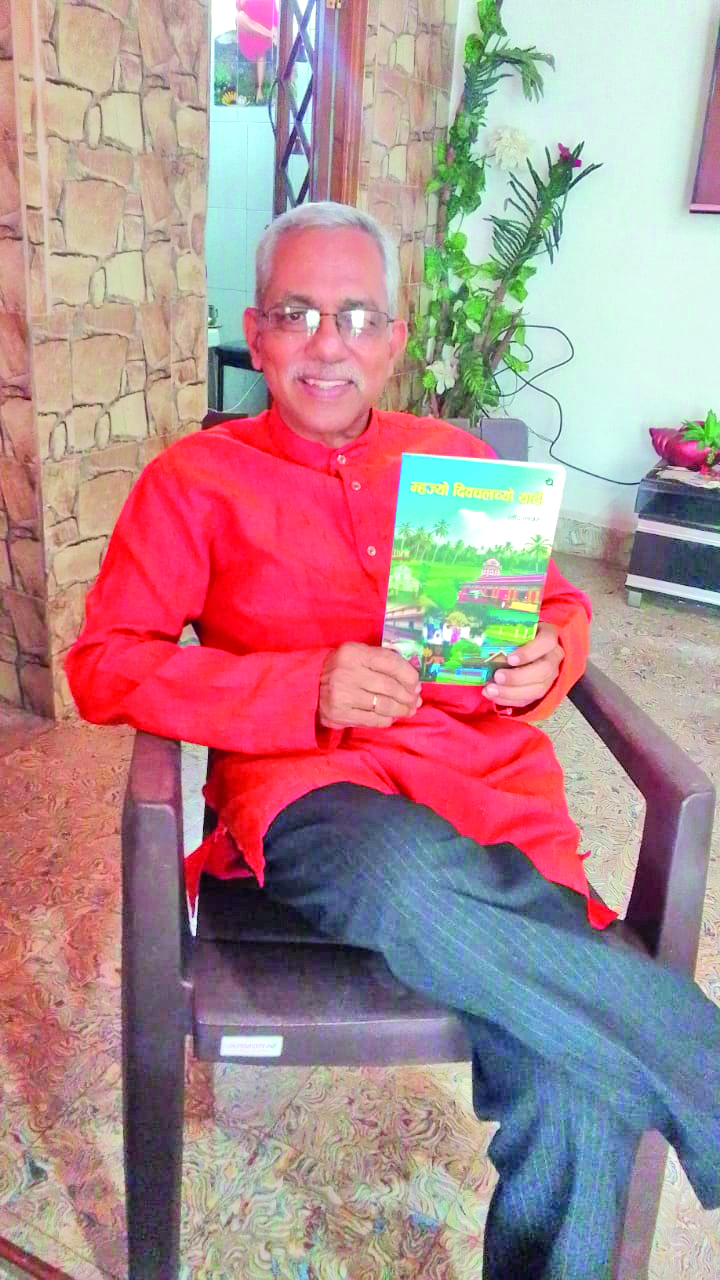
For Ravindra Fogueri, Bicholim is more than just his hometown, it is a repository of cherished memories, enduring friendships, vibrant traditions, and a community spirit that shaped his identity. Now approaching 75 years of age, he has attempted to preserve these memories for future generations through his new Konkani book, ‘Mhajyo Divchlyo Yadi’.

Born and brought up in Bicholim, although he has been living in Mapusa for nearly four decades, his affection for his birthplace remains strong. “I am born in Bicholim, so I love Bicholim. Though I am in Mapusa for the last 40 years, my love for Bicholim has not decreased. This book is out of love for Bicholim. I have written what my memories are there,” says Ravindra.
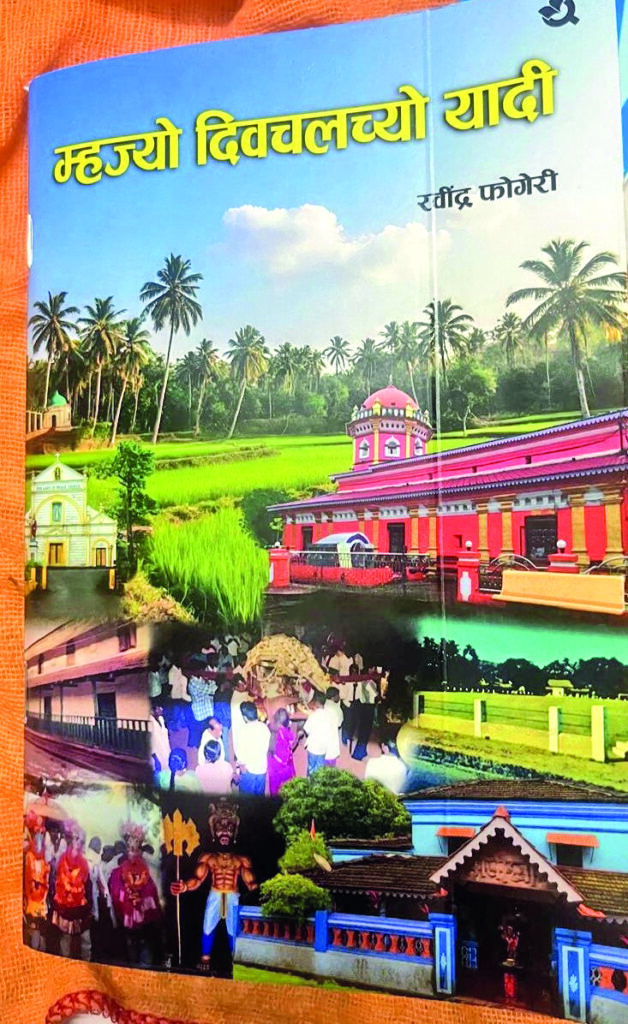
More than a historical account, ‘Mhajyo Divchlyo Yadi’ is a personal tribute to the festivals, traditions, institutions, and people who shaped Bicholim’s identity from the 1950s through the 1970s. He paints a vivid picture of a time when Bicholim was a close-knit community, where everyone knew one another and shared a strong sense of belonging. Reflecting on his childhood, he recalls a town where life moved at a gentler pace and people shared strong bonds irrespective of religion or social background. “It was a very nice place and my birthplace. We enjoyed all the festivals, friendship and school days. We never faced any problem. The climate was good, the river was there, and during summer we used to go and bathe there. I still remember all this. It was a close-knit community. Even at that time, there was communal harmony,” he says.
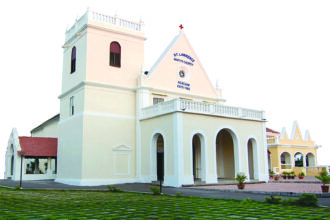
One of the most significant influences in Ravindra’s life was Fr Antonio Pereira, who founded Our Lady of Grace School in 1955 in Bicholim and played a pivotal role in fostering inclusivity within the community. He devotes a section of his book to highlighting the priest’s remarkable contribution to education and social cohesion. He says, “When Fr Antonio Pereira started the school in 1955, he admitted Hindu and Catholic students. He never discriminated. If any poor student was there, he was not charging fees. He was taking so much interest in the community, irrespective of class, creed or religion. “When we completed our schooling, Fr Pereira offered a job to my brother, Krishnanath Fogueri. He told us, ‘One of you will work in the school.’ At that time, more than 70 per cent of the teachers and staff members were Hindus, reflecting the inclusive spirit he fostered. Every Saturday and Sunday, he would visit families in the community, enquire about their well-being, and extend support wherever needed. That bond was there as all of us sat together in class. We still have those values in our minds.”
Ravindra’s educational journey eventually took him beyond Bicholim. After completing his schooling, he pursued higher studies at Dempo College, Panjim and earned a Bachelor of Commerce degree. Following his marriage, he stayed in Porvorim for seven years before finally settling in Mapusa in 1990. He worked as an accounts professor at St Xavier’s Higher Secondary School, Mapusa from 1977 until his retirement in 2011.
Despite moving away from his hometown, Bicholim remained close to his heart, inspiring him to document its social and cultural heritage. The book also serves as a tribute to the many individuals who brought recognition to Bicholim through their achievements. Ravindra has included photographs and brief profiles of 35 personalities.
“I have mentioned that 35 personalities from diverse fields such as medicine, law, theatre, sports, politics and social work and I have mentioned some highlights of living in Bicholim too. In fact, I was lucky that I was their contemporary like Adv Ramesh Sardesai, Dr Pundalik Khandeparkar, Dr Yashwant Tilve and Faki Salaskar. The whole idea is to publish the book to showcase their contribution,” says Ravindra.
The book honours educationists such as Kelkar Guruji (Bhat Master), Fr Antonio Pereira and Madhukar Hari Navate, whose dedication influenced generations of students. It also remembers prominent figures associated with traditional occupations and industry, including Chandrakant (Daji) Chanekar, Dinu and Shivu Salkar, Anand Shetye, Vasant Naik and late Vishnu Fogueri (Bhau Fogueri). The section on professionals features renowned businessmen, doctors and legal experts such as Adv Ramesh Sardesai, Dr Pundalik Khandeparkar, Dr Yashwant Tilve, Dr Usha Kadakade and Adv Amrut Kansar. The book further celebrates artists, singers and researchers including Krishna Govind Kapadi, Vishnu Kunkalkar, Ajit Kakade, Krishna Mashelkar, Vasant Chanekar, Arjun Parab, Govind Chanekar, Naresh Kakade and Dr Duttkumar Naik.
Political leaders like Kusumakar Kakade, Manohar Parab, Satu Devu Pal, Harish Zantye and Faki Shaikh Salsakar also find a place in the narrative, alongside theatre artist Jaywant (Abba) Chanekar, literary figure Shantaram Varde Valavalikar, social workers Ganpat Desai and Ramesh Gawas, and spiritual leader Sahakari Bhatji. He also wrote about a humorous personality. Krishna (Lanjekar) Kansar who was an expert brass craftsman.
He acknowledges the achievements of Bicholim’s athletes and sports personalities, including Pandurang Gaonkar, Ganpat Gaonkar, Suresh Nevgi, Sandanand Natekar, Dr Shekhar Salkar, Shaikh Shakur, Apa Farali, Vallabh Salkar, Bhau Shetye (Junior and Senior), Manohar Pednekar, Mohan Tilve and Dilip Pednekar. Through these profiles, the author preserves the legacy of individuals whose contributions have enriched Bicholim’s heritage and inspired future generations. From the observance of New Monday festivities to Christmas and Eid celebrations, Ravindra documents the shared cultural experiences that united people across communities.
Interestingly, much of the writing for ‘Mhajyo Divchlyo Yadi’ was completed during one of his visits to the United States, where his three daughters reside. Away from daily distractions, he found the ideal environment to focus on the project. Published by Qurate Books, this is Ravindra’s second book. His first work was a private family publication documenting his life story, family tree, and memories of his siblings, intended exclusively for family members.
Before embarking on this literary journey, Ravindra had already established himself as a prolific writer, with nearly 40 to 50 articles published in newspapers over the past two decades on a variety of topics in English, Konkani and Marathi. He has also been actively involved with several organisations, including Bardez Bazaar, St Xavier’s College, and more recently, as a professional director of the Goa Housing Finance Federation. “Drawing from these experiences, I am now planning a third book in Marathi, which will chronicle his articles, associations and experiences connected to Goa’s social and cultural institutions.