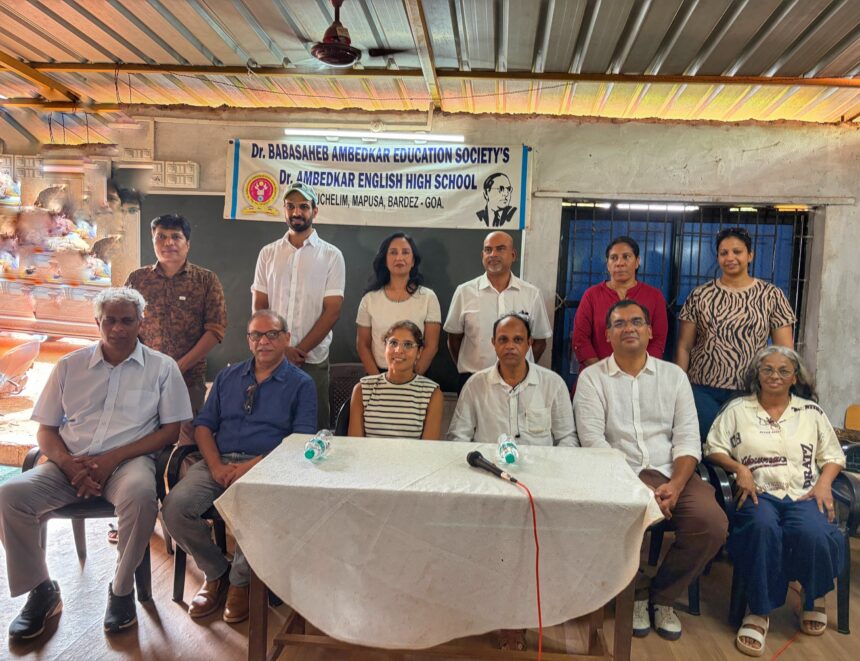
The Cycling Association of Goa (CAG) has entered a new chapter under newly elected president Dr Blanche Themudo, who says her immediate priority is to address the problems inherited from the previous administration and restore transparency and accountability within the organisation.
Speaking to O Heraldo, Dr Themudo made it clear that the new leadership does not intend to simply carry forward the previous committee’s work.

“I never said we want to keep the best parts of the previous association,” she said. “We have to clear the mess created by the previous association.”
Dr Themudo said that at the last AGM of the previous committee, outgoing treasurer Viplav Bhakta arrived late and, despite being asked to produce the audited accounts, could not provide them and declined to sit with the management committee. She also referred to an ongoing criminal case involving three members of the previous association over alleged misappropriation of funds during the National Games.
“We will have to sort out the finances and clean the mess created by the previous association,” she said.
Restoring financial discipline will therefore be among the association’s immediate priorities. A retired Income Tax Officer has been appointed as treasurer, with Dr Themudo confident that the appointment will bring greater accountability to the organisation’s finances.
“She is very methodical and we know with her we can expect everything to be kept in proper order and complete transparency,” she said.
Road safety is another major focus. Dr Themudo identified safer cycling infrastructure, greater awareness and enforcement among motorists, and a formal mechanism to identify and address cycling black spots as three key priorities.
The association plans to work with the Traffic Police, PWD and local authorities to identify dangerous stretches, improve road conditions and junctions, promote safe overtaking and responsible driving, and create a channel through which cyclists can report safety concerns.
The issue is particularly relevant to the association’s selection trials. Dr Themudo said previous trials were at times conducted on open roads without adequate safety arrangements.
“It’s not illegal, but it’s not safe,” she said.
She said proper permissions and traffic-management measures are especially important during time trials, when cyclists ride in a tucked position and have limited visibility of the road ahead. She also recalled an earlier road-race trial where riders had to arrange their own vehicles for safety, following which a cyclist crashed during a descent and suffered minor injuries.
Beyond safety, Dr Themudo believes uncertainty surrounding selection trials has discouraged participation. She said around 18-20 cyclists had previously turned up for trials, compared to just five last year.
With the Nationals scheduled for November, she said trials should ideally be completed by September, allowing selected riders enough time to prepare and peak for the competition.
The CAG also wants to broaden its focus beyond established athletes by investing in schools, junior programmes, women’s cycling, coaching and local competitions.
“We cannot focus only on elite athletes,” Dr Themudo said. “Investment in schools, junior programmes, women’s cycling, coaching and local competitions will create the next generation of Goan cyclists.”
For young riders, however, talent alone is not enough. The financial burden of competing at the national level can be substantial, with Dr Themudo estimating that a family may have to spend ₹60,000-70,000 on travel, accommodation, bicycle transportation and other expenses.
The association therefore plans to organise road races, attract sponsors, develop corporate partnerships and seek CSR support, while working with the government and sports authorities on a structured athlete-support programme.
Dr Themudo also sees Goa’s existing cycling community as an important strength. Several members of the committee have experience organising and participating in major road races, while the state’s cycling clubs can help mobilise volunteers and identify emerging talent.
Ultimately, her vision extends beyond repairing the association’s immediate shortcomings. She wants to create a clear pathway for a young Goan cyclist — from school competitions and local races to state selection and the national stage.
“We need some grassroots structure to be strong,” she said.
For Goa’s new cycling leadership, the task now is to turn that vision into something tangible: safer roads, credible trials, transparent finances and meaningful support for athletes. The state already has the talent and the cycling community. What remains is to build the structure that can carry them forward.