2014 saw the city of Panjim come alive with
the transformation of the area along the municipal garden, known popularly as
Garcia de Orta into an area of fun gatherings and recreation. With the passage
of time, this movement has only grown. From The Original Bandstand, to the
Samba Square, to being the venue for the Red and Black Dance at Carnival, this
area that has long since seen the rivalry between Clube Vasco da Gama and Clube
Nacional battle it out for the title of ‘most happening’ has come alive once
more.
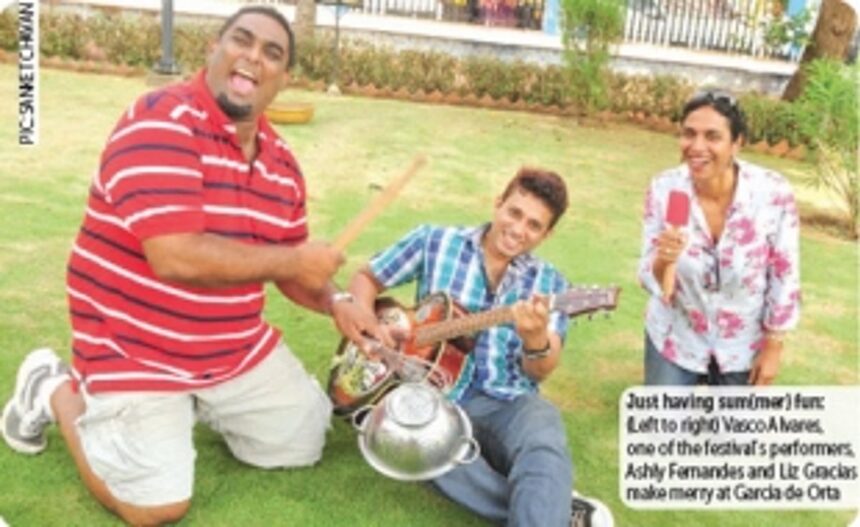
Organised by Vasco Alvares, Liz Gracias and
Richard Dias with the support of the CCP and the Goa Tourism department, the
Summer Street Festival that will be held on April 11 and 12 is an experiment
looking to focus on the benefits of a pedestrianised space within the city and
the viability of doing business in this space.The festival was initially
planned along the Menezes Braganza Road by the National Cinema, the oldest
movie house in Goa, and the triangle in front of Café Bhonsle, elevating an
unnoticed area of Panjim with its narrow streets and by lanes to an interesting
and dynamic space. However, due to work being undertaken by several government
offices, the venue was then shifted to the ever popular Garcia de Orta, already
popular for its weekly event: The Original Bandstand.

“As a group of concerned citizens, we hope
to foster the idea of a congestion-free Panjim, a city that is slowly becoming
unable to sustain the rapid and burgeoning growth of vehicular traffic. We plan
to use the Festival as a platform to ultimately look at the long-term
possibilities in preserving the historical and cultural beauty of the city,”
says Liz.
The street festival also aims to merge the
old with the new. Here, modern day concepts will meet some of Goa’s old
traditions. Elaborating further, popular chef and organiser Vasco Alvares says,
“One major aim of the event is the promotion of the idea of a farmer’s market,
where vendors will sell local summer produce similar to the pre-monsoon fair
(puramento) where local vendors sell ingredients that can be bought and stocked
for the monsoon. This will also include a flea market with local and homemade
preserves, artisanal bread and pastries, curios and artifacts on display. Local
artists will also come together to showcase organic clothing, paper jewelry,
accessories, designer shoes and everything interesting in fashion along with a
street art gallery. There will also be a first of its kind street salon for men
and women to get groomed right within the festival grounds.”
And what festival is ever complete without
food? The food court will showcase some of Goa’s best restaurants, serving
various kinds of cuisine, dessert, ice cream, waffles, crepes and a whole lot
more, washed down with chilled summer drinks that highlight local favourites,
Feni and Urrack.
Therewill be a whole host of entertaining
acts, beginning with music from Goa’s talented musicians busking and performing
on the street as well as the stage. There will also be a stage for comic acts,
impromptu acts and even an ‘open mic’ for anyone to come up and entertain the
crowd. And while parents inevitably have concerns of how to keep their children
occupied, there are plenty of kid’s activities to keep ‘gen next’ entertained.
In similar vein, for movie buffs, there will be a screening area where various
films of different genres, from Charlie Chaplin to Japanese animation will be
showcased.
Lastly, in an attempt to make memories of
the festival last for the sake of posterity, there will be a photo booth with
props set up at one end to ensure that visitors can take their pictures and
memories away with them. After all, if festivals like these don’t ensure that
memories of a Goa that was, and in certain pockets still is, are preserved, one
will be hard pressed to find something that does.