Vivek Menezes
Just as it became obvious his gallant football team was going to be unfairly refereed out of their hard-earned and historic triumph against Argentina in the World Cup quarter-final earlier this week, the Egyptian coach Hossam Hassan threw up his arms in the official FIFA “no racism” symbol to alert the referees about racial abuse on the pitch. We’re all painfully aware nothing happened, and in fact, it was Hassam who was reprimanded with a yellow card, but his wordless gesture flashed around the world instantly indelible, as a vivid embodiment of all the betrayal, anger and frustration of that dreadful moment.

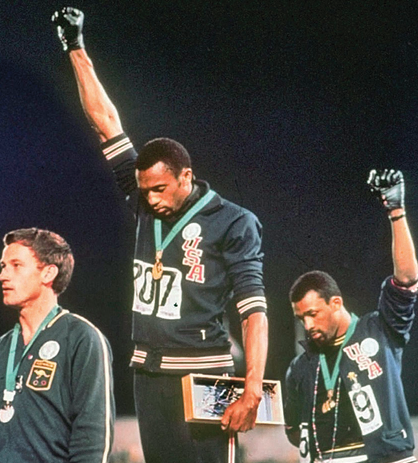
Those images will outlive and overshadow anything that might happen in the field of play during the rest of this fatally tainted World Cup, because this is civil rights, bigger than any game, and very much like the famous Black Power silent protest by Tommie Smith and John Carlos at the 1968 Mexico City Olympics that reminded the world African-Americans were still being systematically oppressed.” 21 years ago, the great Italian scholar/philosopher/writer Umberto Eco showed up in Goa, and I wrote at the time in this paper (a bit playfully, but it was not a joke) that it was an obvious sign unprecedented change was now upon us: “it used to be that whole centuries would creep by without anyone paying attention to this blessed patch of the Konkan, we were the land in which history keeled over and died, a land visited only by retirees and hippies and fugitives.
That was then, we’re a scant half-decade into the new millennium and suddenly we find that Goa is part of a global now. Direct international flights pour thousands of foreigners onto our soil each week, we’ve become a preferred playground for Muscovites and Sabras, you turn a corner and find an international celebrity giving an unpublicized lecture to an unknown audience. Hey presto, ecco Eco.” The point was “Eco is professor of semiotics at Bologna and his speciality views culture as an intricately linked arena of signs. With other important postmodernists (like Roland Barthes), he has argued that this endless web of signs and signifiers are messages that carry hidden meanings; these meanings can be decoded, semiotics is about recognizing and interpreting the hidden meaning in everything. Eco has said, “I’m interested in everything… the semiotic glance is excited by every aspect of life.” Thus, to me, the mere fact of his improbable arrival was already clear evidence “we’ve now been globalized into a curious kind of world circuit” and so it has indeed come to pass. The semiotics of sport are never so potent as when race, nationality, religion, inequality and exploitation all come together in the global eye of the storm, which is precisely what has happened at this World Cup in North America. We have all seen the vicious treatment meted out to Iran by US authorities – the very epitome of poor sportsmanship – and the fact five teams from Africa have been eliminated in the last five minutes of their games seems like an unlikely coincidence.
All this is in the background of Hassam’s defiant, dignified protest, imbuing it with myriad potent story lines. Certainly, most of the world sympathized with his comments afterwards: “I do not want to put it nicely and talk about hard luck. We have been cheated unfairly today; we have suffered injustice. We haven’t seen respect or fair play. There has not been respect or fair play. A penalty was ruled out, was not even checked by VAR. A second goal was remarkably disallowed. There has not even been a VAR check when we have all seen the image of the [shirt] being pulled back. There have been a lot of things to be questioned on and off the pitch. I am not going to continue following the matches of this World Cup. This is my own way of speaking up.” “The arc of the moral universe is long” said Martin Luther King, so it is too much to expect true justice in real time, but I do believe we are experiencing an unmistakable global paradigm shift after Hassan’s silent gesture of defiance. It is already apparent that no one who watched the match remained unmoved, as the highly decorated Portuguese coach José Mourinho (he is currently at Real Madrid) puts the collective reaction succinctly: “[Egypt] was robbed in daylight. When you play against this Argentina team, being 2-0 up is never enough, because you are not just trying to beat eleven men on the pitch.
You are trying to beat the whistle. You are trying to beat the VAR room. You are trying to beat the entire script of the tournament.” That is real outrage – which is mirrored and rippling all across the football world as well as in our families – and it points to the certainty of real change. Infantino and Trump may be able to get away with this utter disgrace in 2026, but there is no way the World Cup can retain any integrity or importance without serious reforms before future editions. It’s definitely going to happen. Mabrouk and thank you, Hossam Hassan.