They
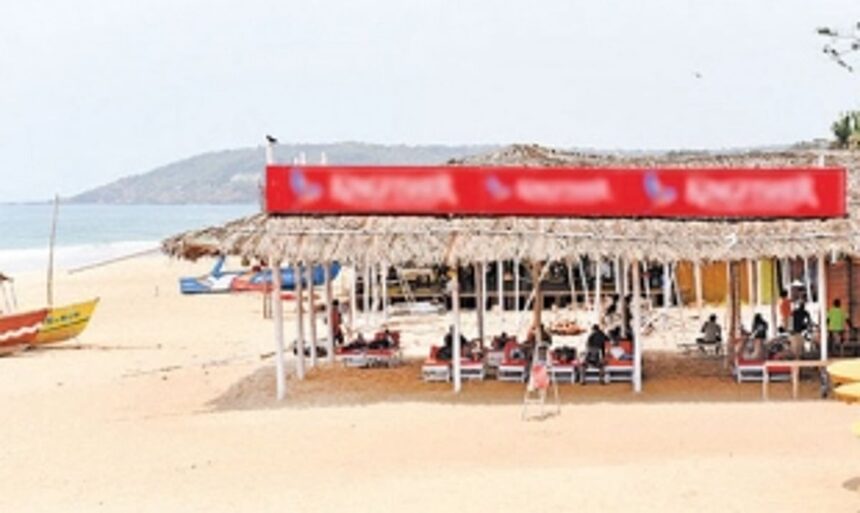
dot the landscape along the beaches of Goa. You cannot miss them. Shacks on the
beaches of Goa are like amateur footballers in the state. Dime a dozen. These
shacks have been present for several years now and have been a place for
tourists to come and relax and spend a day. But now the spread of COVID
19 has changed everything as it has in all aspects of life. The shacks are
shut, the industry is at a standstill and tens of thousands of jobs are now up
in the air. No one seems to know what is going to happen next. The
contracts for the shacks were mostly with Goans but the employees in the shacks
were always migrants. Migrants from Manipur, Jharkhand, Bihar, UP, West Bengal,
Karnataka, and Maharashtra made up a bulk of this workforce. Now they have all
gone or in the process of returning home. The train services have commenced to
the distant parts of this vast country. This is the monsoon season, officially
the offseason where everyone leaves for home. But these are very strange times.
The migrant labour has been treated very poorly as he or she has tried to reach
home. The point is, will they return to Goa in August, September, or even
November when the season is moving into high gear?Cruz
Cardozo, President, Shack Owners Welfare Society, Goa, was surprisingly relaxed
when he said “As of now we don’t know how many tourists are coming. If 25% of
the tourists come this year, we will be able to manage comfortably. If we get a
large percentage of domestic tourists, we will have to only make Indian food
which we can manage. Otherwise, if we had international tourists, our menu
would be extensive. I will admit, if we attract tourists like we did last
season, we will not be able to manage”.
One View: Goan families can run shacks He
then went on to say it would be wrong to even question if the migrants would
not return. He said “You could ask, what if the tourists don’t turn up. You
have to remember there are several shacks run entirely by families all over the
state. They don’t have employees; they cook and serve the guests. They
may have one employee to cook tandoori otherwise it’s all in the family. I am
confident the workers will return. Even if a percentage of the workers return,
we will be able to manage”.

The other view: Migrants will find good jobs in home states
& Goans here will not do those jobs That
may be just one viewpoint Jacob John, GM Whispering Palms had an entirely
different argument. He said “It looks like a very dicey situation to be in. The
boys went back despite being given food and accommodation and they were
determined to go. Many of them have said that their places like UP and Bihar
were changing rapidly. Several companies they said were setting up factories in
their states and they could get jobs there. Others said they would return to
farming. The fact is they will get better wages there. It is a very fluid
situation. If they don’t return, it will be very bad”. He went on to say
the CM had said that there were ten thousand jobs but he did not visualise any
Goan picking those jobs. He felt this subject ought to be relooked in the month
of August to get a better idea of the situation on the ground. Companies
setting up plants in the Hindi heartland is great news but perhaps not so good
news for Goa.
Third view: Goan hospitality professionals returning will help
out Nilesh
Shah, President TTAG felt with a large number of Goan professionals from the
hospitality industry returning home it would not be a problem. He said “Many
have returned home from the ship and will take a while to return to their
assignments. They may not get the salary they are used to but they will have a
job which will keep them occupied till they get a call from their companies.
And with regards to the migrants, I don’t see why they will not return. They
are used to a certain standard of life here in Goa which is not possible
anywhere else. Perhaps everyone may not return but I foresee a substantial
percentage returning”.
Important view: Movement of migrants away from Goa will have an
impact on beach shack industry Asst.
Prof. Cheryl Venan Dias, HOD-Department of Tourism Studies, S.S.Dempo College
of Commerce and Economics, Cujira, Goa gave academicians viewpoint. She
felt the movement of migrant labour especially the ones servicing the beach
shack industry would have a huge impact on this sector, resulting in a skill
gap in Goa especially for those with culinary skills, the waiters and
housekeeping staff, and other skills such as performers and entertainers. She
felt it would be a challenge to employ Goan labour as their demand for
remuneration would be higher. This she felt would impact the economic system as
there would be limited takers for the licenses given by the Government for
setting up of shacks. This could result in the decline of the industry.
The multiplier effect created by tourists by consuming the shack products also
will take a nose dive she said. The revival of this industry would need a
change of attitude and dignity of labour towards the service industry.
The radical view: Shacks may not be needed at all; have
become centers of illegal activities Perhaps
the most savage analysis of the situation was given by Savio Messias the former
President TTAG. Going back in history he said the first shacks made their
presence felt twenty-five to thirty years ago. He said “There were hardly any
restaurants on the beach, so this idea was introduced. Those times only the
charters came and the tourists wanted to sunbathe. Then there were a handful of
restaurants in Calangute and Candolim like Souza Lobo and Brittos and it was
fine. The few shacks present fulfilled their purpose. Then political pressure
was used and the number of shacks began to increase and today we know what the
situation. Explaining
further, he said that today no sunbathing takes place. It’s very noisy in the
north. In the south, the beaches are wider and quieter. Now I believe this
virus has given us an opportunity to sort this problem out. Earlier shacks used
to operate only in the afternoons and the tourists used to go to restaurants to
have dinner. Many people had shacks as well as restaurants. Now, all that has
changed. The number of foreigners has decreased and the number of domestic
tourists has increased. The illegal activities in shacks have increased
dramatically. The question we need to ask is if we really need shacks. Remember
Spain had shacks and then they did away with them and they did not suffer”. Messias’
point of view will raise the hackles of people in the business no less. But the
question as to the future of the shacks is very important because also lies the
question as to how does Goa wants to conduct its tourism. The return of the
migrants will certainly have a lot of answers for the industry.