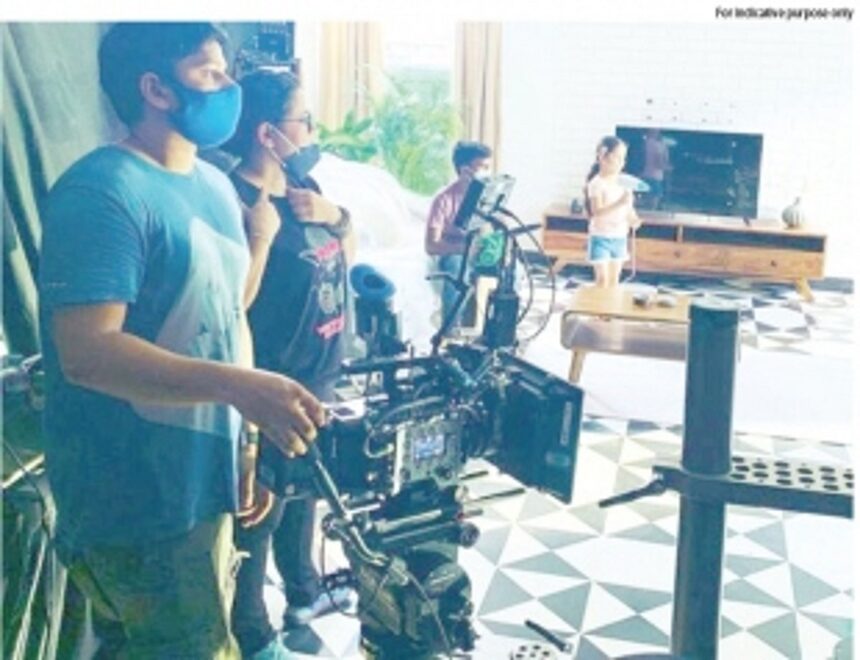
Everyone watches films without a doubt. This is so very obvious in our country. Movies in all the languages are produced and watched with great interest. The actors in them are followed with great interest. It feeds a multimillion rupee industry. Well that’s that. Then there is the world of documentaries. For the uninitiated a documentary film or documentary is a non-fictional motion-picture intended to “document reality, primarily for the purposes of instruction, education, or maintaining a historical record”. It has also been characterised as a filmmaking practice, a cinematic tradition, and mode of audience reception [that remains] a practice without clear boundaries. Fair enough. Now Goa has a couple of documentary film makers who are at it making films publicising various aspects of the cultural life or even its political life or its wildlife or anything else that catches their eye. Now with the virus receding and its effects felt much less how are the documentary film makers reacting to it all. The two years have been terrible for everyone. Has it affected them in a way so as to change the way they approach their art and has it made them rethink their choice of subjects.
Tinky George a documentary film maker who also dabbles in the world of commercial cinema said in 2019 he had made a film on football along with Durgadas Prasad. He said “Soon after the pandemic stopped everything and we twiddled our thumbs for two years. We uploaded the film on an online platform. All the films from Prasad Creations are on that platform. In these two years, there were no documentaries. In 2019 we had two films in IFFI. Now we are planning to start a new feature film”. Asked if the virus and its effects had made him change his mind on the kind of subjects he would tackle he said, they would all be coloured by peoples experience with the virus. The film he said would be based on a true story. With regards to documentaries he said they had done some small films on the elections and had even applied for a competition but it amounted to nothing. He expected the future to be dominated by films talking about the experiences of people during the virus.
Sidharth Yaji is a documentarian who said the virus had affected them in so many ways. He said “We cannot shoot outside in these conditions still. It has however benefited our online business inc. People are now used to watching movies online on platforms like Netflix and Zee 5. People watch them on laptops, mobiles. People are now also watching documentaries at home. We are not making money but viewership has certainly increased”. He said that people were now interested in certain situations around the world. The war was a subject which generating much comment. Before that it was something else. People he said were bored sitting at home and wanted to watch something new and different. People were now passing the word around about documentaries which was helpful for the genre, which was not watched generally. With regards to generating funds he said they were always looking around for funding or some sponsorship. He said “I am also a line producer which helps me make documentaries on the side”.
The very young Kabir Naik who is also very prolific documentary film maker said there were several lessons to be learned from the pandemic. He said “We now work with smaller crews and I have learned to do much on my own. It is great for the documentary. Bigger crews tend to intimidate the subjects. Smaller crews can help ensure authentic answers from the subject”. He pointed out that with people increasingly using online platforms to communicate; the ease of people in front of cameras had increased. In addition, documentarians work on tiny budgets but now the increasing use and comfort of platforms like Zoom meant, eminent people could be contacted anywhere in the world and make them part of the documentary film. Technology he said had made the entire process more open. A lot of people he said were now returning to doing what they wanted to do. Understating this cultural shift, he said was very interesting. People are now watching more real content. Fiction still remained strong but more people were watching documentaries. People he said had realized there was more to life than just working and just existing. With regards to subjects being tackled he said it was not possible to discern if there was a change. Yes, he said people wanted a more fulfilling life. He however said a lot of people were now entering as filmmakers which were great for the craft. He felt that in the future, documentaries would play in big role in understanding the future. Everything he said was a goldmine for the documentary film maker.
Mohan who is part of Eco Warriors said nothing had changed in terms of perspective. He said during the pandemic there were several documentary film makers but he was part of a small group who worked in as a team of two during shoots. They had worked on a documentary on movement of migrants during the Covid pandemic but otherwise had kept a low profile. This they said was a not for profit initiative and all the funds for the films came from within the team. They did not have substantial budgets. It was all done with the intention of raising awareness.
Making documentaries an actor who did not want to be named said was a thankless job. It was usually a labour of love spearheaded by the director and sometimes it could find an avenue to be showcased. Making monies he laughed and said was generally not even in the discussion. But he said it had to be done because subjects not generally touched by mainstream cinema or even the media would come under the spotlight.
That is the motive behind every documentary to throw light on the corners of society. And those in Goa seem to be doing that too. One can only hope they continue to do so.