Last week’s Russian invasion into Ukraine, in my view, was never a surprise. It’s an irony though the crisis (largely, oil and gas at its unseen back-stages) comes days after the COP26, where most nations vowed to deploy alternatives to fossil-fuels over a regulated framework of time!
Not being an expert in foreign policies, I would still like to examine on zero-base, a few details, purely from the eyes of a reasonably educated, well-travelled senior, from the world’s largest democracy.

Without getting too much into the oil and gas pipelines, the Nord-Streams 1 & 2, and intra-European commercial aspects thereof, I’ll just recapitulate on face-value what came out on Monday the 21st, last. President Putin “feared” Russia could come under attack by the Ukrainian far-right government and (the “right”) influence on the country needs to be diminished. He accused Western nations of arming Kyiv against Russia and called for “demilitarisation” and “de-nazification”.
So, now if I can summarise, we have on one side, a Russia, the 2nd biggest military power in the world, the 11th biggest world economy, confronting on the other, a small sovereign republic, 22nd in world military-powers ranking, 60th in ranking of world economies, with the big-brother throwing diktats on policies, on allies and on keeping of arms. Russia’s aggression in Crimea 8 years back and the recent recognition of Luhansk and Donetsk (in spite of the Budapest Memorandum) are clear display of threats, in my view.
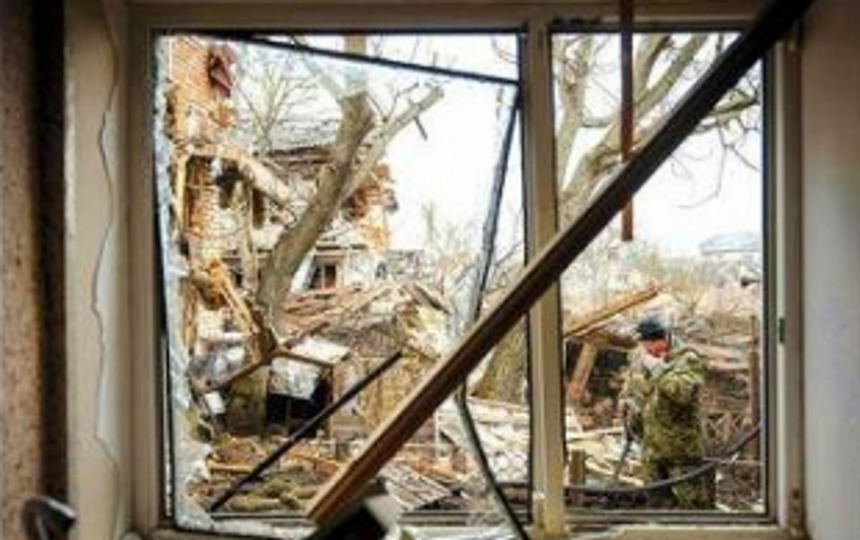
My take: I just can’t reconcile myself, with this blatant bullying of humanity, killing over 5,000 humans (per international media-reports) including innocent children, the traumatic sights of air raids and blasts, seen on world-media and yet for the first three days, all of Europe and NATO (of which Ukraine is an “Enhanced Opportunity Partner”) sat silent spectators! The UNSC convened and they wanted 3 things: a) Deploring the aggression; b) Direction to refrain from use of force against the territorial integrity or political independence of any State and c) Reversal of the decision (of recognising Donetsk and Luhansk as Sovereign States). But as mostly expected we abstained from voting. I’m not exactly clear, which one clause were we really dissatisfied with. These are I thought, the broad contours of our foreign policy as well. I heard a few voices exclaiming “oh! We did this in 1956, 1968, 1979 and 2008,” but how does that matter today? Why should voting against a wrongful action of a friendly nation, stand in the way of political and trade relationships, even though more than 86% of our armed-forces’ equipment originate from them, but did they come free?
Times have changed, should we, the 4th largest world military-power and the 6th largest world economy stay away? I think we could have, in advance strategised, to lead a group of countries like Brazil, Indonesia, South Africa, the ASEAN, the BIMSTEC countries for example, to put pressure on parties in the forefront and those behind, to come to the table for de-escalation and dialogue. We need not meddle into bilateral issues; we only want the UN Charter respected. We need not only grow as a nation, our image as a world leader, in my view, should grow as well, and this was a golden opportunity, I think, we lost out! It’s important, at this moment thousands of Indians and citizens of other countries remain stuck in Ukraine in an utterly hostile and chaotic ambience per the visuals seen, the evacuation programme on, (earlier perhaps would’ve been better), a young promising life already lost!
I wonder also, exactly where we are on our make-in-India of defence equipment, thirteen years (in two tranches together) was a pretty long time! In this context I read, the Offset Clauses in the Rafale agreement are in default, where are we on that? These are important touch-points for posterity, so we can self-sustain our defence and we avoid falling into awkward company of countries, we’re not happy to be in!
Impacts in India: Our economy was showing signs of slowing down already, from the previous estimates of a growth of 9.2% down to 8.9%. Added to this will now be the inevitable oil-effect. (Crude has crossed $108/- already). Although our oil comes essentially from the Middle East, Africa and the US, we being the world’s 3rd largest oil importer and Russia being the world’s 2nd largest exporters global oil prices are bound to harden, a sure recipe for a slide. Imports, particularly fertilisers and farm inputs might get seriously affected. The financial sector will surely be hit with the Russian central bank frozen in its tracks, due to sanctions from the West. I’m a bit worried whether a significant part of transactions cross over to the crypto platforms and goes out from the normal reporting regime. The “de-swifting” will also have its impact on our $12bn bilateral trade with Russia as on date $900mn receivable by exporters is stuck.
As for Russia itself, its brave-face on sanctions notwithstanding, it’s on a sure path down-hill, the rouble has tanked 35% already and central bank rates have been doubled.
One important area I think is, doctors. India needs more doctors. Our boys and girls migrate to the erstwhile “Soviet” countries majorly because of the economics and facilities of the “package”. India has 0.9 doctors per thousand citizens; Brazil has 2.3, and China 2.0. I think there is an urgent need for affordable, quality medical seats here. Why not invite world-universities with appropriate infrastructure here?
And in conclusion: “Don’t raise your voice, improve your argument…” Archbishop Desmond Tutu had once said eighteen years ago, couldn’t be more topical today, when you read the Russian Representative’s reasons for his veto at the UNSC on Sunday last!
(Binayak Datta is a
finance professional)