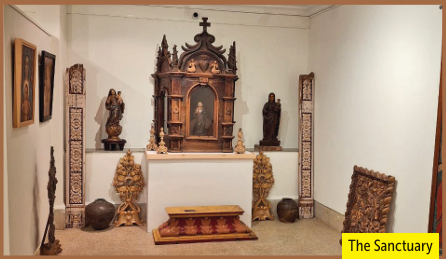
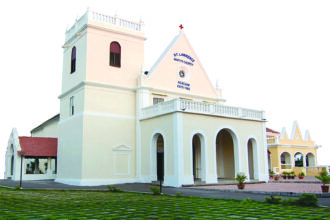
The Xavier Centre of Historical Research (XCHR) Art Museum in Alto Porvorim is set to open on Saturday, February 7, at 6 pm. The inaugural exhibition, titled ‘There Will Be An Answer: Hidden Treasures of the XCHR,’ is curated by Vivek Menezes and Délio Mendonça. The curatorial note reads, “Almost 50 years after the Xavier Centre of Historical Research was founded in 1977, this pioneering research institute has somewhat unexpectedly also become an invaluable community cultural archive. Our library has always been famous for its unique treasures, but we now also bear the responsibility to look after, celebrate, study and share an extraordinary artistic legacy from the brilliant modernist Angelo da Fonseca and the polymathic genius Jose Pereira to centuries old sculptures, carvings and paintings that have been rescued and bestowed here over the years. Many of the works in this first-ever exploration of the entire XCHR artistic archives have never been seen in public. Several were framed for the very first time. There are hundreds more that need similarly urgent care, and we need your support to make it happen. Please help us to safeguard this irreplaceable cultural heritage.” This invaluable collection housed at the XCHR comprising religious and secular paintings, sculptures, and more serves not only to showcase the rich history and artistic talent of Goans but also aims at transforming the XCHR into a vibrant space for community engagement. It will foster conviviality, dialogue, and discussions on issues that impact the people of Goa. Having been a long-cherished project marked by twenty years of challenges and setbacks, the realization of this museum is now a fortunate and meaningful achievement. The event will represent a significant milestone, indeed, a new beginning, in the activities of the XCHR and in the cultural life of Goa. This initiative is also expected to generate interest among art enthusiasts, particularly among Goan artists who serve as influential custodians of the region’s cultural heritage and environmental awareness. Through its museum, the XCHR now offers even more to the public, with countless hours of effort and planning dedicated to its establishment symbolizing its unwavering commitment to the arts and the community. Ultimately, this museum stands as a celebration of Goa’s rich artistic heritage. The inauguration of a new museum is a momentous occasion that invites reflection on its initial phase and early development, to celebrate what may be perceived as a successful and joyful story from its very beginning. Undoubtedly, the history of this museum, beyond symbolizing cultural growth, artistic maturity, and community engagement, was neither linear nor easy. In fact, most galleries and their visionaries encounter early challenges, ranging from financial uncertainties and the inability of authorities to recognize a museum as an invaluable cultural and educational asset, to widespread indifference or disinterest in human artistic talent and creativity. Achieving success often depends on perseverance and favorable perceptions with changing times. One of the curators, Délio Mendonça says, “After twenty long years of waiting and dreaming, without losing hope because those directly involved in this project believed that “there will be an answer” someday our perseverance was truly worth the effort. Fortunately, all forces finally converged after all those years to establish this enduring museum. Reflecting on the history of the museum and the treasures of the XCHR, it becomes clear that a providential hand was at work, granting a rare second opportunity in history for the XCHR to create a museum that preserves its treasures and enriches our social capital. How often do we encounter such great opportunities and get a second chance?” The XCHR, a Jesuit institute, established with foundational support from local and international well-wishers, is now preparing to expand its art programmes and space to address emerging educational challenges and priorities. The art project of the XCHR fits perfectly into India’s new National Education Policy (NEP) 2020 that advises the use of and approach to art as an integral part of the curriculum in order to promote art-integrated learning across all school stages and higher education for holistic human and environmental development. More importantly, this art project is intrinsic to the original objectives of the XCHR. As a recognised institute of Goa University, the XCHR houses one of the most renowned private libraries in the state with over 35000 volumes. Its extensive collections include the history of Goa as well as of the arts and culture of Goa and India. These resources attract researchers and scholars from across the region. To date, the Centre has published over 60 volumes of original research, including works on Christian art in India, playing a vital role in studying, interpreting and preserving Goa’s unique ethos and identity. The XCHR has consistently contributed to research, and celebration of Goa’s unique and inclusive culture, art and material heritage. Goa’s layered social and cultural identity holds even greater significance for India today, underscoring the urgent need to safeguard its rich heritage amid unprecedented threats. Positioned as one of the custodians of Goa’s physical legacy, the XCHR aspires to become a prominent space for dialogue, social sharing and community engagement. Research in history and culture relies heavily on collections of artifacts and art displays which serve as living documents of the past and references for the future. In other words, they are sources for history writing and conversation. Among the XCHR’s most significant art collections is that of Angelo da Fonseca, a modernist as mentioned before, with works that bridge the East and the West. His legacy includes hundreds of drawings, watercolours and oil paintings that offer invaluable insights into the cultural history of India. This collection ranks among the most significant repositories of Christian art worldwide. Additionally, the XCHR is custodian of other artifacts and paintings, encompassing both historically significant religious items and contemporary art. The XC will exhibit these works to ensure their preservation, foster art literacy and promote social education among visitors. “Future initiatives will feature invitations to contemporary Indian artists to showcase their work. Additionally, a dedicated space for Young People’s Art is planned to foster their ethical and civic responsibility through critical thinking and artistic expression. Art programs and workshops will also be organized to promote environmental stewardship and a deeper care for our shared planet,” says Délio. This museum marks the first step in a broader vision of the XCHR to develop multiple activities and spaces that promote meaningful research and artistic expression. It aims at fostering individual and community creativity while enhancing appreciation and conservation of Goa’s rich natural heritage. Along with the opening of the museum and its research library, the XCHR will evolve into a vibrant hub of cultural and intellectual life, engaging more effectively with the public amid Goa’s environmental exploitation. “Our gratitude goes to Rinald D’Souza, SJ, director of the XCHR; Pedro Rodrigues, SJ, provincial of the Jesuit Goa Province; and Vivek Menezes, curator of this exhibition, for their unwavering support and for recognizing the vital role of art in society. After all, you, just as they, are the answer!,” concludes Délio
XCHR Art Museum opens to unveil hidden treasures of Goa’s cultural heritage