BLAISE COSTABIR

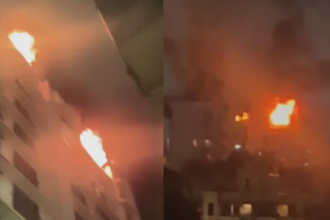
Recent headlines have created the impression that the Arpora night club fire was the worst trag edy to befall Goa, simply be cause it claimed 25 lives. This reveals an uncomfortable truth: Public memory is pain fully short. Goa’s deadliest man-made disaster remains the collapse of the Ruby Res idency building in Canacona in January 2014, which killed 31 workers. That catastrophe should have marked a decisive turn ing point in Goa’s govern ance. Instead, it has faded into a footnote. The inquiry identified poor design, de fective structural work, and negligent execution as pri mary causes of the disaster. The V. K. Jha Commission of Inquiry later submitted a detailed report. It identified poor structural design, weak foundations, the use of sub standard construction mate rials, and serious regulatory negligence as the primary causes of the collapse. Re sponsibility, at least on paper, was clearly established. More than a decade lat er, justice remains painful ly incomplete. The accused walked free, reportedly be cause the prosecution case was “weak”—a weakness that itself raises disturbing questions about intent, com petence, and institutional will. Ruby Residency is not merely a tragedy of the past. It is a living symbol of insti tutional amnesia—a remind er that in Goa, disasters may shock briefly, but account ability rarely survives the news cycle. Goa today is facing a grow ing string of incidents that echo one message: Account ability is missing in action. Not absent quietly, but ab sent boldly, confidently, and with entitlement. The fire at Birch by Romeo Lane and the shocking restructuring pillars of the Dabolim flyover — reveals a disturbing pat tern that links past failures to present chaos. The devastating fire that broke out recently at Birch by Romeo Lane, which reported ly had no licences, was built on a salt pan, no fire clear ance and no pollution board approval. We see this situa tion often where aesthetics and contacts take precedence over compliance. The real shock is not the fire — accidents do happen — but the fact that everyone knew about the violations and did nothing. When au thorities ignore complaints, when inspections become mere paperwork, when viola tors know they can “manage” instead of comply, disasters are not possibilities; they are eventualities. Who cleared the place? Who inspected it? Why was the stay on demolition not vacated? Who all turned a blind eye? So far, the answers are vague. Action is symbolic. Accountability, again, is miss ing. If Ruby Residency was a symbol of past structural fail ure, the news that the pillars of the under construction Dabolim flyover are to be cut to reduce the height so as to avoid breaching the funnel zone height restrictions. A flyover pillar is a primary load-bearing structural ele ment—its integrity directly affects the safety of the entire bridge or flyover. Decisions to cut, modify, or compromise such components without a formal structural study or engineering assessment are highly irregular and poten tially dangerous. How did this happen? Who authorised the construction in violation of the rules? Who submitted the answer to the Union Minister for surface transport, because he had de clared in Parliament that the flyover had all the requisite permissions. Was it an engi neering decision, a contrac tor shortcut, or a bureaucrat ic cover-up? Again, what is missing is not rules, but enforcement. Not systems, but accounta bility. Governance has become reactive, not preventive. We wait for wrong to be exposed and then rush to create com mittees that recommend what we already knew but no one pays the price, except the common man. The price we pay for in stitutional negligence is not only measured in lives lost or money wasted. It is measured in public confidence eroded. When people start believing that rules apply only to the powerless and accountability applies to no one, democratic trust collapses silently. If Goa wants to prevent another Ruby Residency, an other Birch tragedy, another flyover scandal, it needs a radical shift. What is appar ent is that there is an invisi ble hand pushing the bureau crat to close their eyes, to not take action or bury the issue in red-tape. If they benefit financially from this is sub jective, but what is clear is the faith of the law abiding common man is eroding day by day. Hence it is time that bu reaucrats are held criminally liable not just administra tive reprimands, for negli gence that endangers life. They should be terminated, like was done to four DGCA officials in the aftermath of the Indigo meltdown. The current slap on the wrist of suspending an official is not working, they get reinstated in a few months with all the back wages. They just come back, even more willing to bend rules. Once there is a price to pay for allowing the invisible hand to direct the operations, the bureaucrats will think twice before breaching the law or turning a blind eye. The invisible hand every one knows belongs to the politician, who benefits fi nancially big time. It is heart ening the High Court has taken suo moto notice. It would have been must bet ter if the Government had announced the same bowing to public sentiment instead of persisting with a magis terial enquiry. The Collector has no power to summon panchayat secretary let alone the Chief Secretary and more importantly his office is also involved in the lapses. The sections the police apply are also crucial to the direction or breadth of investigation. Criminal conspiracy and abetment must be added, this will allow the investigations to look into all aspects of the case and connect the dots. We are given the impression that with the arrest of the Luthra brothers all is well. They will get bail in a few days, but they were assisted by many in this business that cost the lives of innocent. The law must catch up with these officials. A system that holds no one responsible will continue to produce tragedies. Ruby Residency was sup posed to be Goa’s wake-up call. Instead, it became the beginning of a pattern. What followed are symptoms of one deep problem: Our refus al to enforce accountability before disaster strikes. Until accountability be comes visible, predictable, and uncompromising, we will keep living from one prevent able tragedy to the next. The question is simple: How many more warnings do we need before we change course? (The author prefers to write rather than chat in a balcao).