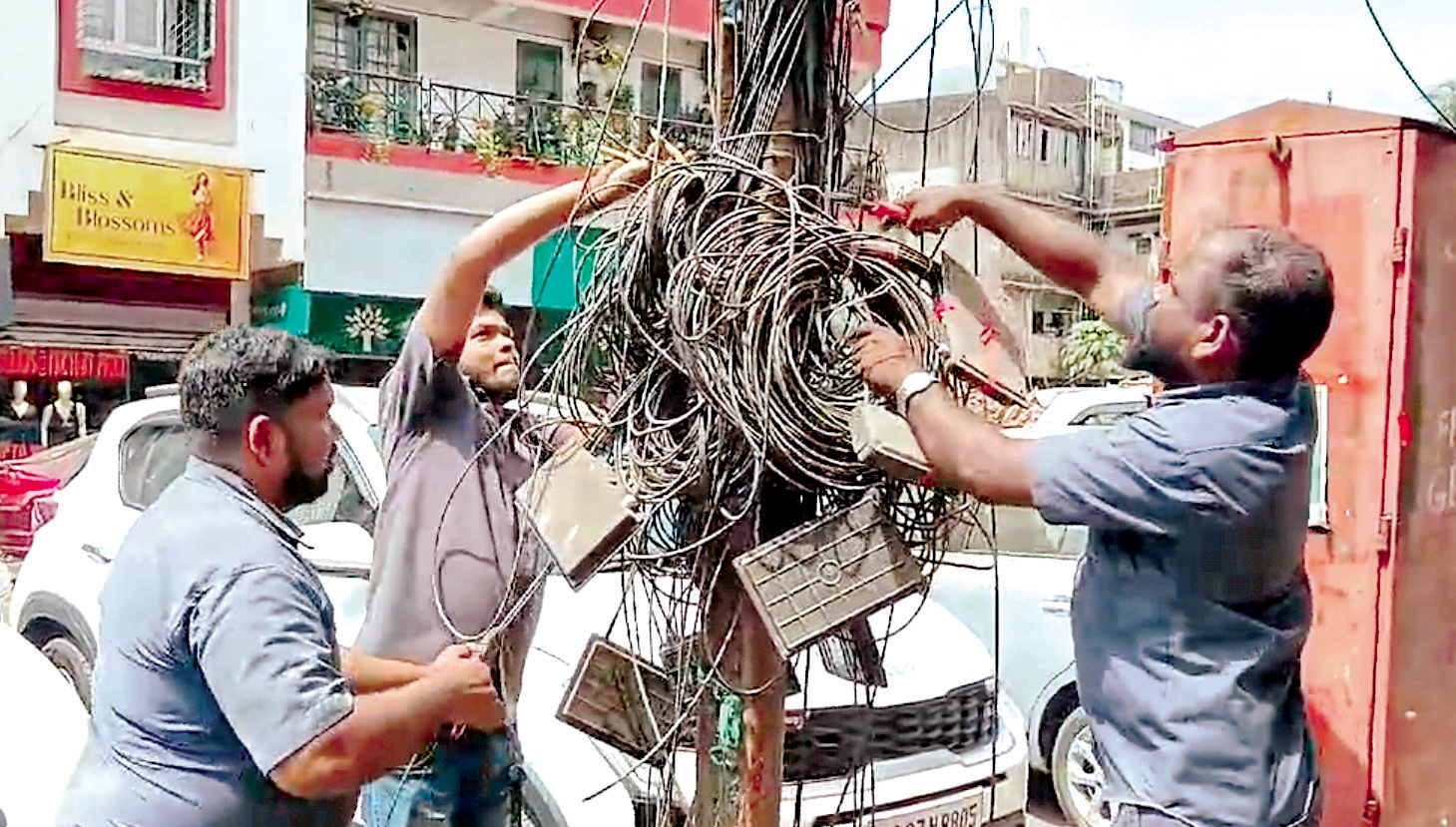
The recent crackdown by the Electricity Department on illegal internet service cables hanging from electricity poles has sent shockwaves across Goa. On Tuesday, in a sweeping move, the department severed cables from around 43 poles in Panjim alone, plunging businesses, professionals, and countless citizens into digital darkness. This abrupt action disrupted critical internet services, leaving many establishments paralysed and causing substantial financial losses. While the issue of unauthorised cable usage has long been brewing, the sudden, heavy-handed approach taken by the authorities raises serious concerns about governance, preparedness, and the government’s understanding of the digital era’s essential needs.
The Electricity Department justifies its actions on two fronts: loss of revenue and security concerns. While these arguments hold merit individually, their simultaneous invocation raises doubts. If revenue loss was the primary concern, then security threats were evidently not urgent enough to warrant immediate action. Conversely, if safety risks posed by hanging cables were genuinely critical, then all non-electricity cables, including authorised ones, should have been banned outright. The inconsistency in reasoning suggests a lack of coherent policy planning, leaving common citizens to bear the brunt of bureaucratic inefficiency.

What makes this situation even more troubling is that cable operators had approached the High Court seeking intervention. However, the court refused to stay the Electricity Department’s crackdown. Following this legal green light, the department escalated its actions, seemingly without considering the real-world consequences of their decisions. The affected citizens—small businesses, students, professionals working remotely, and online service providers—found themselves cut off overnight, with no prior warning or alternative solutions in place.
The crux of the problem lies in governance failure. The internet is no longer a luxury; it is as fundamental as electricity and water. The abrupt severing of cables without an immediate backup plan indicates a lack of foresight. Service providers argue that they are willing to pay fees for using the poles, but they contest the high charges demanded by the Electricity Department. Additionally, they claim that paying the entire amount at once is financially unfeasible. The department, on the other hand, asserts that it is merely enforcing existing rules. However, a question arises—if these regulations were always in place, why was enforcement delayed until now? And why was no structured resolution sought before resorting to drastic action?
Beyond revenue and security, another key concern is the authenticity of the networks operating in the State. With cybercrime on the rise, ensuring that only legally authorised and well-regulated service providers operate is crucial. But a blanket shutdown is not the solution. The government must take proactive steps to scrutinise these networks and ensure compliance with security standards without disrupting essential services.
The ideal long-term solution is clear: underground cabling. Modern urban infrastructure worldwide has transitioned to underground ducts for internet, telecommunication, and power lines. This not only eliminates safety hazards but also ensures a cleaner, more efficient urban landscape. However, service providers argue that the existing infrastructure, even in so-called Smart City projects, lacks sufficient underground ducting. This has forced operators to rely on existing electricity poles, an arrangement that saves costs and time but has now resulted in regulatory conflict. If the government is serious about resolving this issue sustainably, it must accelerate the development of robust underground cabling infrastructure and provide clear, enforceable guidelines for all service providers.
Dialogue is the need of the hour. Authorities must engage with service providers, urban planners, and technical experts to craft a solution that balances revenue, security, and uninterrupted service. Without swift intervention, the situation could spiral into public outrage, with citizens demanding accountability for the disruptions they have endured.
Enough damage has been done. The time for bureaucratic standoffs is over. Goa’s leaders must now take charge and ensure that this critical issue does not snowball into a crisis that could have been easily prevented with better planning and coordination. Internet access is not a privilege—it is a necessity. The government must act accordingly.