The write fight
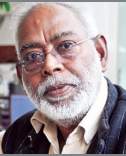
Goa’s literary giant; Konkani’s only Jnanpith Award winner Ravindra Kelekar, who passed away on Friday, was first a Gandhian activist and freedom fighter. One who dedicated his life to Konkani, Goa and the nation at the tender age of 21, he participated in Goa’s struggle for Liberation, and for the cause of Konkani and the Goan identity.
He was born on 25 March 1925 in Cuncolim. His father, Dr Rajaram Kelekar, was a doctor who translated the ‘Bhagwad Gita’ into Portuguese. The momentous events of 18 June 1946, when Ram Manohar Lohia ignited the fires of the Goan revolution, ignited in him a firm desire to liberate his motherland from the Portuguese yoke when he was a student at the Lyceum in Panjim.
In 1949, he left Goa for Wardha, to be with noted Gandhian Kakasaheb Kalelkar, where he lived until 1955, when he was appointed as librarian of Gandhi Memorial Museum in New Delhi. Within a year, he gave up the job, started the weekly ‘Gomant Bharati’, in Roman script Konkani, and plunged into the freedom struggle. Imprisoned by the Portuguese, he remained in jail till the Indian Army liberated Goa in 1961.
Goa was free, but his struggles were only beginning. Ahead was the David-versus-Goliath struggle to thwart the determination of Goa’s popular Chief Minister Dayanand Bandodkar to merge the fledgling territory with neighbouring Maharashtra. But as in the Biblical tale, the David of Konkani and Goa triumphed over the Goliath of Marathi and Maharashtra, in the historic Opinion Poll of 1967.
But there was still more to fight for. Ravindra-bab’s literary activism – to get the Konkani language its due status as an independent language, and not as just a dialect of Marathi – was ahead. This was not just a political struggle, but a literary one as well. And it was in this period that he wrote his finest – both books and works of advocacy – till in 1975 the Sahitya Akademi recognised Konkani as an independent language. Fittingly, Ravindra-bab won the first Sahitya Akademi Award in Konkani for his travelogue, ‘Himalayant’ (In the Himayalas), in 1977.
From then till 1987 was a turbulent period of intense struggle, and of writing. As a father figure of the Konkani movement, he guided its leaders and the people. In 1987, the Goa Assembly finally declared Konkani to be the official language and, as a result, Goa gained statehood on 30 May of that year.
For Ravindra-bab, fighting and writing were two sides of the same coin. For him, the struggle ended in 1992, when Konkani was finally included in the Eighth Schedule of the Indian Constitution. As the doyen of the Konkani movement, he had declared this as its ultimate aim, and he announced his retirement from public life, to concentrate only on writing.
But there was much, much more in store for him. He was awarded the Sahitya Akademi Fellowship in 2007, followed by the Padma Bhushan in 2008 (the first resident Goan to win the award). In 2009, it was announced that he had been conferred the Jnanpith Award – India’s highest literary honour – for the year 2006. This was as much a mark of recognition for Konkani, taking its place with other modern Indian languages whose literary achievements merited the award.
The award was presented just a few weeks ago in the Kala Academy, where Ravindra-bab accepted it seated in a wheelchair. But though his body was frail, his mind was sharp as ever; he warned that blind pursuit of English would only breed ‘bonsai’ intellectuals in India.
As is only appropriate, he was cremated with full state honours in his native Priol, where he lived ever since he returned to Goa from Wardha. That he saw Goa and Goans as one – regardless of caste or religion – was emphasised in the fact that Fr Alfred Almeida also offered final prayers to the departed soul. Ravindra Kelekar lived and died for Goa. Every Goan mourns him.
30 August,2010