The Laxmikant Parsekar government has just ensured that no decision will be taken on the Medium of Instruction issue in the next few months. By constituting a 17-member advisory committee that will deliberate on the matter and report on the issue so as to facilitate a decision, what the government has managed to do is buy itself some time. Four months is what the committee has been given to arrive at a decision, but given how committees are known to seek extensions to their terms so as to complete their deliberations and prepare a report, the State could well have a new government in place before this committee presents its report.
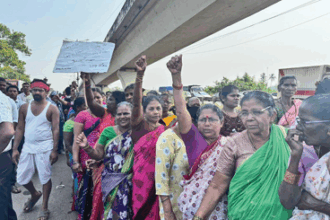
Announcing the committee, Parsekar said that the State has turned into a battlefield on the Medium of Instruction. The Chief Minister and his government is perhaps feeling the heat from the Bharatiya Bhasha Suraksha Manch (BBSM) that has begun to boycott government functions and has even greeted Parsekar with black flags, even when he entered the venue where he was being felicitated on his 60th birthday. While it has the BBSM applying pressure on one side seeking that grants to English primary schools be stopped, there is the Forum for Rights of Children to Education (FORCE), that is demanding that the cabinet decision on giving grants to English schools be incorporated into the Education Act, giving it legal status.
Even as the government in Panjim was readying to announce the formation of the committee, parents were meeting in Margao and deciding that it was time to vote out those politicians who ‘lied’ to them and did not fulfill the assurances made. Well aware that it cannot satisfy both sides, the government has opted for the committee, that buys it some time, and a body on which to lay the blame when a decision is finally taken.
There is no doubt that the government is seeking an escape avenue on the issue and the Chief Minister came clean about his intentions when he said that the decision to appoint a committee was taken so that the issue can be decided on the advice of ‘educationists and not politicians’. That way the politician can shrug his shoulders and point his finger at a ‘committee of experts in the field’ that recommended the action. Yet, and this is common knowledge, whatever it is that the educationists may recommend, it is the politicians who will take a final decision and if they find that the recommendation is not palatable, will ignore the recommendations. There are instances of this and the manner in which the government has rejected the Jacques report on Tiracol is evidence.
The government knows that it cannot antagonise any one group with just months before an election is called. Yet, one group is going to leave the battlefield wounded and will give vent to that anger through the electronic voting machine. At this point of time the government cannot afford to displease either of the groups. BBSM has announced its plans to support in the 2017 elections a party or individuals who are in sync with their demands. FORCE has warned it will work against any party that clearly states in its manifesto that it will withdraw grants to English primary schools. There is little that the government can do, and so the committee.
The government has to realise that it cannot fool the people by forming a committee. It is obvious to everybody that this move is nothing but a delaying tactic that could even escalate the action on the very ‘battlefield’ that this government has talked about. This committee is not the solution, it is an indication of a weak government that does not have the nerve to legislate its own cabinet decision.