For years, decades actually, Goa has been desperately scouring the world in search of solutions, with even ministerial teams flying abroad in search of feasible solutions. Till now the solutions have been elusive, but with Goa State Pollution Control Board granting consent to establish the plant under the Air and Water Acts, the last of bottlenecks has been cleared.
The environmental clearance for the plant is already in hand since January this year, and Goa Waste Management Corporation has also invited pre-qualification bids for the project, denoting its seriousness on the issue. What now remains is to award the tender. The delay in the plant has already been too long. It is 11 years since the acquisition of the land by the Corporation of the City of Panaji, that due to objections from the local panchayat then went into a legal battle and the land was thereafter transferred to the Goa Waste Management Corporation to take the plant ahead.
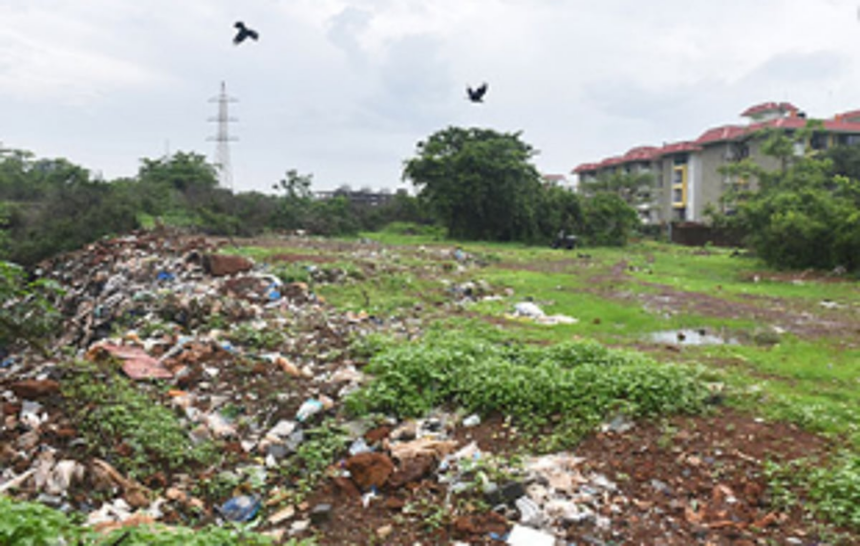
That, however, won’t be as easy as it should be. The treatment plant at Bainguinim has already faced opposition, not just from the local panchayat, but also from the people who live in the vicinity. Such opposition has been seen at almost every place where a garbage treatment plant has been planned. The recent opposition to extending the capacity of the existing Saligao garbage plant is a case in point. The fact, however, is that the State definitely needs this plant, and even more like it, if Goa is to tackle its waste in a scientific manner and not have it dumped at any available open space. Goa does not need another Sonsoddo.
The choice today is between a waste management plant that is scientifically operated and the open dumping of garbage at any available place. Fears of pollution arising from the plant can always be handled, and it should be the responsibility of the Goa Waste Management Corporation to ensure that there is no pollution of any sort arising from the plant once it is operational. This is not negotiable, and the waste management corporation has to make this assurance to the people right now, and it cannot go back on it.
The prime reason for the opposition to garbage plants is that these will be the cause of pollution. The bigger fear that people have to understand is that not treating garbage, and allowing it to fester will create larger environmental problems for the State. What is required is a holistic plan to handle garbage, and the past suggestion that every village should have its own plant is just not feasible. The State needs larger plants that can handle the garbage of a cluster of towns and villages in a more efficient manner, rather than small plants across the State. A few of these, however, would reduce the pressure on the larger plants.
Bainguinim has another problem that needs to be considered. Not too far is the World Heritage Site of the complex of Churches of Old Goa. These monuments need to be protected and this is one concern that the Goa Waste Management Corporation and the Minister for Waste Management has to address. There cannot be a situation that arises at a later date, wherein the monuments are endangered or threatened due to the plant. This too is not negotiable. Once these concerns are addressed, the government has to expedite the construction of the plant so as to not delay the process longer.