Last year, when ‘The Elephant Whisperers’ won the Oscar Award in the documentary short film category, the country celebrated in jubilation. Everyone took pride in talking about the Mahout couple, Bomman and Bellie, who took care of orphaned elephants in the forests of Tamil Nadu. It was a momentous occasion as the popular perception of forest conservation and biodiversity was turning towards optimism and hope. State governments in the country acknowledged the work of forest dwellers and the urgent need for eco-conservation.
Goa is positioned in the laps of one of the eco-sensitive zones in the world, the Western Ghats, and by its natural positioning is blessed with tremendous flora and fauna. However, over the last decade, not everything is as beautiful as meets the naked eye. Chief Minister Pramod Sawant on the occasion of Environment Day in 2021, announced that the Forest Department will develop 100 new water bodies in the wilds for animals as part of its measure to reduce human-animal conflict, an indication that the government was very serious about forest conservation.
However, two years later, in July last year, when it had the most opportune moment to take the big leap, the Goa government rejected the Centre’s proposal to have a Tiger Reserve in and around the protected areas of the Mhadei-Cotigao tiger corridor. The Goa State Wildlife Board was of the view that a small State like Goa cannot have a Tiger Reserve. The tiger presence in Goa was officially recorded in 2002, when the animal census conducted by the State Forest Department authenticated the presence of the wild cat in the Mhadei area. This was followed by the 2006 and 2010 censuses that also recorded tiger presence in the area. Even the Supreme Court refused to grant a stay to the High Court order, directing the Goa government to notify the Mhadei Wildlife Sanctuary and its surrounding areas as Tiger Reserve by October 24, 2023.
The year 2024 began on a sad note even on the environment conservation front, as a tired, starved, leopard roamed on the Borim road, not threatening, but threatened by humans. The cub appeared starved and tired, and after the initial panic, the villagers provided the cub with water in a bucket. After a brief chase at the busy Borim Circle on the National Highway, a team from the Forest Department successfully rescued the juvenile leopard by using a net.
Leopard sightings in the neighbourhoods and the disappearance of stray dogs, domesticated animals and poultry are less of news and more of a reality now. While neighbourhoods are concerned about the predator, questions should be raised as to what has led them to run towards human settlements, knowing well that they will be in danger of being captive if not hunted down. On the other hand, the habitat of the State animal, the gaur, is in danger and thus the bison have begun venturing into human neighbourhoods and farms for their livelihood. Until recent times, only farmers complained about their plantations being attacked by wild animals, however, now you can witness these animals running on the highways in search of their food.
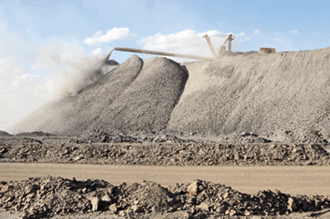
The ‘novel’ idea of concretising all lands for the benefit of human is only leading to disaster, not just for humans but also for the wild. Under the garb of “correction”, lakhs of square metres are being converted into settlement areas for multi-dwelling complexes and huge investment into commercial projects. In response to questions being raised by environmentalists and activists, human need is portrayed above all the other needs of the civilisation.
As kids, school curriculum imparts knowledge about the food cycle and how human beings at the centre of this food chain play a vital role in sustaining the needs of all the others species is taught. However, as adults, especially politicians and bureaucracy, seemingly suffer from amnesia and these vitals lessons are forgotten.
The renowned conservationist Daphne Sheldrick once famously said, “It’s not enough to love animals; we must actively protect and preserve them. It’s our duty and responsibility as custodians of this planet.”