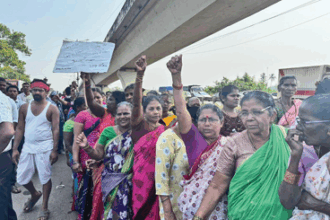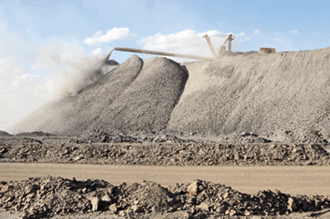
It lasted a long two years and seven months, and finally the court came to their rescue quashing the first information report (FIR) that had been filed against 45 of the villagers. Their only crime had been to protest the pollution caused by the transportation of ore by trucks through their village. The 45 villagers, including 23 women, were arrested on charges of unlawful assembly and criminal intimidation. They had formed a human chain and stopped the movement of trucks ferrying iron ore and plying through their village. The protesters had been demanding a stop to the plying of mining trucks through the village road, cleaner air, water, and basic healthcare.
For this they were arrested, lodged in jail and kept in judicial lock up for about 10 days. The villagers were granted bail, but remained in jail as they had no means of furnishing the Rs 10,000 bond. They were economically not well off and had no voice strong enough to speak for them, so they remained in custody until their plight was highlighted, first in Herald. The issue came to the fore as villagers began to gather outside the Valpoi police station demanding the release of the family members. Finally, a mining company itself came to their rescue and posted the bail surety that led to the release of the villagers late in the night.
But the horrendous experience didn’t end there for them. The FIRs lodged by the police were not withdrawn, and these remained hanging over the heads of the villagers like a sword that would remind them of the consequences of taking on the mining sector and the government. It was only when the villagers approached the High Court of Bombay at Goa, with a petition to quash the FIR that they got some justice. It was pointed out to the court that though the FIR had been filed, the charges had not been filed even over two years later. It is commendable that the prosecution too did not insist that the FIR not be quashed, and admitted that it was a genuine grievance of the villagers, who were fighting for their right to survival and for the environment.
This does bring up an entirely new line of reasoning, as to why, if the prosecution was aware that the battle of the villagers was genuine, did they allow the case to prolong for over two years, and not seek to withdraw it from the court of the judicial magistrate where it was being tried? Did they have to wait till the villagers went to the High Court with a petition to quash it, and then make this statement. Can’t the administration work in such manner that it takes into consideration the facts of the case and then decide whether it is worth taking to trial or not? The Sonshi case is a glaring example of the failure of the system to understand and appreciate the law, and of the people who deal with it of understanding the suffering of those who had an FIR lodged against them for ‘fighting for their survival’.
The villagers of Sonshi can finally sleep in peace. Or can they? One long unsettling battle may have ended, but the threats that mining operations bring, still remains. Yes, this will arise when the ban on mining operations in Goa is lifted, but shouldn’t this be the time to ensure that all systems are in place to ensure that all environment norms are met? Sonshi would have remained much as it was had not the police acted and arrested the protesting villagers. That one action changed everything. The administration has to take responsibility for its actions.