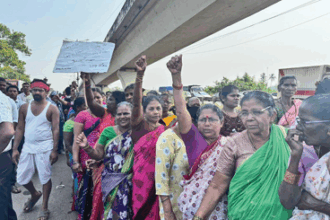
While it’s early days to wash our hands and say that the enemy of coal pollution has been ground to dust, there appears to be meeting ground and a thawing of ice between activists representing the people of Vasco and the government over the issue of acceptance of pollution.
Chief Minister Parrikar’s assurance on no expansion of coal facility is crucial but critical concerns must be addressed.
The fundamentals of people’s protests still remain and rightly so. While the expansion of coal facilities is something that the government of Goa will not support in the wake of mounting evidence that that it will not just cripple Vasco but have long term health effects on places and people on the coal route, the existing operations and their impact is no less serious.
The questions that need to be asked are these:
1) Can’t coal transportation be done from other routes where people are not as affected. The answer to this is clear. When a port virtually hugs a town which is as densely populated and congested you cannot even minimize the risk of pollution, leave alone mitigate it totally.
2) Does Goa benefit directly or indirectly from this transportation from all aspects and if it does even on one count, is it worth more than the lives that are getting affected due to coal pollution. The answer is obvious.
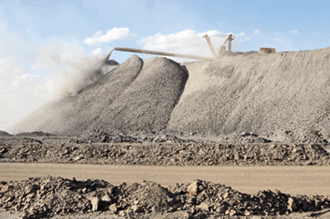
3) The Environment Minister Mr Harshvardhan, said that coal is needed for energy. But can’t it be done without sapping out the energy of the population of an entire town and numerous other villages and urban hamlets. As the Indian Express investigative series, published in Goa, in partnership with Herald stated, that 25 million tonnes of coal will be unloaded each year at MPT by 2020, which will rise to 51.6 million tonnes each year by 2030 onwards
The cumulative impact of this on populations which will suffer a quantum leap in pollution levels, is absolutely unimaginable.
Chief Minister Manohar Parrikar on Friday assured Goa Against Coal activists that expansion of the facility proposed by South West Port Ltd (SWPL) would not be allowed, while GAC members demanded a complete stop to the coal handling activities at MPT.
And as the Indian Express investigation stated, the coal that lands in Mormugao — mainly from Australia, Indonesia and South Africa — is currently consumed by an estimated 31 corporates.
The immediate issue at hand, if the two battles – total stoppage and halting expansion – need to be prioritised, is the latter. A second late route is being readied and a waterway is likely to be opened up through the network of rivers. Therefore the coastal jetties may serve the purpose of coal transportation. These moves do not augur well, according to the people.
It is a battle between people and environment on one hand and sheer economics of massive scales on the other. While the big three, JSW Adani and Vedanta will literally feed off the port, something which hasn’t quite been highlighted is that fact that the future of MPT, post the iron ore mining doom, is linked to coal expansion. So it not just the corporates that the people are battling.
MPT exported 43 million tons of iron ore in 2010-2011. At that time, the port contributed to 35 per cent of the state GDP. In 2014, it exported 11 million tons affecting the bottom line the Mormugao Port Trust severely.
It’s a battle all right. But the weight of the peoples angst and their expectations from the government are expected to really count in this battle between economic bottom lines and people’s lifeline.