In a shocking and tragic incident on
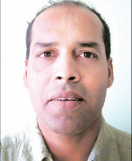
Friday, January 12, a 28-year-old youth, Yamanappa Madar, engaged in manual
scavenging in Ektanagar, Mapusa, died after he collapsed into the septic tank
that he had entered to clean during the wee hours of the day. Another colleague
of his tried to rescue him, but stepped out of the tank after feeling
suffocated. The Chief Minister has directed the authorities to book the
contractor, who had asked the labourer to go inside the septic tank.
Under the Prohibition of Employment as
Manual Scavengers and their Rehabilitation (PEMSR) Act of 2013, manual
scavenging has been prohibited and is an outlawed practice. In October last
year, a division bench of the Supreme Court, comprising Justice S Ravindra Bhat
and Justice Aravind Kumar, while passing its verdict in a public interest
litigation against the employment of manual scavengers, directed the Centre and
the state governments to ensure the complete eradication of manual scavenging
and ordered the compensation in the cases of sewer deaths to be increased to Rs
30 lakh. And in case of permanent disability, the victim be paid Rs 20 lakh,
and Rs 10 lakh be given for other forms of disability.
Engaging a human being in manual scavenging
is cruelty and against the fundamental right to live life with dignity as
enshrined in the Indian Constitution. However, the larger question in the
present circumstances should be that despite technological advancement and the
laws existing, labourers are pushed into life-threatening risks at work.
In October last year, a 28-year-old labourer
from Bihar, working for the Smart City project, died after getting trapped
under a mud pile at the project site in Panelim-Ribandar. The police had stated
that the agency and the contractor had acted negligently by not providing
safety gear and precautionary equipment to the labourer. The lives of our own
Goans working as linemen and assistants in the power department have been at
risk for years and as we know several deaths while on the job were reported in
2023. For the youth, it is a double-edged sword, as they cannot choose between
safety and employment. Therefore, the onus of their safety is on the
government, the agency appointed to carry out the project and the contractor
executing the work.
Recently, the Panjim MLA raised an important
question on the need for consultants when the government departments and
agencies have been fully equipped with the needed talents to execute the
projects being undertaken in the State. The question gains relevance due to the
absence of government officials at the site of work and the work being executed
only under the guidance and supervision of a consultant or a contractor. In
such circumstances, while the safety parameters are thrown out of the window,
the quality of the work also takes a hit as the contractor and the agent are on
the lookout for every opportunity to maximize their profits, even if it comes
at the cost of the lives of the people. Otherwise, how could a ‘Smart Road’
that has been completed and opened for public cave-in at Tonca in Panjim and a
sewage tanker fall by its side? Or how is it that despite the sanctions for
safety equipments, deaths on duty where the labourer or the staff of the department
has not worn safety gear are reported?
The gross negligence at work not only costs
families their dear ones but also burns big holes in the government coffers.
Since works have been carried out without due diligence, they are retendered
and when mishaps happen, it once again directly impacts the quality of work,
and the vicious cycle continues.
It is thus important for the government to
fix responsibility in all cases of dereliction of duty from its officials.
Former US Senator, late Carl Levin once said, “Restoring responsibility and
accountability is essential to the economic and fiscal health of the nation.”