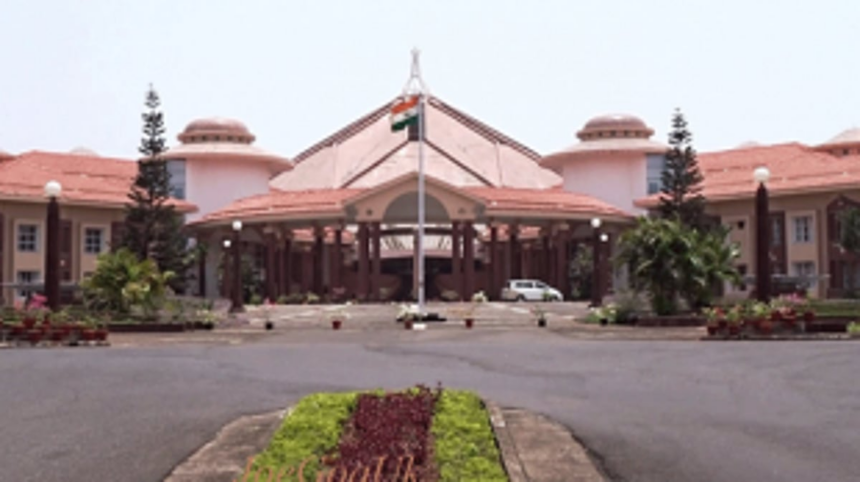
At other times, the oath taking of the MLAs has been viewed more as a procedure as it was always overshadowed by government formation and the politics that accompanied it, as the interest was more on who got or would get a berth in the cabinet. This, therefore, presents the opportunity to focus on the responsibilities of the elected members of the Legislative Assembly and what is expected from them during the term.
Legislators are primarily representatives of the people, democratically elected in a first-past-the-post system, by the citizens of the State. They represent a geographical area comprising towns and villages and are sent to the Legislature as the voice of that particular constituency, but are not restricted to taking up issues of just the area they represent. By the very nomenclature of their title, they are tasked with legislating – enacting laws for the State – which is their primary responsibility, but definitely not the only one. Within the Legislative Assembly they also have the right to ask questions, raise issues, move and vote on bills and resolutions and approve the government’s public expenditure plans. Those seated in the opposition benches are like watchdogs, who have the charge of holding the State government accountable for all actions.
While MLAs in government may work differently from those in opposition, in the House, it is the opposition MLAs that play a larger role, especially during debates and also forcing the government to act in the interest of the State and the people. The MLA has the opportunity to bring in legislation in the form of a Private Members’ Bill on what he or she thinks would be an appropriate law that the State requires. Even if this is not passed, it shows the intent to make a change and forces the government to think on similar lines. Most important of all is that the MLA has to right to raise issues of public importance in the House and demand answers from the government.
MLAs are not meant to get involved in the micro management of the constituencies. That is best left to the representatives of the local self government – the municipalities and the panchayats – who are better able to understand the issues of the area and find solutions to them. The MLA should play more of an advisory role, but this unfortunately is just not happening. What is the benefit of having a two-tier local self government if the MLA is required to work on issues of roads, water taps, street lights? The only benefit of this is to the MLA who then gets to control the local politics and politicians thus ensuring his re-election. This hold of the MLA on the representatives of the local self government bodies has to be broken.
But it doesn’t end there. We have a mix of experience and youth in this Assembly that should augur well for Goa, just as long as the vision of the members of the House is in the interest of the State. The Legislative Assembly has been constituted with four very senior MLAs who have been around for three decades or so, 19 first-time legislators with some of them being very young ones. The latter should be bringing to the House new perspectives, with the former will have to guide them on their performance in the Assembly. Together the MLAs must strive to give the State a new direction that encompasses sustainability with development and growth. They have five years ahead of them to do so. Time enough to make a difference with a five-year plan for Goa.