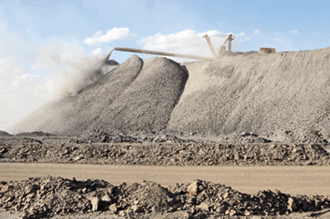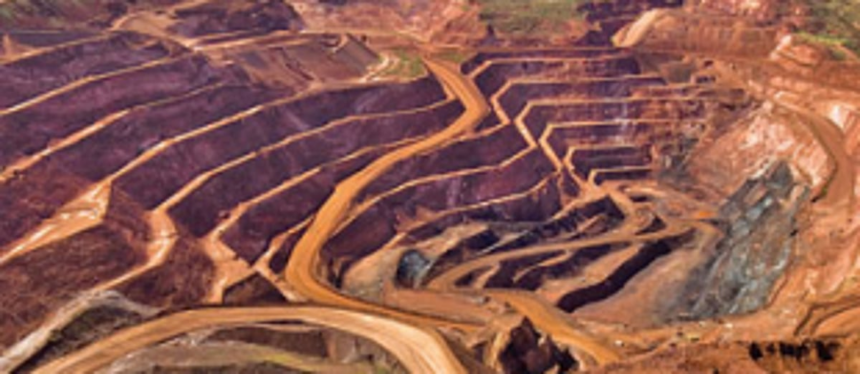
As Goa struggles with a floundering economy, that is being further buffeted by the COVID-19 lockdown restrictions, the ore exporters have come forward with a plea to restart mining. In an appeal to the Central government, the apex body of the mining sector in the State – Goa Mineral Ore Exporter’s Association (GMOEA) – has sough the resumption of iron ore mining activities to ‘improve and strengthen the socio-economic condition’, that has been hit hard due to COVID-19 pandemic. Various attempts have been made since March 2018, when extraction of ore stopped after the Supreme Court deemed the process of second renewal of leases as illegal. Since then there has been no mining activity in the State, though transportation of extracted ore was permitted by the Supreme Court from Janauary, this year.
The argument proferred by GMOEA is that while it will not be possible to restart tourism unless the contagion is overcome globally, there is no such restriction on mining as it can be carried on even during the period of the lockdown with safety procedures and practices directed by the Centre. That may be true. But starting mining operations in Goa is not that simple an exercise, if it was, then it would have been started months ago. Further, stating that the resumption of mining would strengthen the State’s socio-economic condition, the body argues that the mining sector has compliances of the highest level and that the ‘reputation damage’ to the sector has been ‘consistently caused by false and un-substantive allegations by vested interest groups’.
This is a canard that needs to be set straight immediately. The only reason why the mining sector can get away with such a statement is that the investigation authorities have delayed probing the various illegal mining cases that they have before them. If the mining sector is indeed as blameless as it makes itself out to be, then it means that there never was any illegal mining in the State. So, is it that the Justice Shah Commission report completely wrong? There may be a dispute in the figure of illegal mining, but the sector is not clean as a whistle. Let the investigations continue, let the probing agency complete the case and let the guilty be brought to book, or as the miners would have it, let it be proved that there was no illegal mining.
This makes it imperative on the government to ensure that the mining cases are fast tracked. They have been delayed too long already. The Shah Commission report was tabled in 2012 and mining was stopped by the government in September that year so as to nail those who were involved in the illegal operations. Almost eight years later, there has been little progress in the probe. The cases have to reach a logical conclusion, and until that happens, the sword of illegal mining will remain hanging over the sector, with little credence to statements that they are guiltless. If they indeed want to prove their innocence, they too should be equally eager to see the end of the cases.
And there’s more. Illegal mining has led to massive losses to the exchequer. How is the State going to be compensated for these losses? It is of utmost importance that the government recover the losses, and for that to happen the cases have to be taken to the legal conclusion. Investigations into all the illegal mining cases have to be expedited, and the monies recovered before mining operations can begin. If the recovery of illegal mining losses are big enough, Goa may not even have to restart mining in the State. That’s a thought to be kept during these times of lockdown, instead of attempting to push mining ahead.